Shree Krishna Stole the Clothes of Gopis Bathing in Yamuna Maa
The childhood pastimes of Shri Krishna in the pastoral paradise of Vrindavan are collectively known as leelas—divine plays. To the casual observer, these stories can read like folk tales or playful myths. However, within Vedic philosophy, every action of the avatar carries an exact, surgical spiritual purpose.One of the most profoundly misunderstood yet spiritually significant events is the Vastraharan Leela (the stealing of the garments), which took place on the sacred banks of the Yamuna River.
Far from a simple act of childhood mischief, this leela serves as an advanced masterclass on Sharanagati, the principle of absolute, unconditional surrender to the Divine.
The Intense Devotion of the Katyayani Vrata
To understand the depth of this event, we have to look at the spiritual state of the gopis (the cowherd maidens of Vrindavan). The gopis were not ordinary souls; they represented the highest peak of Bhakti (devotion). Their singular, burning desire was to serve Shri Krishna not just as a king or a friend, but as their eternal husband and soulmate.
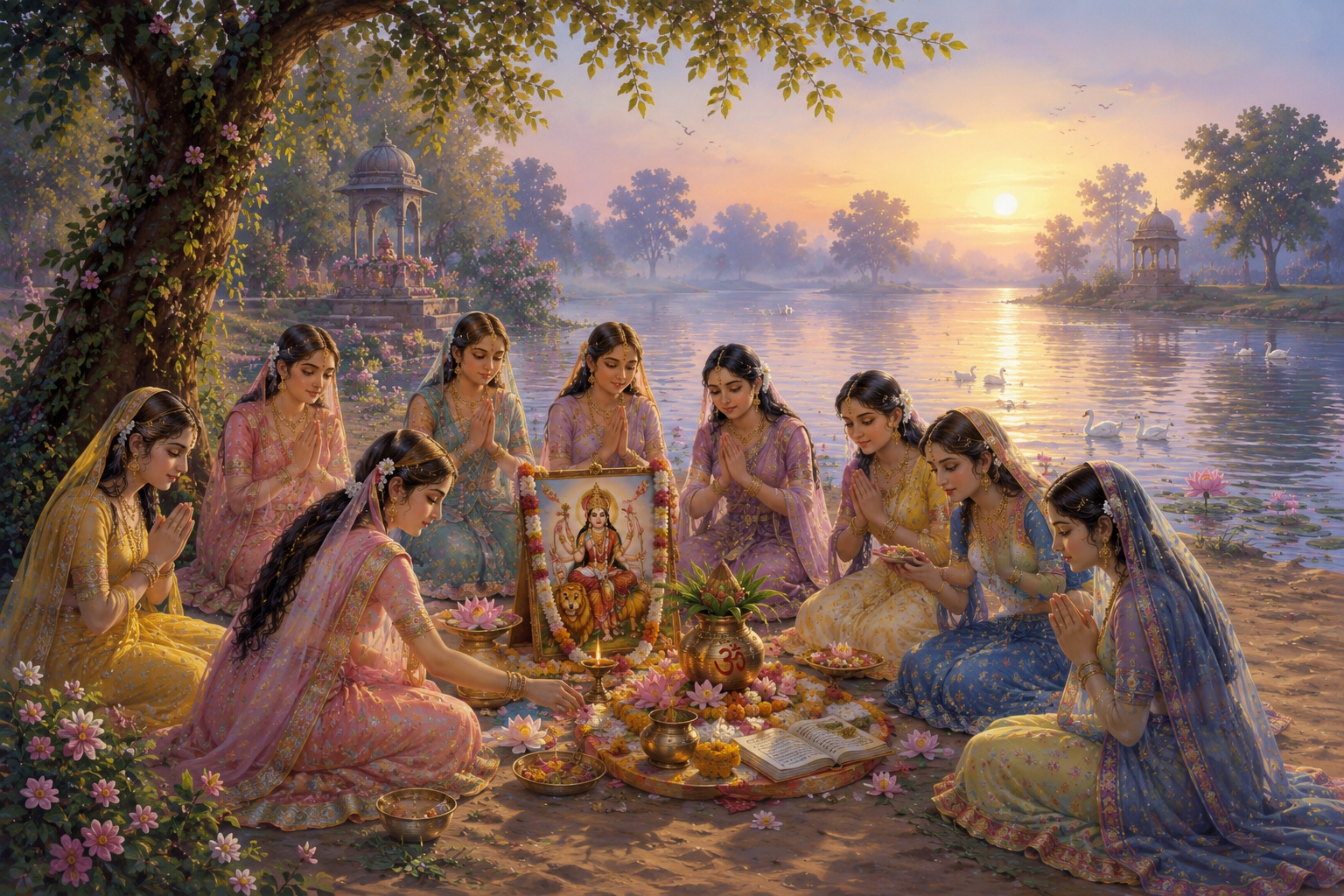
To qualify for this ultimate spiritual union, they undertook a rigorous month-long vow known as the Katyayani Vrata during the first month of winter (Margashirsha).
The Daily Ritual of the Vrata
Waking up at Dawn: The gopis would rise before the sun, waking each other up by singing songs of Krishna’s glories.
The Holy Bath: They walked hand-in-hand to the freezing waters of the Yamuna River to take a ritual purificatory bath.
The Worship: On the riverbank, they would sculpt a deity of Goddess Katyayani (a form of Durga) out of the river clay and offer prayers, asking for a single benediction: "O Goddess Katyayani, please make the son of Nanda Maharaja my husband."
The Day the Garments Disappeared
On the final day of their month-long vow, the gopis went to the Yamuna. Following a common but flawed practice of the time, they stripped off all their clothing (vastra), left them on the riverbank, and entered the water entirely naked to bathe and play.
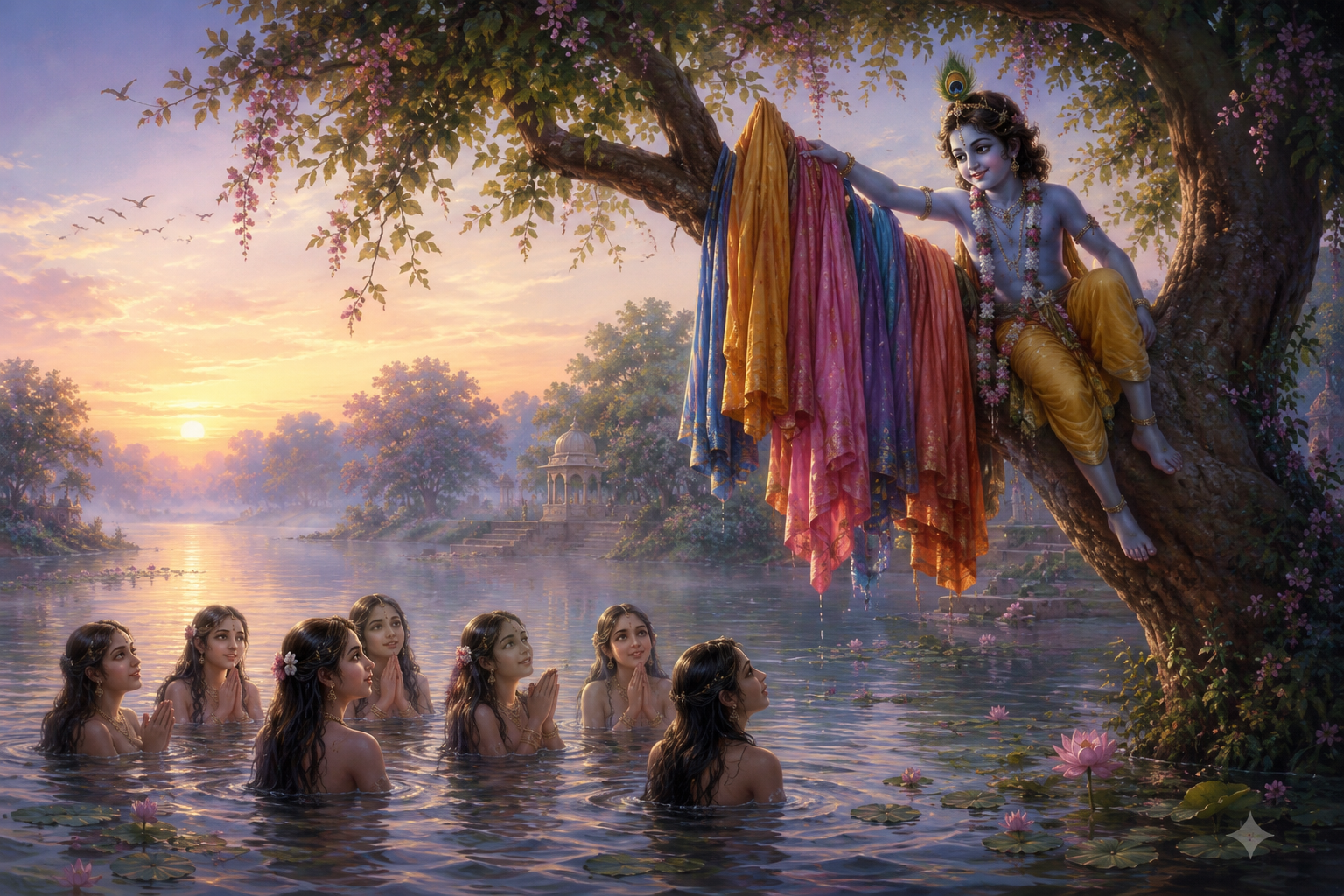
Seeing that the moment had arrived to grant their innermost prayers—and to strip away the very final layer of their material conditioning—the young Krishna quietly approached the bank. He gathered all their clothes, climbed into the branches of a nearby Kadamba tree, and hung the colorful garments all around him,
When the gopis finished their bath and looked for their clothes, they noticed Krishna sitting in the tree, a playful yet knowing smile on his face.
The Metaphysical Dialogue: Modesty vs. Illusion
When the gopis realized what had happened, they were overcome with intense material shyness (lajja). Immersed up to their necks in the cold river water, they began to plead, bargain, and even threaten Krishna, asking him to throw their clothes down.
Krishna, however, used this moment to shatter two distinct levels of illusion:
1. The Cosmic Law: Respecting the Elements
Krishna pointed out that entering a sacred river like the Yamuna naked was a violation of scriptural codes. It showed disrespect to the river goddess and Varuna (the deity of water). In the Vedic worldview, nature is not a lifeless resource to be used mindlessly; it is a manifestation of the divine, and interacting with it requires conscious respect.
2. The Spiritual Law: Standing Naked Before the Divine
The deeper, psychological lesson was far more profound. The gopis wanted the Supreme Lord as their husband. Yet, they were trying to hide behind their material modesty.
Krishna gently but firmly forced them to confront a paradox: How can you hide from the One who already sees the innermost depths of your soul?
The garments they left on the shore represented more than just fabric; they symbolized their material identities, their societal conditioning, their bodily identification, and their ego. To merge completely with the divine consciousness, one cannot hold onto artificial personas.
The Act of Complete Surrender
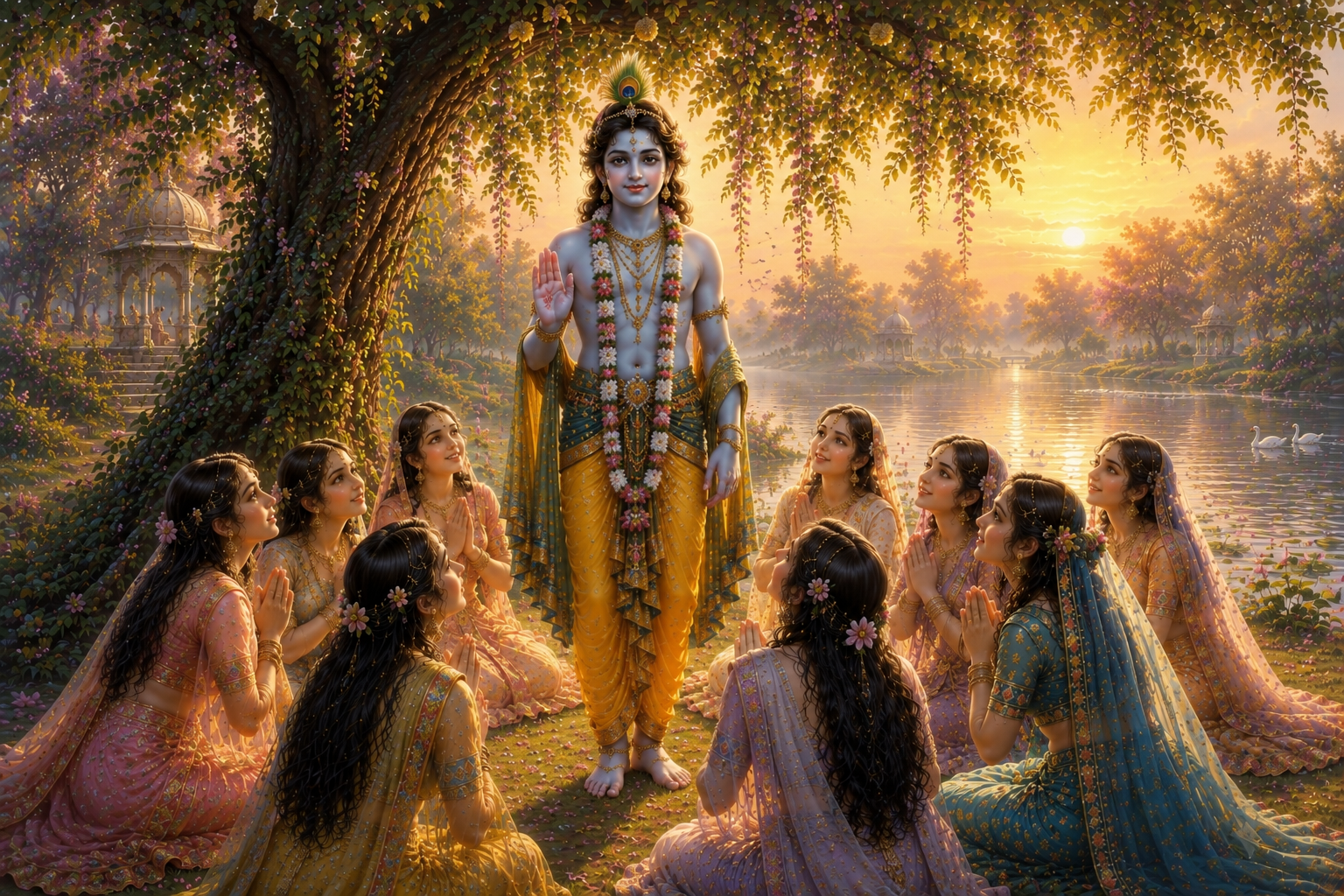
Krishna told the gopis that if they truly wanted their clothes back and wished for their vow to be complete, they had to step out of the water, come to the base of the tree, and accept their garments with hands folded in prayer.
This was the ultimate test of their ego. One by one, conquering their societal conditioning and bodily shame, they chose their love for Krishna over their material pride. They stepped out of the Yamuna and raised their hands in total submission.
In that exact moment of absolute vulnerability, their surrender (Sharanagati) was complete. Krishna immediately returned their clothes, explicitly stating that he harbored no malice or worldly intent. He told them that because they had surrendered everything to him, iincluding their pride, he accepted them completely and promised to meet them for the sacred Maharaas dance in the upcoming autumn nights.
Spiritual Reflection
Spiritual progress requires surrender of ego and false identities. We all walk through life wrapped in our own metaphorical "garments." We identify ourselves by our wealth, our professions, our physical beauty, our social standing, and our intellectual pride. We use these identities as armor to protect ourselves from the world.
But when we approach the spiritual path, this armor becomes an obstacle. The Vastraharan Leela reminds us that the Divine does not care for our external coverings. To experience true spiritual awakening, we must have the courage to shed our false identities, drop our egos, and stand before the universe in absolute, transparent honesty.
#YamunaMaa #KrishnaLeela #SpiritualReflection #Braj