Part 1 of this series explored how the scriptures of Sanatana Dharma reveal that Peace itself is the Divine, and how every human heart is constantly longing for this lasting peace. How, then, can a seeker take simple, practical steps to move closer to this Divine peace in daily life?
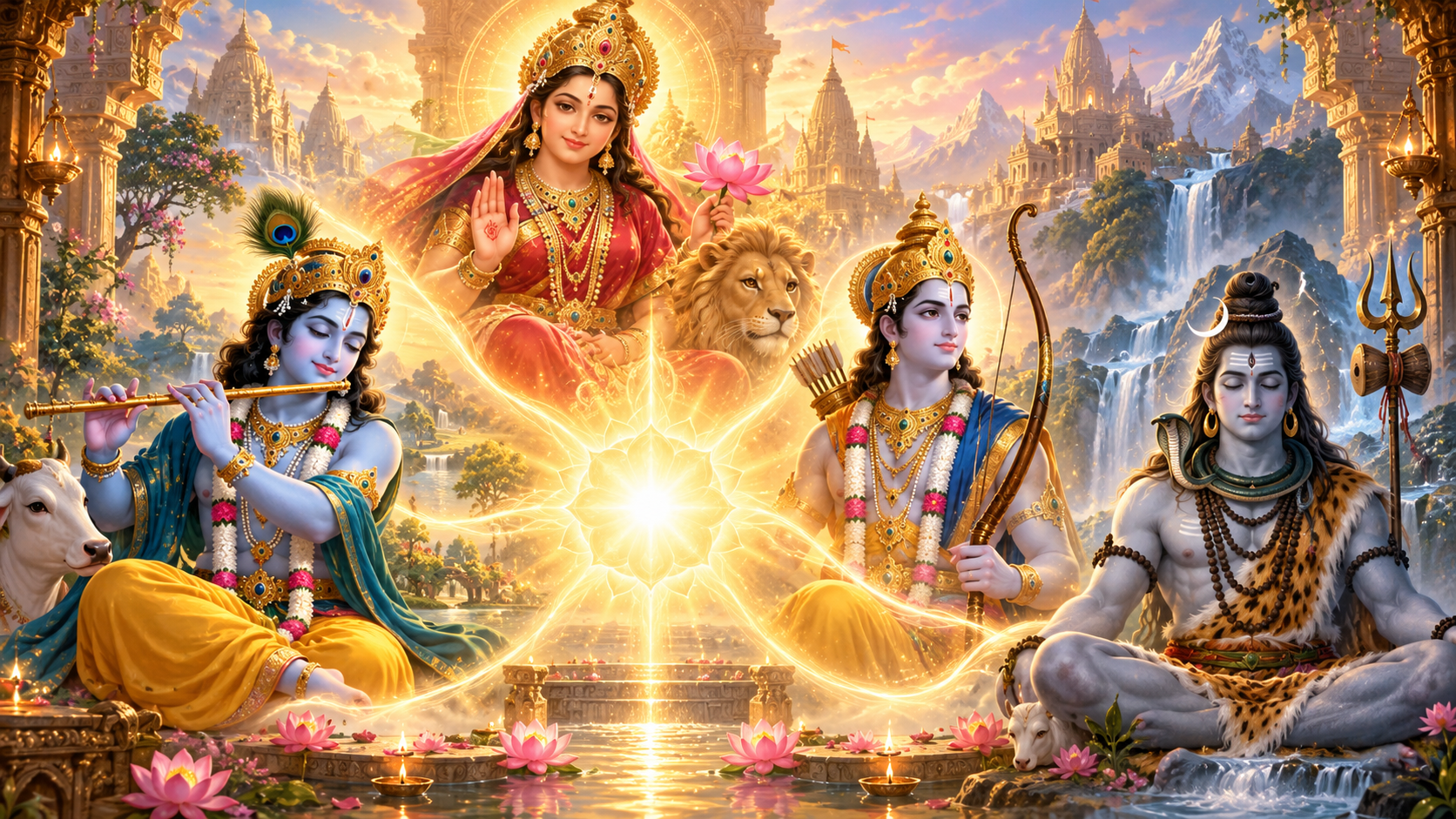
One Truth, Many Forms
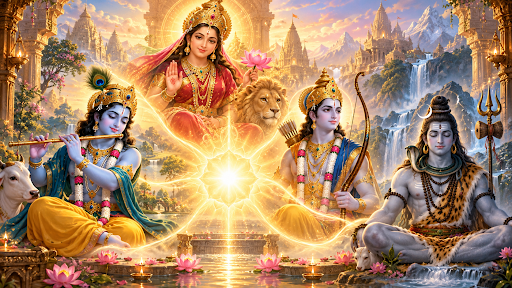
In Sanatana Dharma, the Divine is worshiped in many beloved forms—such as Lord Shiva, Goddess Parvati, Lord Rama, Lord Krishna, and Lord Hanuman. At the same time, the Vedas, the Upanishads, and the Bhagavad Gita clearly declare that the Supreme Divine is One. At first glance, this might seem like a contradiction, but the underlying principle is very simple and natural.
In nature, no two flowers on the same plant look identical, and even twins born in the same family have different personalities and preferences. Creation is filled with rich diversity. Given that every human heart is unique, how could a single, uniform expression appeal equally to everyone on earth?
Out of boundless compassion, the one Supreme God has manifested in countless forms, displaying diverse qualities and sacred pastimes (Lilas) so that every devotee can find a heartfelt way to connect. Although no human word or adjective can fully describe the infinite Divine, God willingly accepts names and forms so that seekers have a loving support for their devotion.
Finding Your Ishta Dev This Navaratri
Since the Divine has taken so many forms out of compassion for humanity, devotees can joyfully embrace this gift. Let this Navaratri be a starting point for a deeper spiritual journey.
A seeker can reflect upon the various manifestations of the Divine across traditions and ask what naturally draws their heart:
- Is it the joyful playfulness of Lord Krishna?
- Is it the humble, unwavering devotion of Lord Hanuman?
- Is it the pure, selfless love (Prem) of Sri Radha?
- Is it the noble sense of duty and righteousness of Lord Rama?
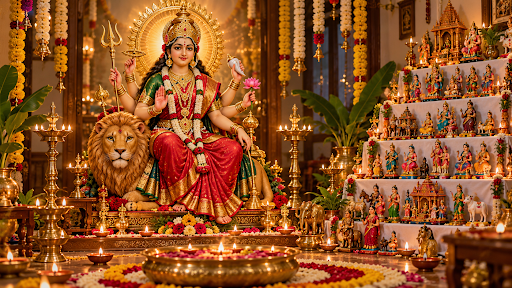
- Or is it the gentle, motherly compassion of Devi (Ambal)?
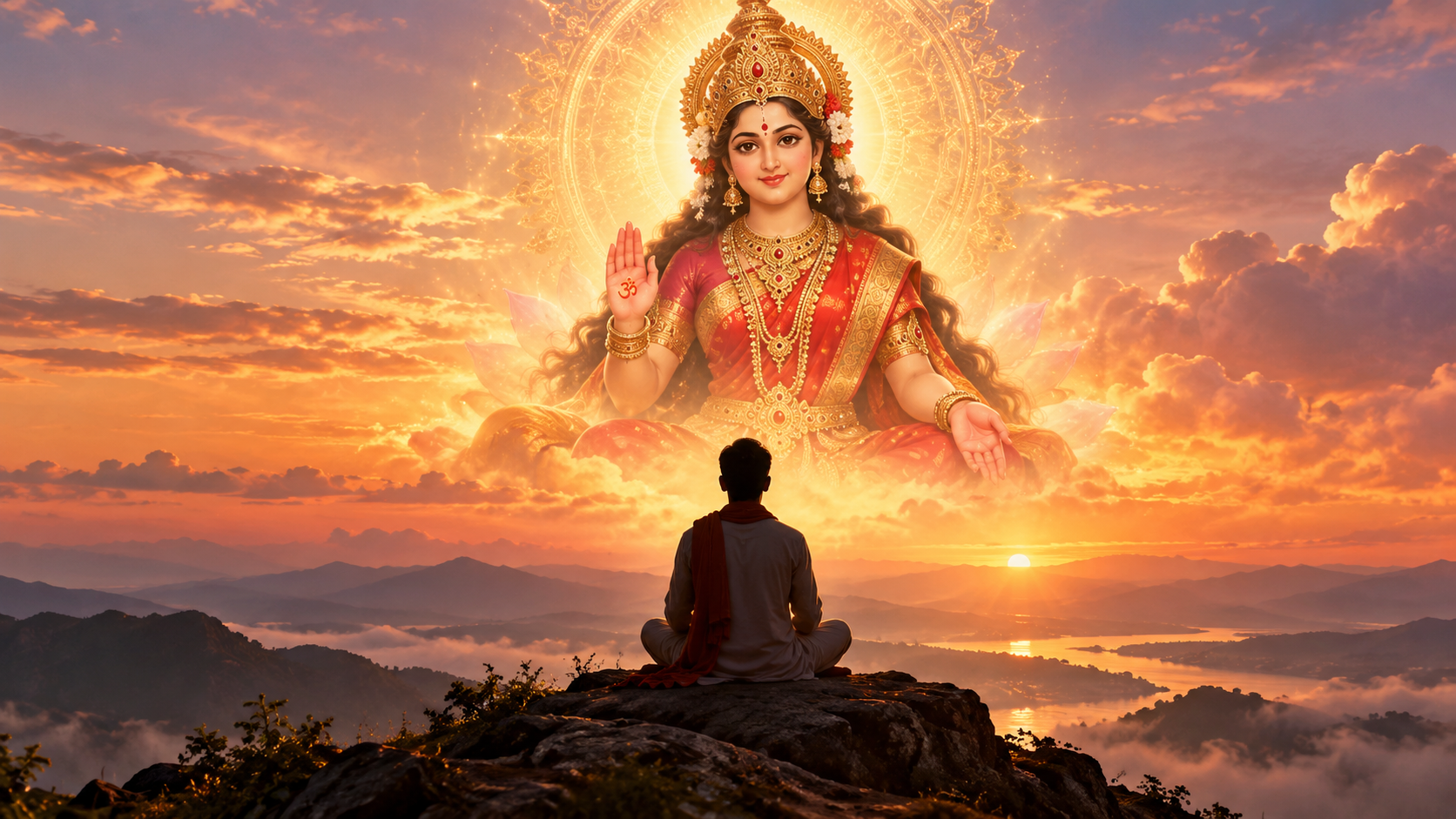
Every seeker can take time to discover which form of the Divine naturally pulls their mind and heart inward. Once a devotee anchors their heart on their Ishta Dev—their cherished personal form of God—that bond becomes a lifelong spiritual anchor.
Seeing the Chosen Deity in All Forms
Once anchored in the Ishta Dev, the next step is to behold that same cherished Deity within all other forms of the Divine. For instance, a devotee whose Ishta Dev is Goddess Meenakshi can lovingly behold Meenakshi Amman within Lord Rama, within Lord Krishna, and within Lord Shiva.
This vision is fully supported by the scriptures. Since the Divine is One and pervades the entire universe, it makes no difference whether a devotee sees Lord Krishna in all forms or the Divine Mother in all forms. Ultimately, the devotee is connecting with the one Supreme Reality behind every name and form. As Arjuna proclaims in the Bhagavad Gita (Verse 11.40) upon beholding the Cosmic Form:
“namaḥ purastād atha pṛiṣhṭhatas te
namo ’stu te sarvata eva sarva
ananta-vīryāmita-vikramas tvaṁ
sarvaṁ samāpnoṣhi tato ’si sarvaḥ”Translation: O Lord of infinite power, my salutations to You from the front and the rear, indeed from all sides! You possess infinite valor and might and pervade everything, and thus, You are everything.
📖 Bhagavad Gita 11.40 — Read in Bhagavad Gita ↗
The Harmony of the Three Main Traditions
This unity is beautifully illustrated across the three primary branches of deity worship in Sanatana Dharma: Shaivism (worship of Lord Shiva), Vaishnavism (worship of Lord Vishnu), and Shaktism (worship of Devi, the Divine Mother).
When one compares their respective Sahasranamas, the descriptions are remarkably similar because they all point to the same Supreme Reality beyond names and forms. That is why Goddess Lalita is revered as the Supreme Reality in the Lalita Sahasranama, Lord Vishnu in the Vishnu Sahasranama, Lord Krishna in the Bhagavad Gita, and Lord Shiva in the Shiva Sahasranama:
Sri Lalita Sahasranama (Ambal as the Supreme Reality)
- Parabrahma-swarupini (Name 452): She whose intrinsic nature is the Supreme, Absolute Brahman.
- Ekakini (Name 665): She who stands alone as the One-without-a-second (Advaita Reality), before, during, and beyond creation.
- Tattvamayi (Name 908): She who is the very essence of Ultimate Truth (Tattva).
Sri Vishnu Sahasranama (Vishnu as the Supreme Reality)
- Vishwam (Name 1): He who is the entire universe and its underlying cause, indicating that nothing exists separate from Him.
- Brahma (Name 665): He who is Brahman—the infinite, all-pervading Supreme Reality.
- Ekakin / Ekah (Name 725): The One Absolute Reality without a second (Ekam Evadvitiyam).
Sri Shiva Sahasranama (Shiva as the Supreme Reality)
- Sarvah (Name 26): He who is All—the totality of both manifest creation and unmanifest reality.
- Brahma (Name 319 / 521): He who is the Supreme, Infinite Parabrahman declared in the Vedas.
- Tattvam (Name 892): He who is the fundamental, unchanging Truth of existence.
Conquering the “Evil” Within
At the beginning of this reflection, two central themes were introduced: the Divine and the Evil. While the nature of the Divine has been explored in depth, very little focus was placed upon “Evil”—and that is by design.
In Part 1, “Evil” was understood as those inner emotions that diminish the experience of life—such as sadness, anxiety, jealousy, and anger—and disturb one’s inner harmony. As a seeker moves closer to the Divine, which is Supreme Peace itself, these inner agitations naturally fall away, for true peace is the complete absence of mental turmoil. Therefore, moving closer to the Divine is itself the true act of conquering the “Evil” within. This reflection is offered as a humble effort to inspire every seeker’s spiritual journey toward lasting peace. May that Divine Peace awaken within every heart!
Actionable Takeaway for Navaratri
Spiritual Practice: Anchor the heart in your Ishta Dev (chosen personal form of the Divine), and practice seeing that same beloved Divine presence across all deities, traditions, and living beings.
Shri Matre Namah — Salutations to the Divine Mother. Happy Navaratri!