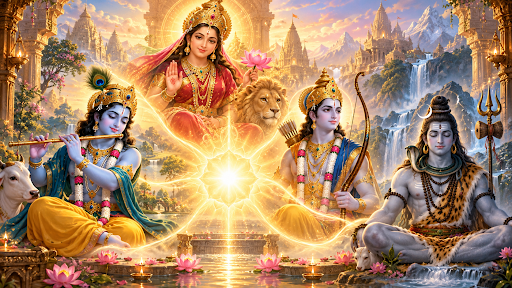
Whether one is celebrating the victory of Goddess Durga over Mahishasura or Lord Rama over Ravana, the core message remains the same: Navaratri celebrates the victory of the Divine over Evil.
Why “Divine and Evil” Instead of “Good and Bad”?
In spiritual reflection, it is helpful to use the word “Divine” rather than simply “Good”. In everyday life, “good” and “bad” are often subjective and change from person to person or generation to generation. What seems beneficial to one person may seem unfavorable to another. Similarly, many social customs that were considered unacceptable a hundred years ago are viewed as completely normal today.
In worldly disagreements, every side often believes its own actions are right and justified based on its own perspective. Because worldly definitions of “good” and “bad” can easily cause confusion, the scriptures invite seekers to look deeper and focus on the eternal truths of the Divine and the Evil.
What, then, is “Evil” in daily human experience? Emotions that diminish the experience of life—such as sadness, anxiety, jealousy, or anger—and disturb one’s inner harmony can be understood as evil. And what is the Divine? Peace itself is the Divine. This profound truth is repeated again and again throughout the scriptures of Sanatana Dharma.
The Scriptures Declare: Peace is the Divine
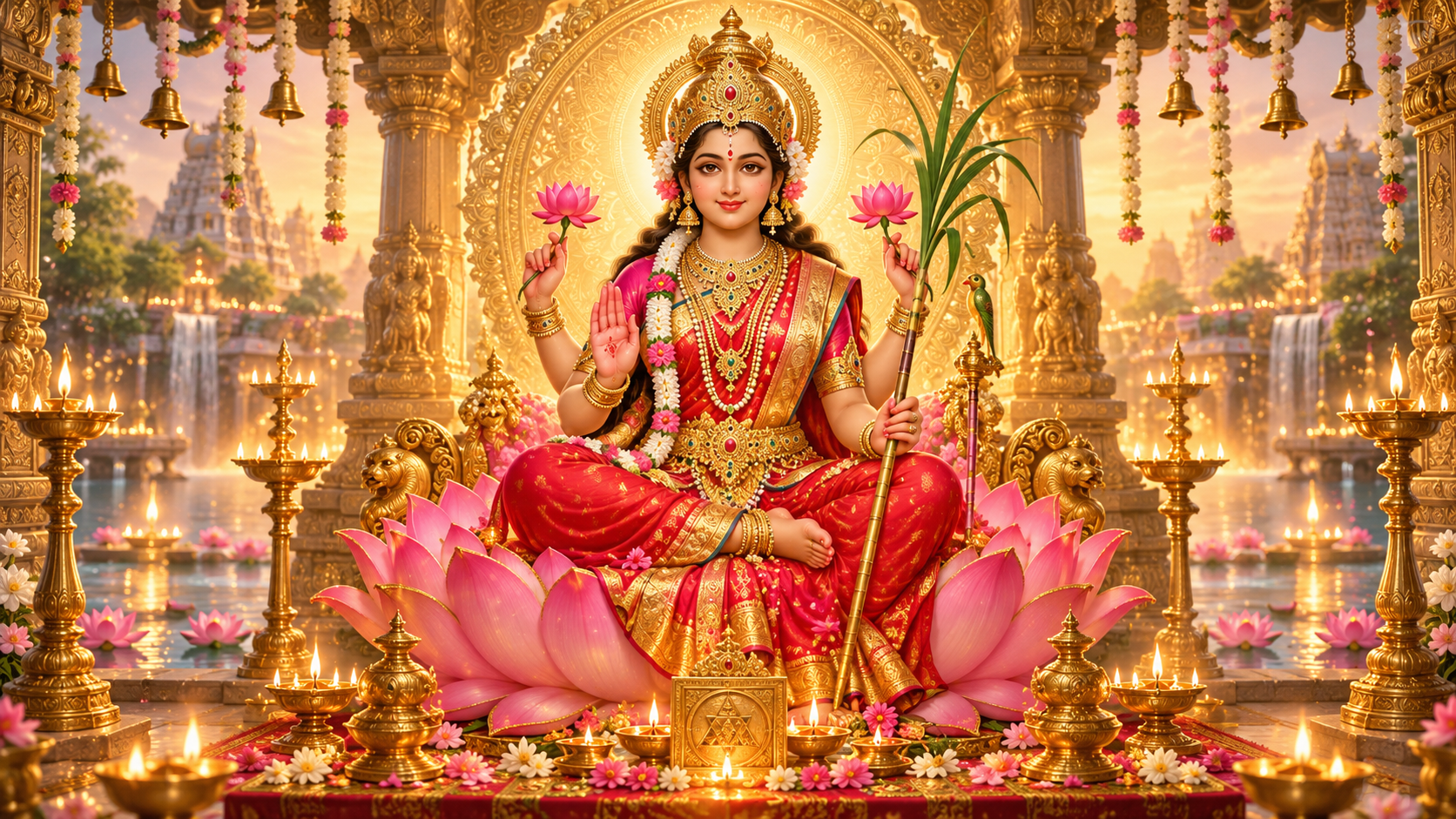
In the Devi Mahatmyam, the Divine Mother is worshiped not merely as someone who grants peace from afar, but as the very presence of peace inside every living being:
“yā devī sarva-bhūteṣhu śhānti-rūpeṇa saṁsthitā |
namas tasyai namas tasyai namas tasyai namo namaḥ ||”Translation: To that Devi who abides in all beings in the form of Peace (Shanti-rupena), salutations to Her again and again.
📖 Source: Devi Mahatmyam (Durga Saptashati), Chapter 5, Verse 29
Here, peace is not just a gift given by the Mother; whenever true peace arises in the heart of any living being, that peace is Devi Herself.
This same teaching shines across the major Sahasranamas (the hymns of a thousand names) dedicated to the Divine:
1. Sri Lalita Sahasranama
The Divine Mother is invoked through several sacred names that identify Her directly with stillness and peace:
- Shanta (Name 131) & Shantih (Name 411): She who is Peace itself—completely tranquil and beyond all agitation of nature (Prakriti and its Gunas).
- Shantimati (Name 324): She who is Peace Personified.
2. Sri Vishnu Sahasranama
In the opening meditation verse (Dhyana Sloka), Lord Vishnu is introduced first and foremost as the embodiment of peace:
“śhāntākāraṁ bhujaga-śhayanaṁ padmanābhaṁ sureśhaṁ…”
📖 Source: Sri Vishnu Sahasranama, Dhyana Sloka
He is revered as Shantakaram—He whose very form (Akara) is Peace (Shanta). Resting effortlessly upon the serpent Adi Shesha in the cosmic ocean amidst the constant movement of creation, He represents unshakeable inner stillness. Throughout the hymn, He is praised through names of peace:
- Prashantatma (Name 559): He whose Self (Atman) is supreme, unshakeable calmness.
- Shantah (Name 583): The peaceful, unruffled One, free from attachment to sense objects and abiding as changeless Reality.
- Shantih (Name 585): He who is Peace itself—the complete end of all sorrow and division.
3. Sri Shiva Sahasranama (Mahabharata, Anushasana Parva & Shiva Purana)
Just as in the Lalita and Vishnu Sahasranamas, Lord Shiva is addressed by specific names that equate Him directly with Peace:
- Prashantatma (Name 220): He whose Self (Atman) is supreme, unshakeable tranquility.
- Shantah (Name 263 / 822): He who is absolute Peace itself, completely free from anger, passion, or mental disturbances.
- Shantabhadrah (Name 975): He whose very nature is peaceful and auspicious.
The Lifelong Search for Peace
The great irony of human life is that people spend their entire lives searching for this very peace outside. Every day, people work hard, earn a living, build families, celebrate milestones, and strive tirelessly to experience moments of happiness.
When a person closely observes a moment of deep joy—such as being treated with special affection by loved ones, or graduating after years of study—something remarkable happens inside. In that moment of fulfillment, all thoughts cease, and the person experiences complete peace with everything inside and outside.
However, worldly happiness is temporary and requires constant effort and external arrangements to maintain. In the search for that same relief, some people even lose their way, turning to harmful habits and fleeting sensory distractions. Yet, at the deepest level, every person is searching for the exact same peace that yogis, saints, and devotees seek—many are simply looking in places that cannot provide lasting fulfillment.
Because the Divine itself is peace, and every living being longs for peace, all of humanity is actually searching for God, whether they realize it or not.
In Part 2 of this series, we will explore a simple, practical step to move closer to the Divine Peace.