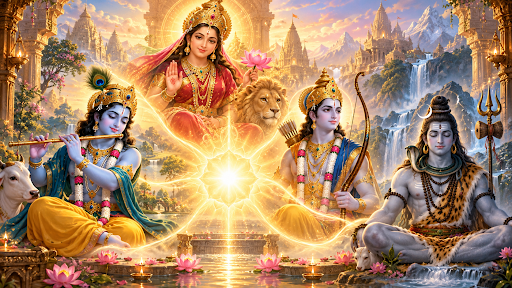
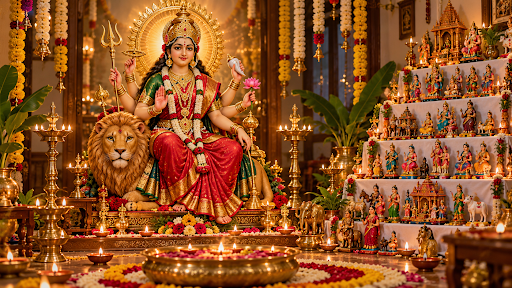
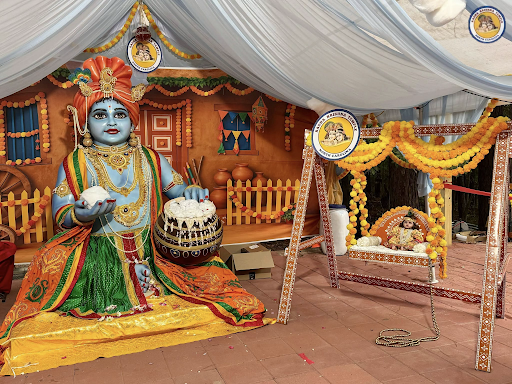
We may worship Krishna, pray to Him, and celebrate His divine appearance every Janmashtami. But how does Krishna become someone we truly love? The answer begins with understanding a relationship that has always existed and discovering the many ways in which Krishna allows us to come close to Him.
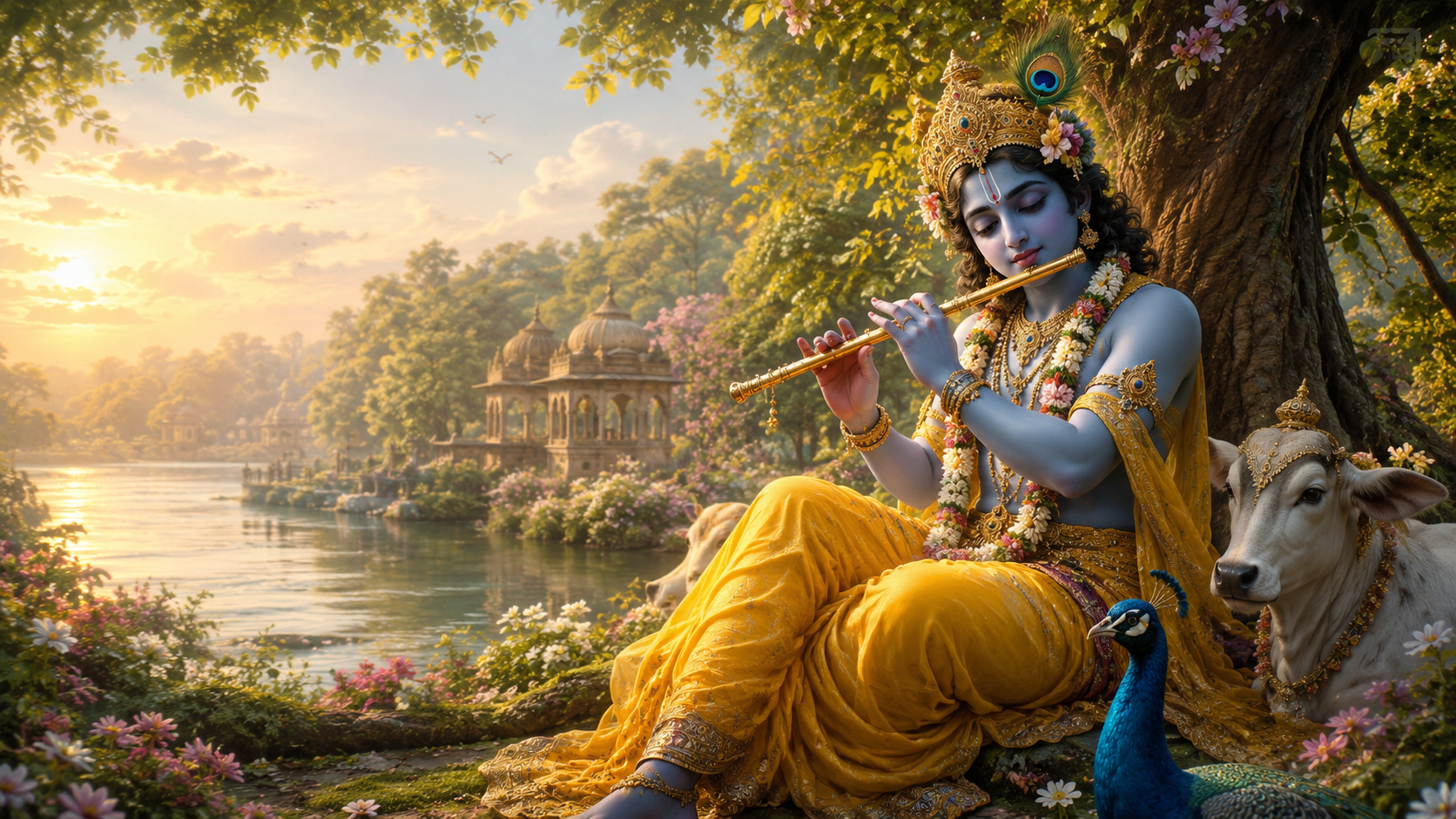
Every Janmashtami, temples and homes come alive with kirtans, Krishna leelas, jhankis, fasting, worship, and celebration. We hear about the little Krishna who stole butter, played with His cowherd friends, enchanted Braj with His flute, and allowed Mother Yashoda to chase Him through the courtyard.
These leelas attract us, but they also raise a deeper question.
How can we develop genuine love for Krishna?
Can love for God actually be cultivated? Or must we simply wait for it to arise someday?
The path of bhakti gives us a practical answer. Love grows when Krishna ceases to remain only a distant conception of “God” and we begin to recognize our personal relationship with Him.
Krishna Is Already Ours
We naturally become attached to people whom we consider our own.
A mother thinks, “This is my child.” A child thinks, “This is my mother.” We say, “my family,” “my friend,” or “my spouse.” The feeling of mine creates closeness.
The same principle can be directed toward God. But in Krishna’s case, this relationship is not something we need to invent.
Krishna reveals in the Bhagavad Gita:
“mamaivānśho jīva-loke jīva-bhūtaḥ sanātanaḥ”
Translation: The embodied souls in this material world are My eternal fragmental parts.
📖 Bhagavad Gita 15.7 — Read in Bhagavad Gita ↗
We are eternal souls, and Krishna is our eternal source. Our relationship with Him existed before the relationships of this present life and will continue beyond them.
Yet this truth is easy to forget. God can remain in our minds as the Supreme Being who created the universe, controls everything, and is worthy of our reverence. All of that is true. But if our awareness stops there, Krishna may still feel far away.
Bhakti invites us to go closer. We can begin cultivating the thought: Krishna is mine.
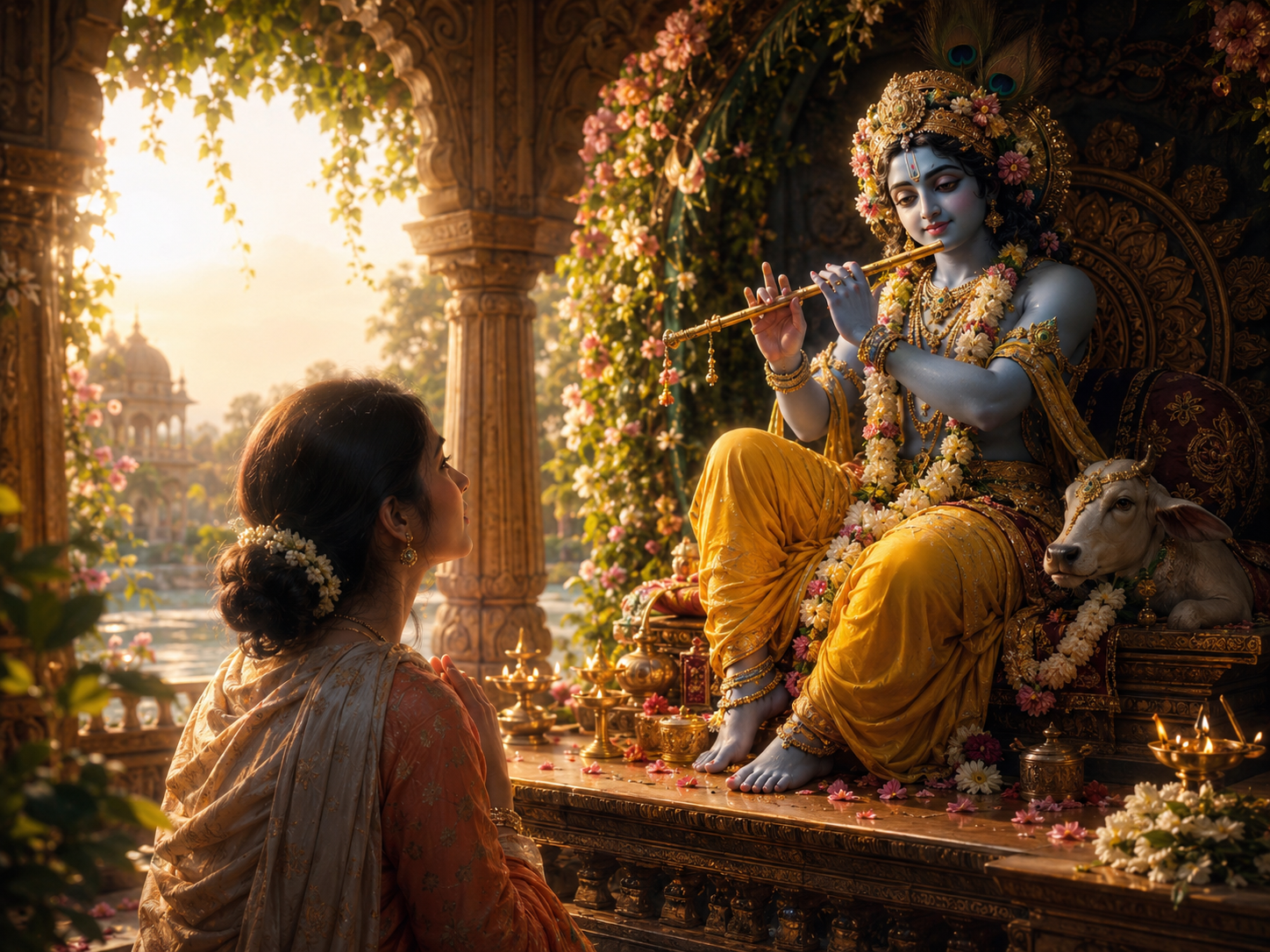
From Reverence to Relationship
Imagine a king. To the people of his kingdom, he is powerful and majestic. They may approach him formally and see him from a distance.
But his personal servants have greater access to him and interact with him directly. His close friends can speak to him with familiarity. His children may play in his lap and call him father. His queen knows him in a more intimate still.
The king is the same, but the relationship changes the interaction.
Our relationship with God can also carry different levels of intimacy.
The bhakti tradition describes five primary bhavs, or devotional sentiments, through which we can relate to God: Shanta, Dasya, Sakhya, Vatsalya, and Madhurya Bhav.
Krishna accepts the sentiment with which the devotee approaches Him. In the Bhagavad Gita, He says:
“ye yathā māṁ prapadyante tāns tathaiva bhajāmyaham”
Translation: In whatever way people surrender unto Me, I reciprocate accordingly.
📖 Bhagavad Gita 4.11 — Read in Bhagavad Gita ↗
The leelas of Krishna allow us to see what these relationships can actually look like.
Shanta Bhav: Beholding the Greatness of God
In Shanta Bhav, the devotee relates to God with peace, reverence, and awareness of His greatness.
There is admiration and devotion, but a certain distance remains. Krishna is understood as the Supreme Lord—the creator and controller of countless universes.
This awareness has its place. Yet Krishna does not restrict us to worshipping Him from afar. The other bhavs bring increasing intimacy into the relationship.
Dasya Bhav: “Let Me Serve You”
In Dasya Bhav, the relationship becomes personal: Krishna is my Master, and I am His servant.
Now devotion expresses itself through service.
Instead of approaching God primarily with “What can You do for me?”, the heart gradually learns to ask, “What can be done for Your pleasure?”
Even ordinary actions can begin to take on a different meaning when they are offered in a spirit of service.
The relationship has moved closer. And Krishna allows us to come closer still.
Sakhya Bhav: Krishna as Our Friend
What would it feel like to regard the Supreme Lord as a friend? The cowherd boys of Braj did exactly that.
The Srimad Bhagavatam gives us a glimpse of Krishna sitting with His friends for lunch in the forest. The boys brought food from their homes, showed one another what they had, tasted each other’s preparations, laughed, and made one another laugh.
“bibhrad veṇuṁ jaṭhara-paṭayoḥ śṛṅga-vetre ca kakṣe
vāme pāṇau masṛṇa-kavalaṁ tat-phalāny aṅgulīṣu
tiṣṭhan madhye sva-parisuhṛdo hāsayan narmabhiḥ svaiḥ
svarge loke miṣati bubhuje yajña-bhug bāla-keliḥ”Translation: The One who receives the offerings of countless sacrifices sat in the forest with a flute tucked at His waist, eating with His friends and joining in their jokes.
📖 Srimad Bhagavatam 10.13.11
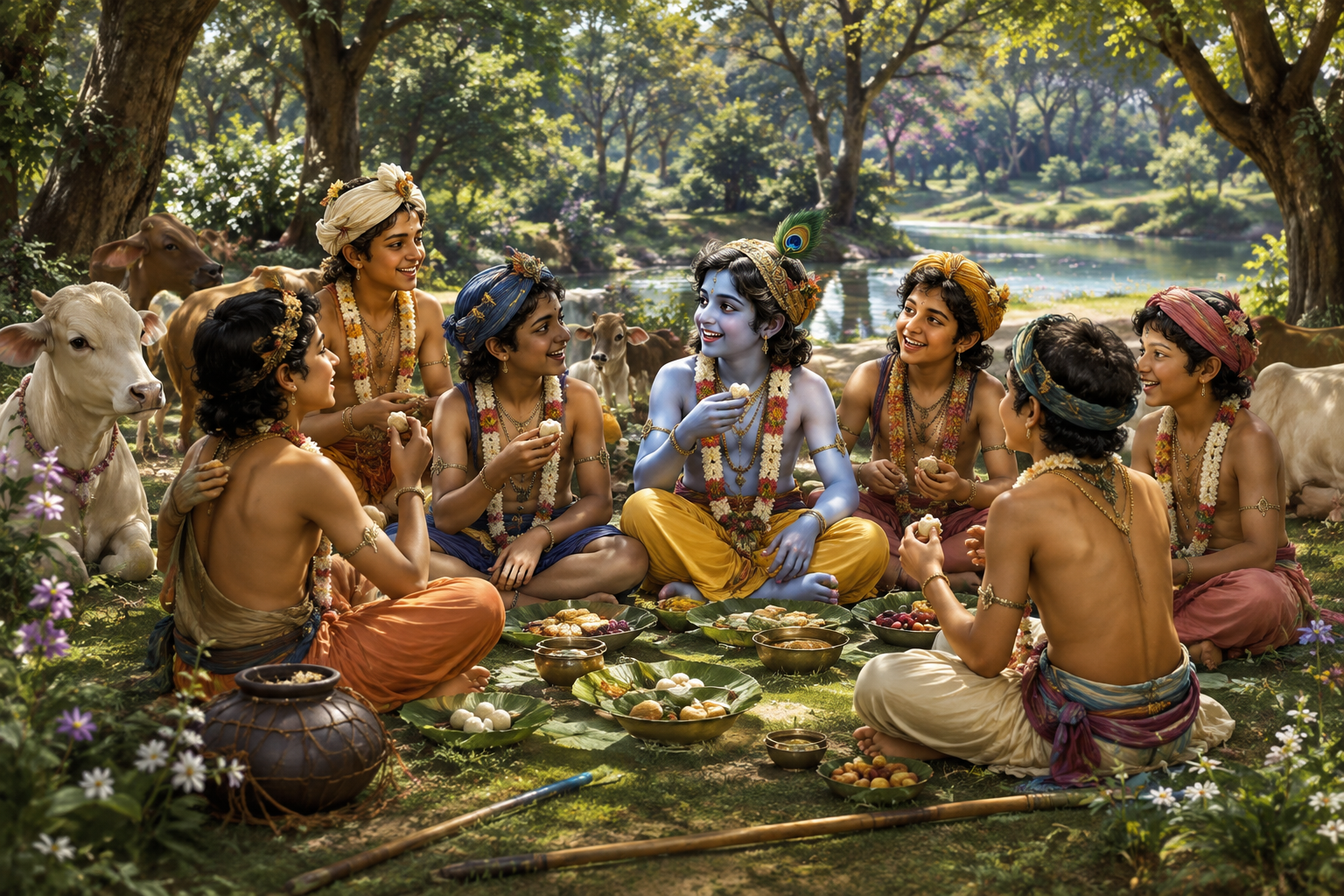
For the cowherd boys, Krishna was not an inaccessible Almighty. He was their companion.
Sakhya Bhav allows us to bring that sentiment into our own devotion. We can speak to Krishna inwardly, share our struggles with Him, seek His guidance, remember Him during the day, and cultivate the feeling that our eternal Friend is with us.
Vatsalya Bhav: When the Supreme Lord Becomes a Child
In Vatsalya Bhav, the devotee does not look to Krishna for protection. Instead, the devotee feels ‘I must take care of Krishna’.
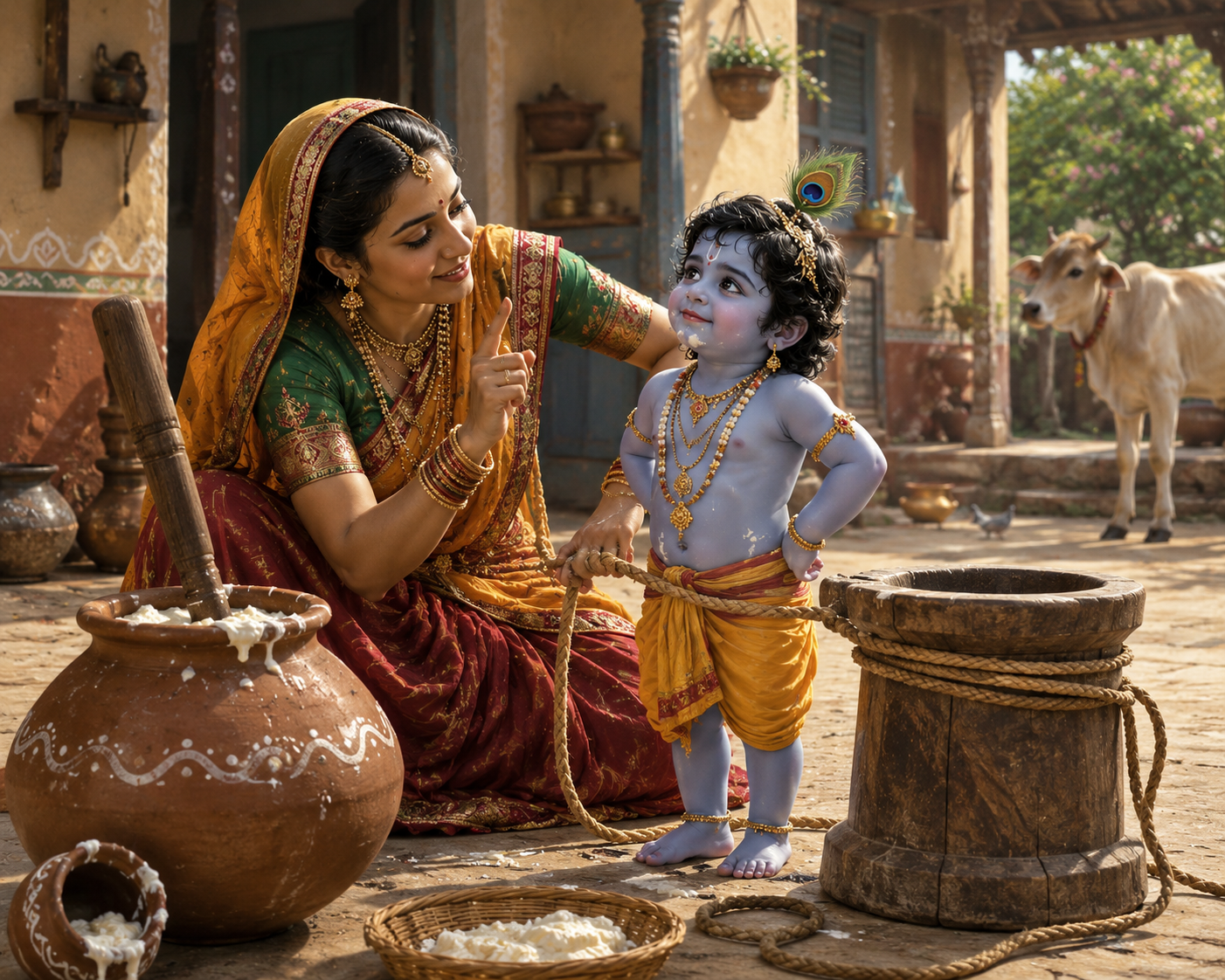
The Damodar Leela, where Mother Yashoda tries to bind little Krishna, expresses this so vividly.
One morning, Mother Yashoda was churning yogurt when Krishna came to her wanting to be fed. She lovingly took Him onto her lap. But when she noticed the milk on the stove beginning to boil over, she set Krishna down and went to attend to it.
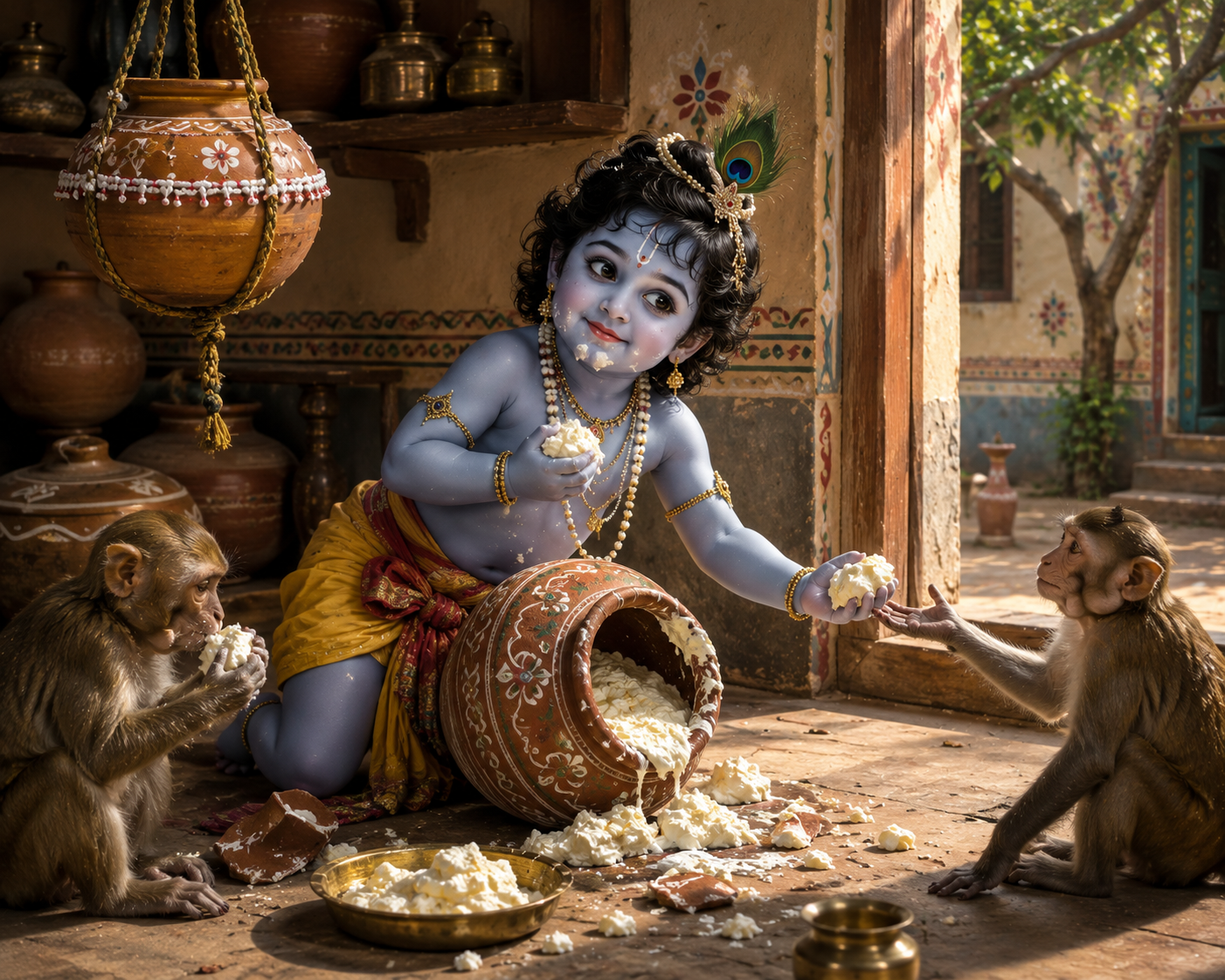
Little Krishna became upset. He broke the pot of yogurt and went to eat the freshly churned butter, sharing it with the monkeys. When Mother Yashoda discovered what He had done, she went looking for Him with a stick in her hand.
Krishna saw His mother coming and ran. Yashoda chased Him and finally caught Him. She then decided to tie Him to a wooden mortar so that He would not run away again.
But every rope she tried was two fingers too short. She brought more rope and joined it together, yet it remained two fingers short. She continued trying until she became tired and perspiration covered her body.
“sva-mātuḥ svinna-gātrāyā
visrasta-kabara-srajaḥ
dṛṣṭvā pariśramaṁ kṛṣṇaḥ
kṛpayāsīt sva-bandhane”Translation: Seeing His mother’s effort, Krishna finally allowed Himself to be bound.
📖 Srimad Bhagavatam 10.9.18
Consider the scene for a moment. The Lord whom no material force can bind stands before His mother and lets a simple rope go around His little waist because He chooses to submit to her love.
This is one of Krishna’s extraordinary qualities: the Supreme Lord allows Himself to become Bhakta Vashya—subservient to the love of His devotee.
Madhurya Bhav: Krishna as the Beloved
In Madhurya Bhav, the devotee relates to Krishna as the beloved.
The gopis of Braj are among the highest examples of this selfless devotion. Their minds were absorbed in Krishna—not for worldly gain, protection, or liberation, but for Krishna Himself.
The Srimad Bhagavatam gives us another glimpse into their love.
“barhāpīḍaṁ naṭa-vara-vapuḥ karṇayoḥ karṇikāraṁ
bibhrad vāsaḥ kanaka-kapiśaṁ vaijayantīṁ ca mālām
randhrān veṇor adhara-sudhayāpūrayan gopa-vṛndair
vṛndāraṇyaṁ sva-pada-ramaṇaṁ prāviśad gīta-kīrtiḥ”Translation: Krishna enters the forests of Vrindavan with Balaram and the cowherd boys and begins playing His flute. The sound reaches the gopis, and their minds immediately turn toward Krishna. They begin speaking with one another about His flute, His form, His movements, and the fortune of all those who are able to behold Him.
📖 Srimad Bhagavatam 10.21.5
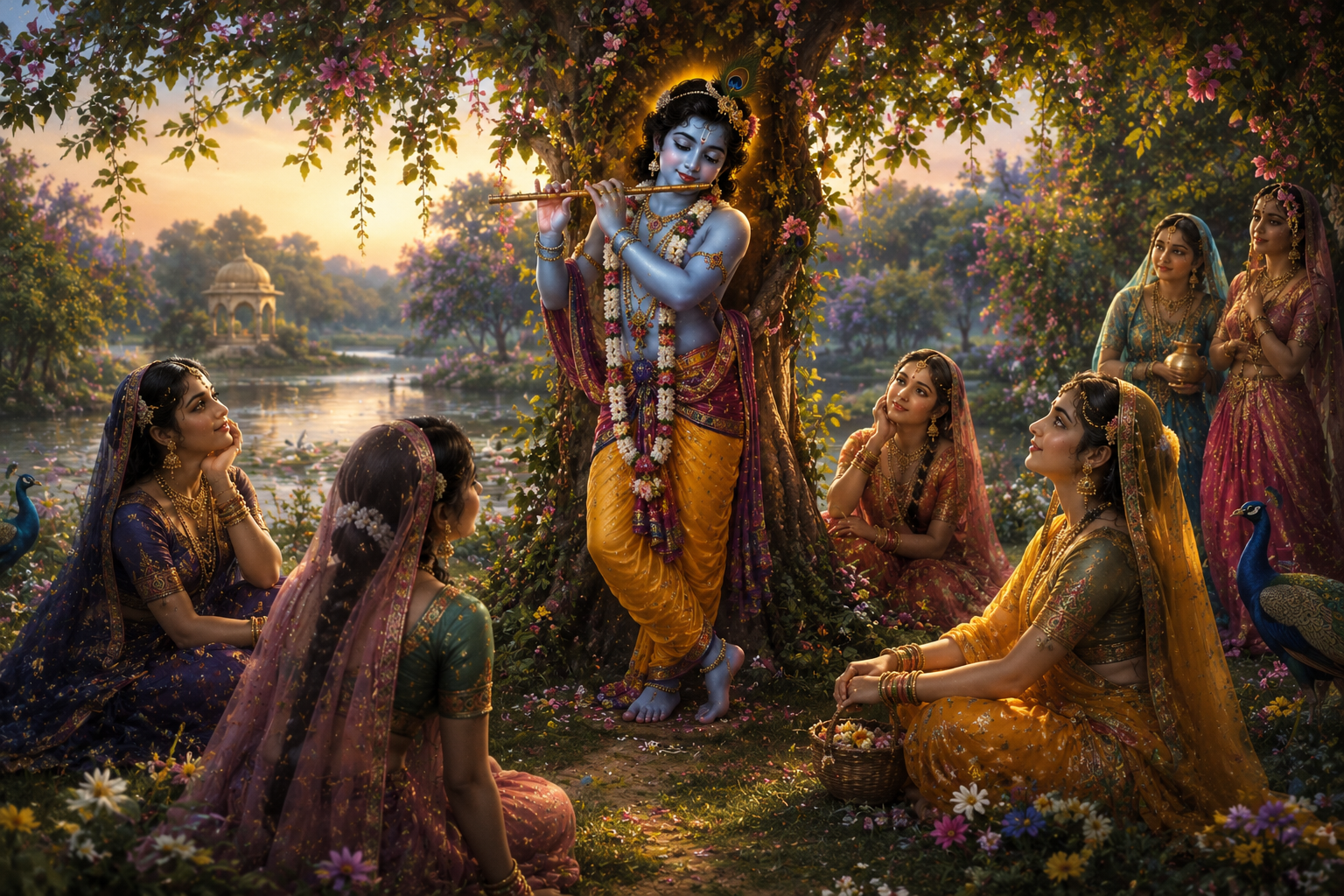
A sound was enough to carry their minds to Him.
This is the nature of attachment. Whatever we love repeatedly enters our thoughts.
Bhakti gradually reverses the direction in which our mind has been accustomed to moving. Instead of repeatedly thinking about the objects and relationships of the world, we give the mind Krishna to think about.
Why Is Krishna So Easy to Love?
Here we come to something special about Krishna.
The mind needs something upon which to rest. An abstract instruction to “think about God” can be difficult. Krishna makes devotion easier by giving the mind His form, qualities, names, relationships, and leelas.
His personality contains forms of sweetness that especially attract the heart:
Bal Leela Madhuri — The Sweetness of His Childhood Pastimes
Little Krishna crawls through the home of Nanda and Yashoda. He steals butter. He breaks pots. He runs when His mother comes looking for Him. He plays tricks on the gopis and then looks at them with complete innocence.
Knowing that He is the Supreme Lord makes these leelas even more striking.
The Almighty has chosen to become a little child whom a mother can carry, feed, scold, and embrace.
Roop Madhuri — The Sweetness of His Form
Krishna’s form itself becomes an object of loving meditation—His peacock feather, curling hair, gentle smile, yellow garments, and threefold-bending tribhangi posture.
Rather than allowing the mind to wander wherever it wishes, we can consciously give it Krishna’s form to contemplate.
Murali Madhuri — The Sweetness of His Flute
Krishna’s flute is inseparable from the mood of Vrindavan.
The Bhagavatam describes how its sound captivates the residents of Braj. The gopis hear it and become absorbed in Krishna. The peacocks dance. The creatures of the forest turn their attention toward Him.
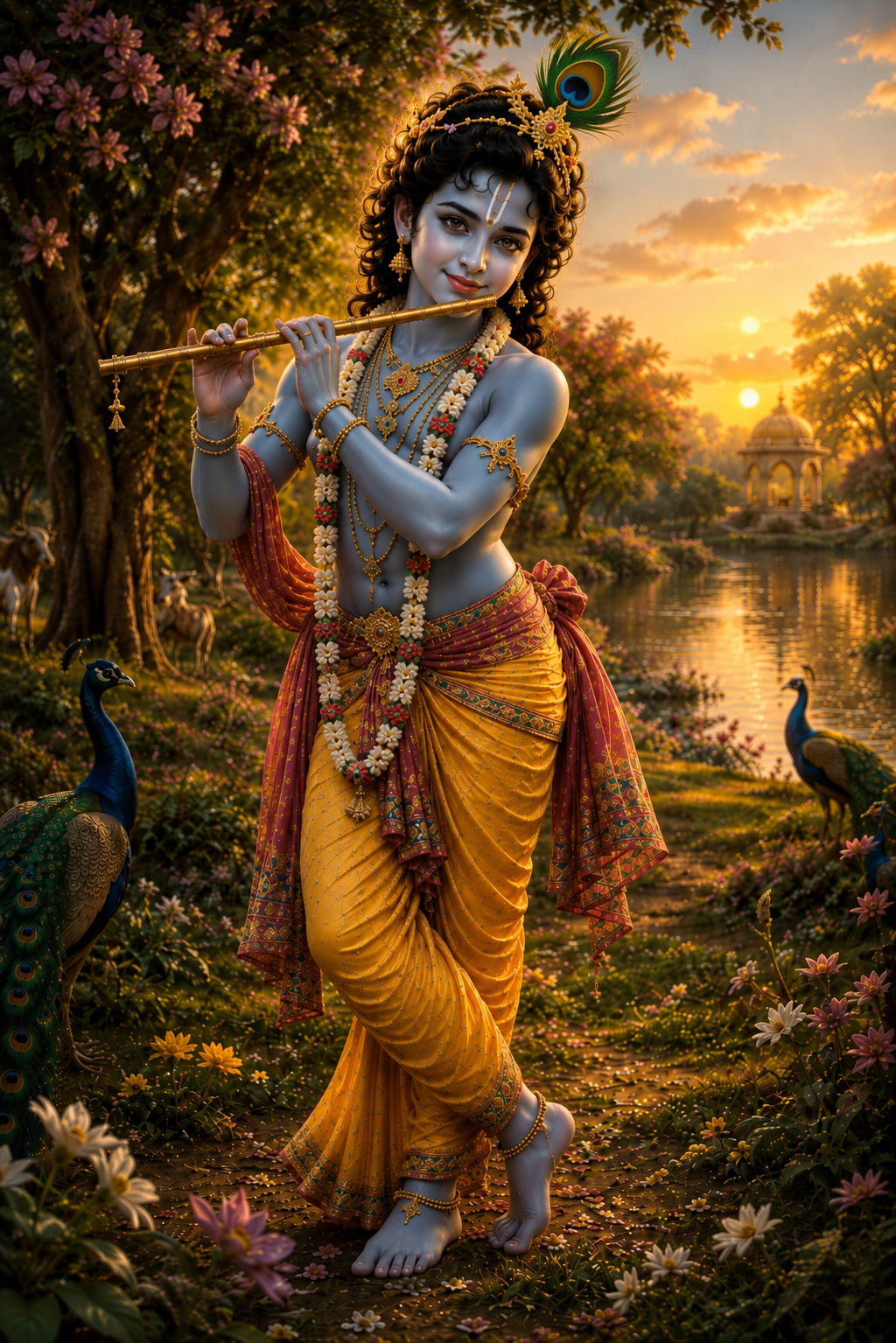
The flute becomes another doorway through which the mind enters remembrance of Krishna.
Prem Madhuri — The Sweetness of Being Conquered by Love
Perhaps the most endearing of all is Krishna’s willingness to become controlled by the love of His devotees.
The Supreme Lord becomes Yashoda’s naughty child. He becomes the cowherd boys’ playmate. He becomes Arjun’s friend and charioteer. He responds to the loving sentiments of His devotees.
Krishna possesses infinite power, yet in His intimate leelas, He does not insist on displaying it. He allows love to take precedence.
Fill the Mind with Krishna
Developing love for Krishna therefore does not begin with forcing an emotion. It begins by repeatedly bringing Him into the mind.
We can hear His leelas. We can chant His names. We can meditate upon His form. We can think of ourselves serving Him. At another time, the mind may be drawn to walking beside Him as a friend, caring for little Bal Gopal, or simply sitting in Vrindavan listening to His flute.
The bhav that draws the mind toward Krishna can become part of our devotional remembrance.
Over time, what we repeatedly contemplate begins to occupy a greater place in our heart.
Preparing the Heart for Divine Love
There is, however, an important distinction. Our present love for God is cultivated with a material mind, while divine love itself is bestowed by God through His grace when the heart becomes eligible to receive it.
Taking the mind toward Krishna purifies it. Hearing spiritual knowledge, chanting His names, remembering His pastimes, performing seva, and practicing devotion with the right sentiment gradually cleanse the heart.
Our task is to prepare the vessel. Krishna gives us every reason to keep trying, for the One we are seeking is not far away; He is already our eternal relative.
This Janmashtami, Get Closer to Krishna
Janmashtami is a beautiful opportunity to do more than remember that Krishna appeared on this earth thousands of years ago. It is an opportunity to bring Him closer into our own lives.
Listen to His leelas and picture them in the mind. Sing His names. Look at His form. Speak to Him. Serve Him. Try relating to Him in a bhav that draws the heart.
We can care for Krishna as little Bal Gopal, walk beside Him as our friend, serve Him as our Master, or simply hold the feeling that He is our Krishna.
This Janmashtami, step into the atmosphere of Vrindavan and spend time hearing, chanting, remembering, and celebrating Shree Krishna.
Celebrate Krishna Janmashtami at Radha Krishna Temple of North Carolina
Join us at Radha Krishna Temple of North Carolina for our Janmashtami celebrations and experience an evening centered on the names, leelas, and devotion of Shree Krishna.
Date: Sept 4th - Sept 6th
Venue: Radha Krishna Temple of North Carolina