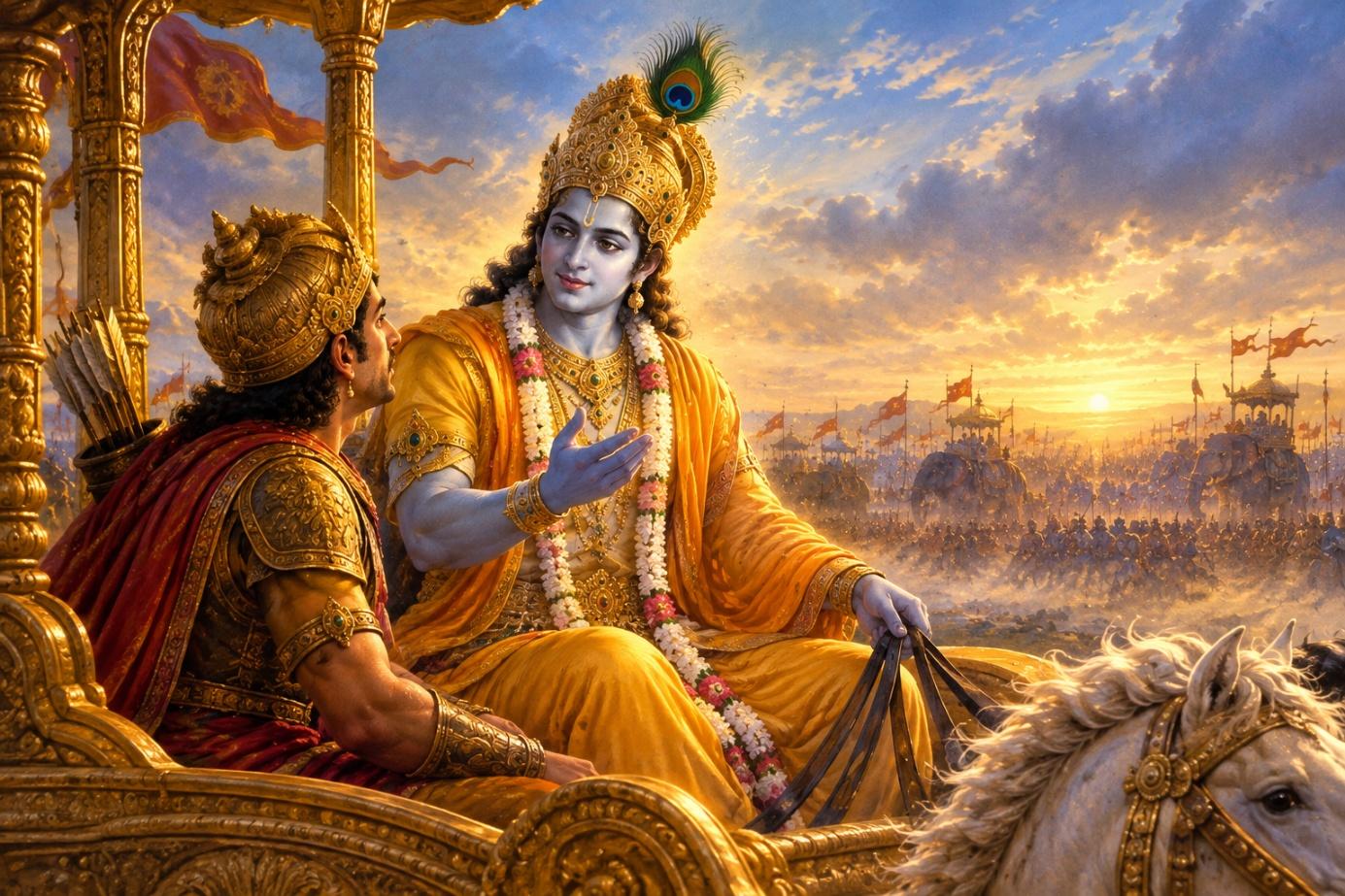
Diwali, also known as Deepavali, means “rows of lamps”. It is the most significant and widely celebrated festival in Hinduism across the nations. Its spiritual and religious importance is rooted in several sacred traditions. The festival commemorates the joyous return of Lord Ram, Mother Sita, and Lakshman ji to Ayodhya after fourteen years of exile, following Lord Ram’s victory over Ravan, symbolizing the triumph of good over evil. To celebrate their homecoming, the people of Ayodhya illuminated the entire city with countless diyas. It is also associated with the divine appearance of Goddess Lakshmi during the Samudra Manthan, symbolizing prosperity with auspiciousness.
On this day, Lord Krishna defeated the demon Narakasura, symbolizing the triumph over arrogance and cruelty. The festival also honors Lord Vishnu’s Vaman avatar and King Bali’s act of charity, highlighting the virtues of humility and surrender to God.
Celebrated on MahaAmavasya, the darkest night of the lunar month of Kartik, Diwali carries a profound spiritual message: to awaken the light of divine knowledge within ourselves and spread its radiance to dispel darkness both within and around us.
Beyond its religious significance, Diwali brings families and communities together through Faith, Fellowship, and Food. Prayers, festive decorations, colorful rangoli, the exchange of sweets, acts of charity, and the lighting of diyas make the celebrations all the more joyous and memorable.
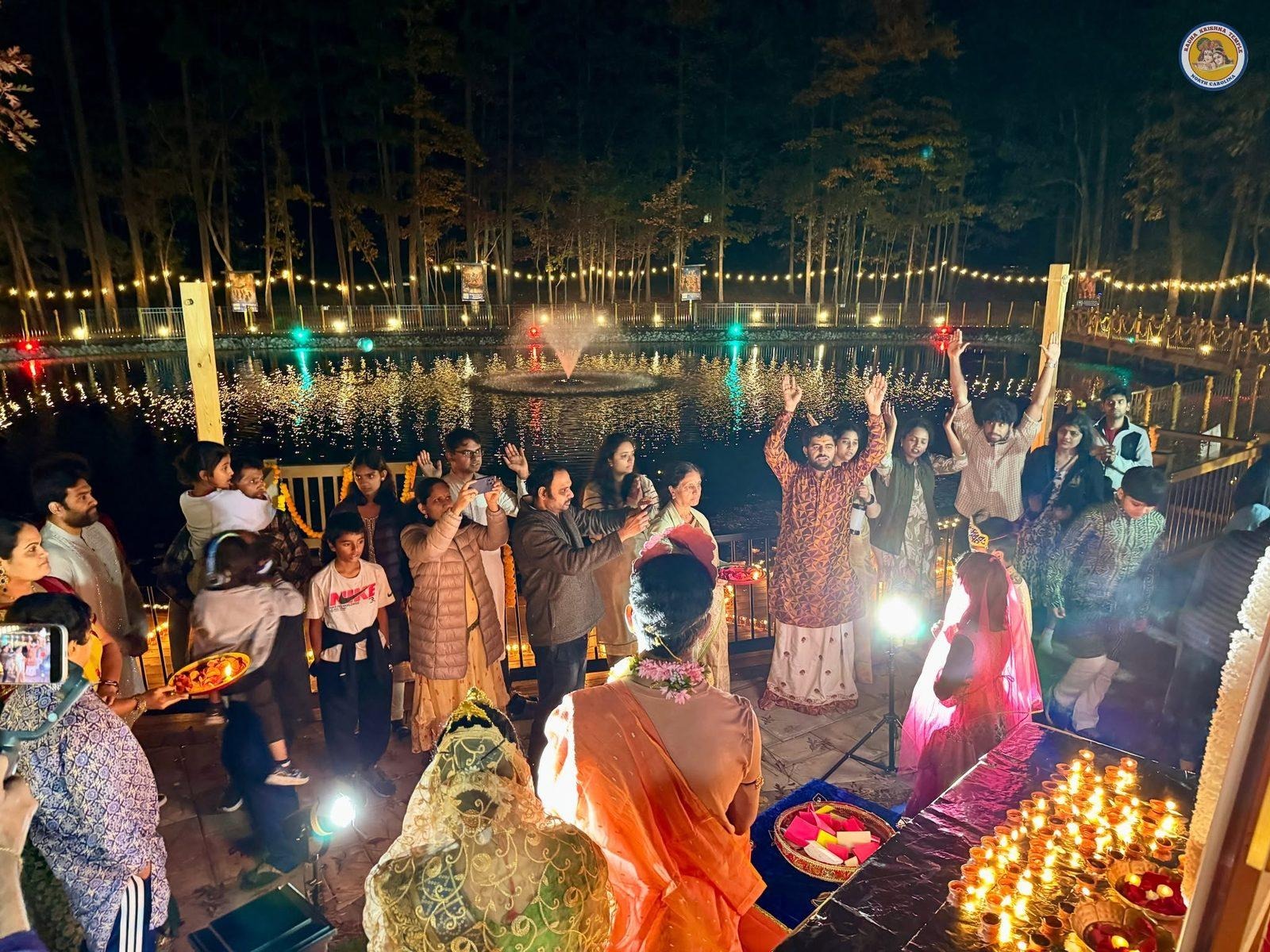
One such joyous celebration took place at the Radha Krishna Temple of North Carolina (RKTNC), where devotees lovingly transformed the temple grounds and the adjoining Yamuna Ma Ghat into a breathtaking spectacle of flowers and glowing diyas. Recreating the joy of Ayodhya, the temple hosted five days of Diwali festivities from November 6 to 10, 2026, with additional celebrations on November 15, bringing the spirit of Lord Ram’s homecoming alive in North Carolina.
Dhanteras
The five-day Diwali celebrations began on November 6 with a special Dhanteras Lakshmi Puja in the evening. The word Dhan means wealth, while Teras refers to the thirteenth lunar day of the Krishna Paksha (waning phase of the moon) in the month of Kartik. Marking the auspicious beginning of Diwali, devotees welcome Goddess Lakshmi to seek her blessings for prosperity and well-being.
In the beautifully decorated temple hall, devotees dressed in colorful traditional attire participated in the puja with deep reverence, while the temple priest guided them through the rituals and explained their spiritual significance.
Several other sacred traditions are also associated with Dhanteras. Lord Dhanvantari, the divine physician and an incarnation of Lord Vishnu, emerged from the cosmic ocean during the Samudra Manthan, carrying a pot of Amrit, the nectar of immortality. His appearance symbolizes health and longevity. Other traditions include purchasing gold, silver, or new household utensils as symbols of prosperity and new beginnings, and lighting a special diya, known as Yam Deepak, in honor of Yamraj, with prayers for the protection of family members from untimely death.
Chotti Diwali
The second day of the Diwali Mahotsav, November 7, unfolded with a wonderful array of devotional activities, creating a magical atmosphere. From engaging workshops and Ramayan-inspired games to soulful renditions of the Hanuman Chalisa, a grand Ram Leela, and the ceremonial lighting of 1,008 diyas, the festivities continued late into the night, keeping the joyous spirit of Ayodhya alive.
Diwali Kids & Youth Workshop
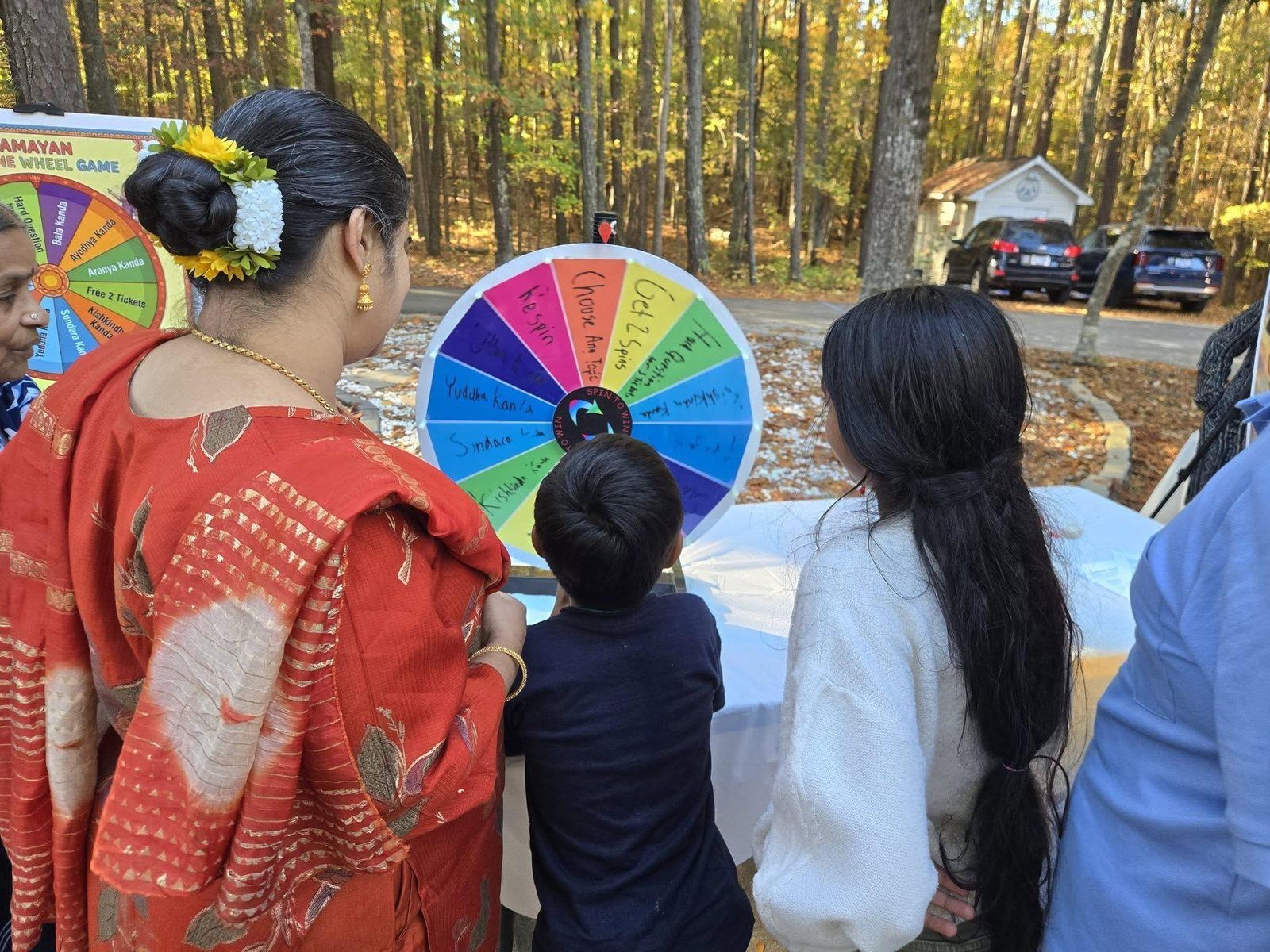
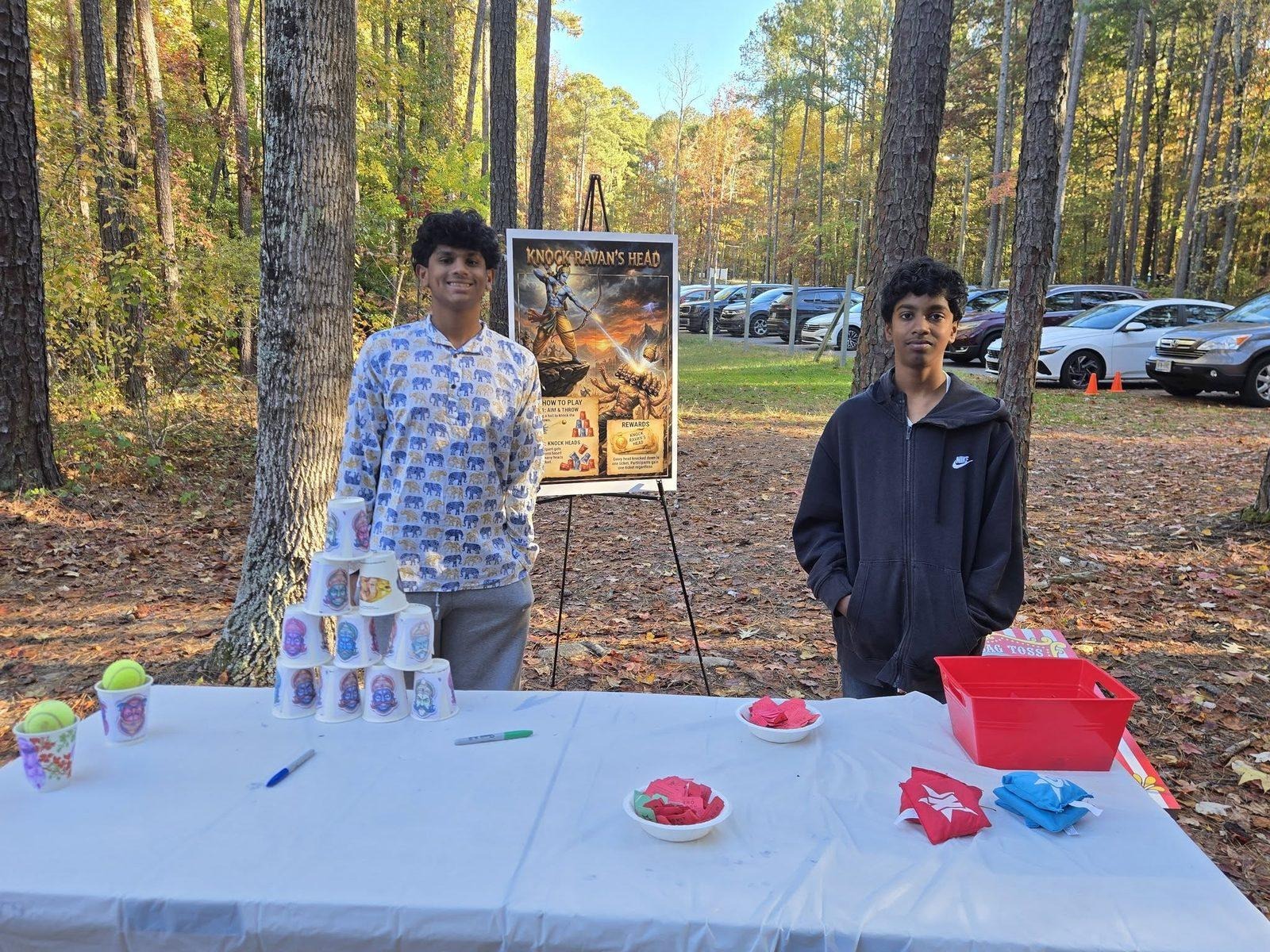
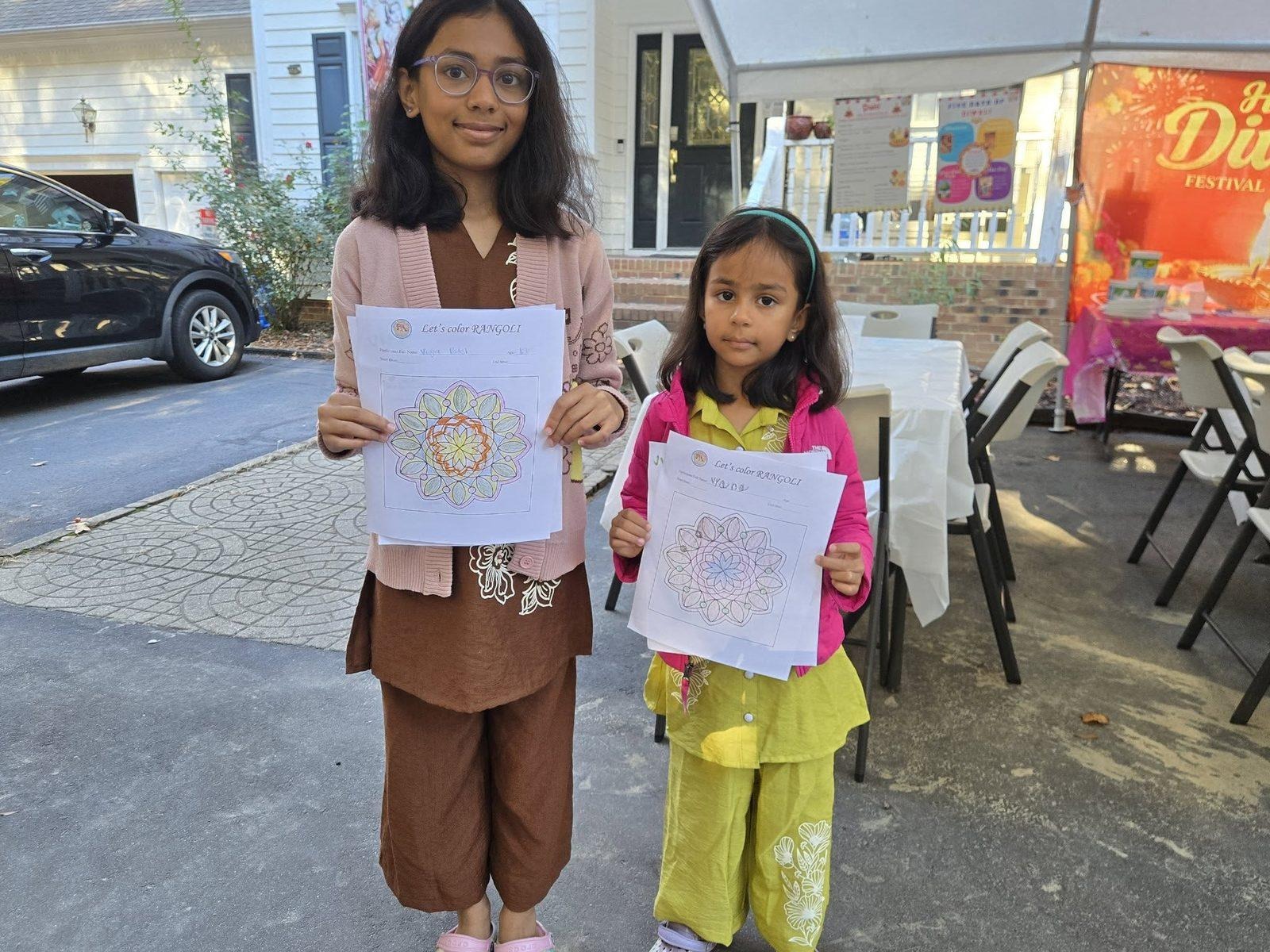
The celebration started in the afternoon with the workshop that engaged children in activities ranging from designing and decorating to creating colorful artwork, while connecting them with the cultural traditions of Diwali. A variety of Ramayan-themed games, including “Drop Ram Ji’s Ring,” “Ramayan Spin-the-Wheel,” and “Knock Ravan’s Head,” along with hands-on clay modeling, mandala coloring, rangoli coloring, and craft activities, added to the excitement.
Hanuman Chalisa Community Singing
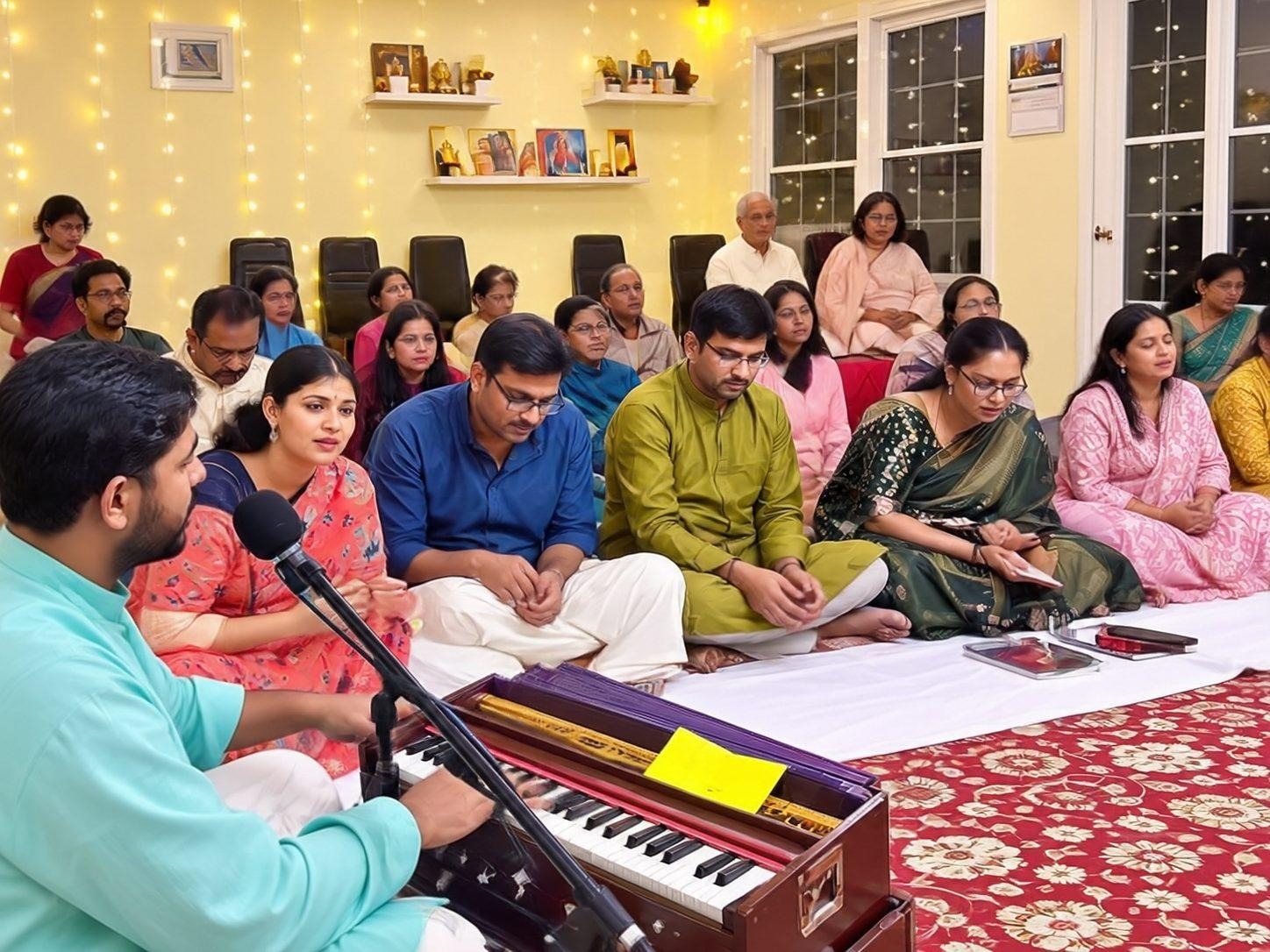
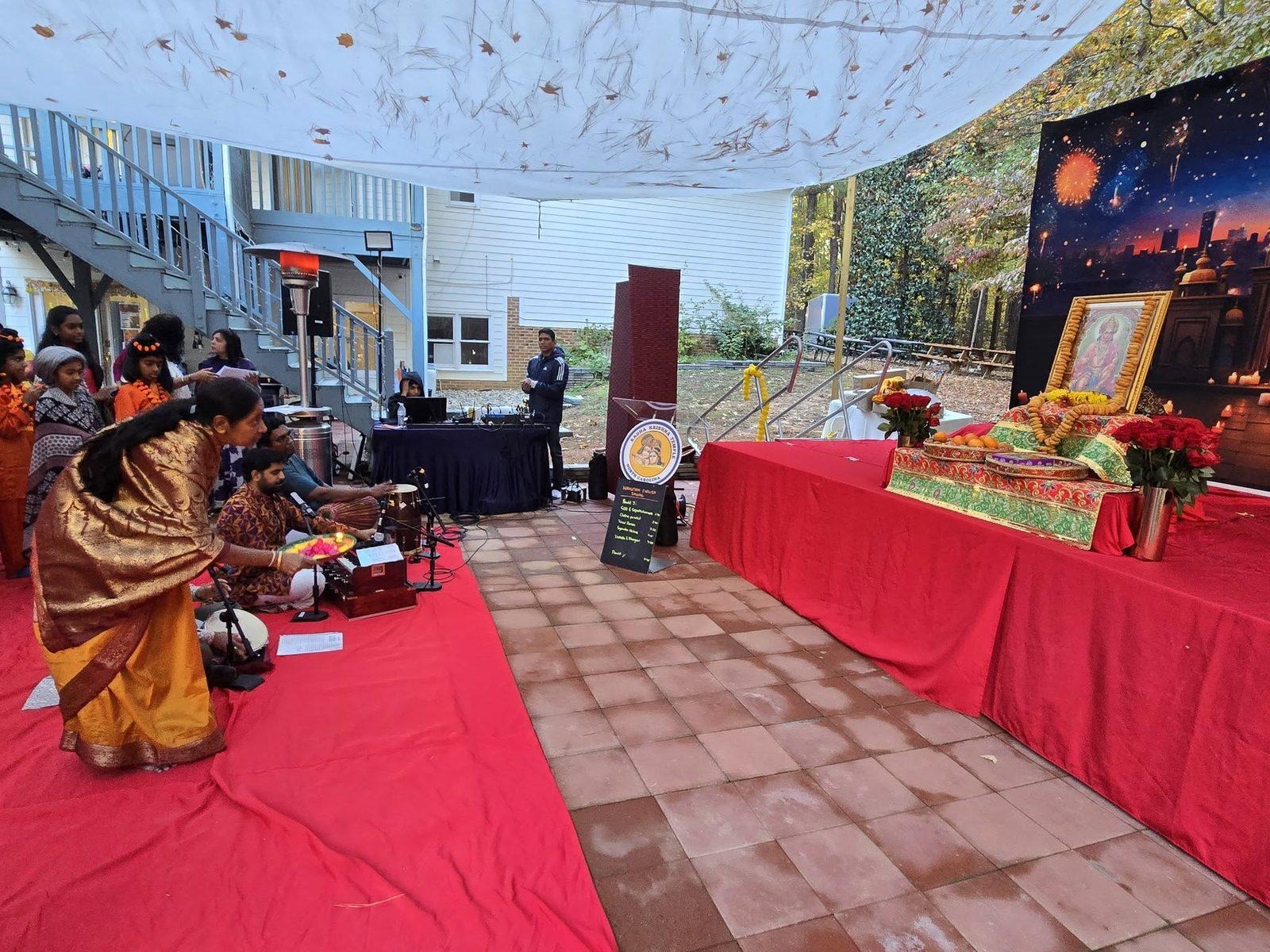
The community singing of the Hanuman Chalisa added a deeply devotional touch to the Chhoti Diwali celebrations. Composed by Goswami Tulsidas, the forty verses glorify Lord Hanuman’s extraordinary strength and devotion to Lord Ram. As devotees recited the Chalisa together, they sought Lord Hanuman’s blessings to deepen their devotion to Lord Ram, cultivate the spirit of selfless service and overcome obstacles in their spiritual journey.
Spectacular Ram Leela
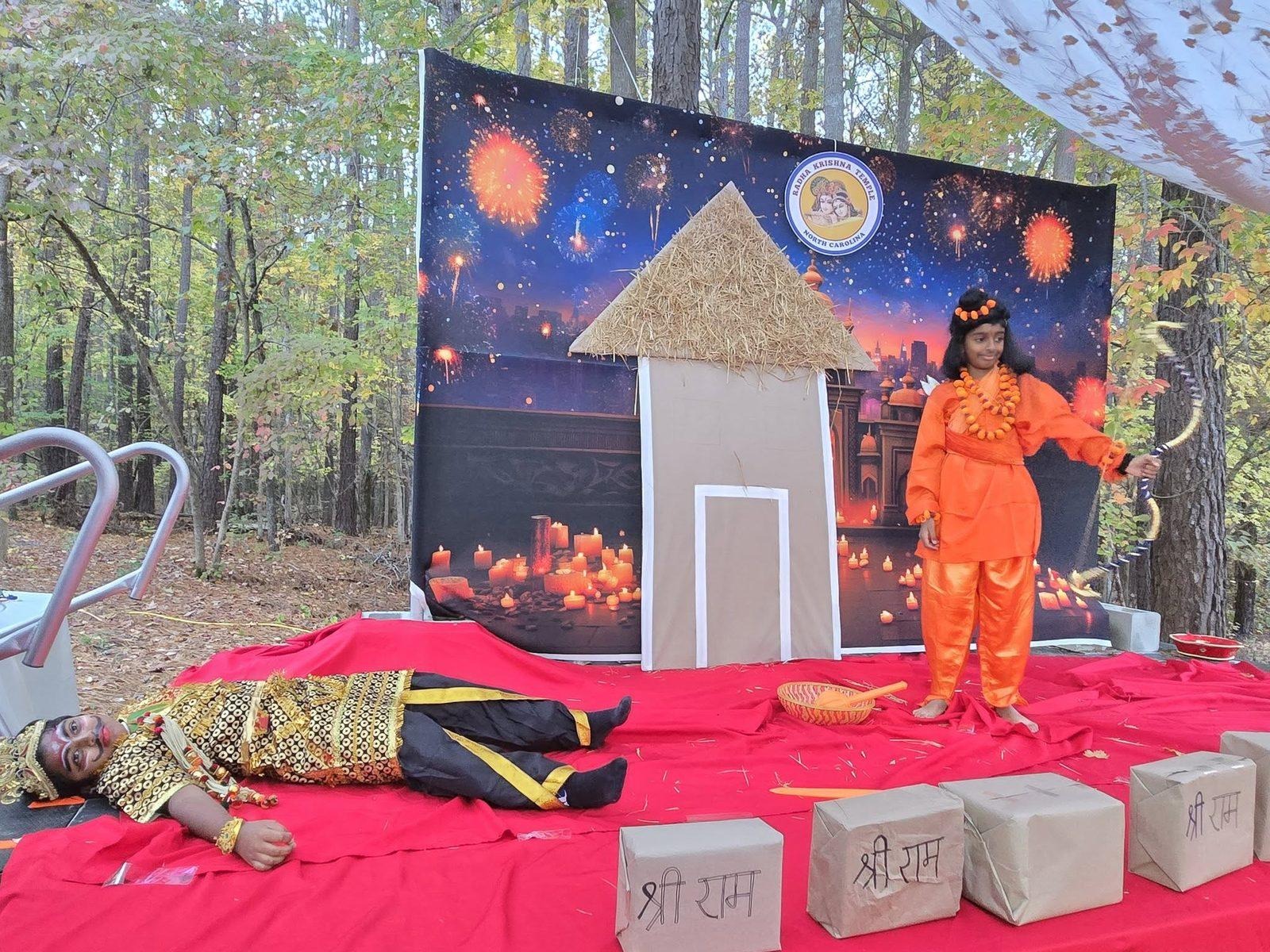
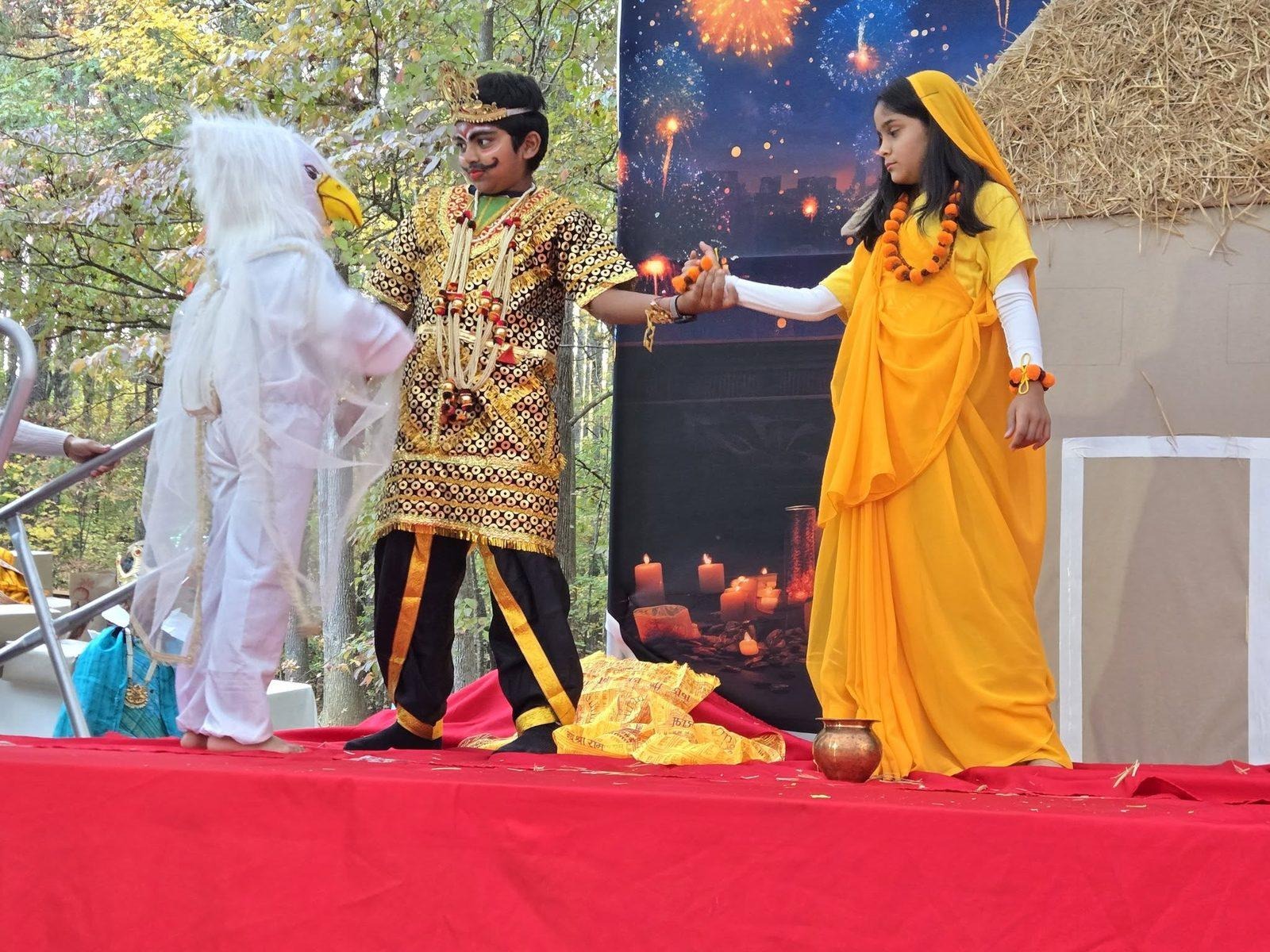
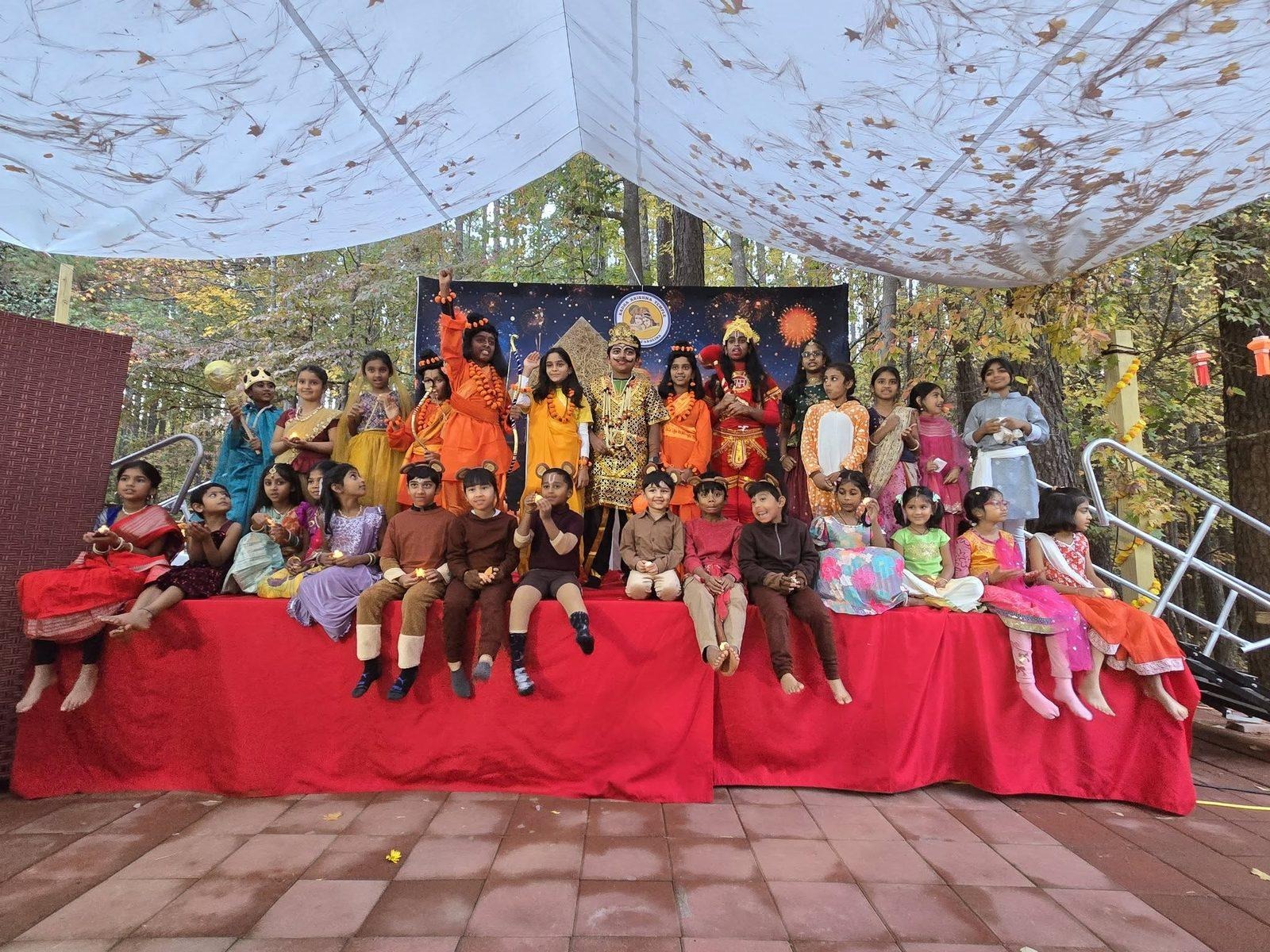
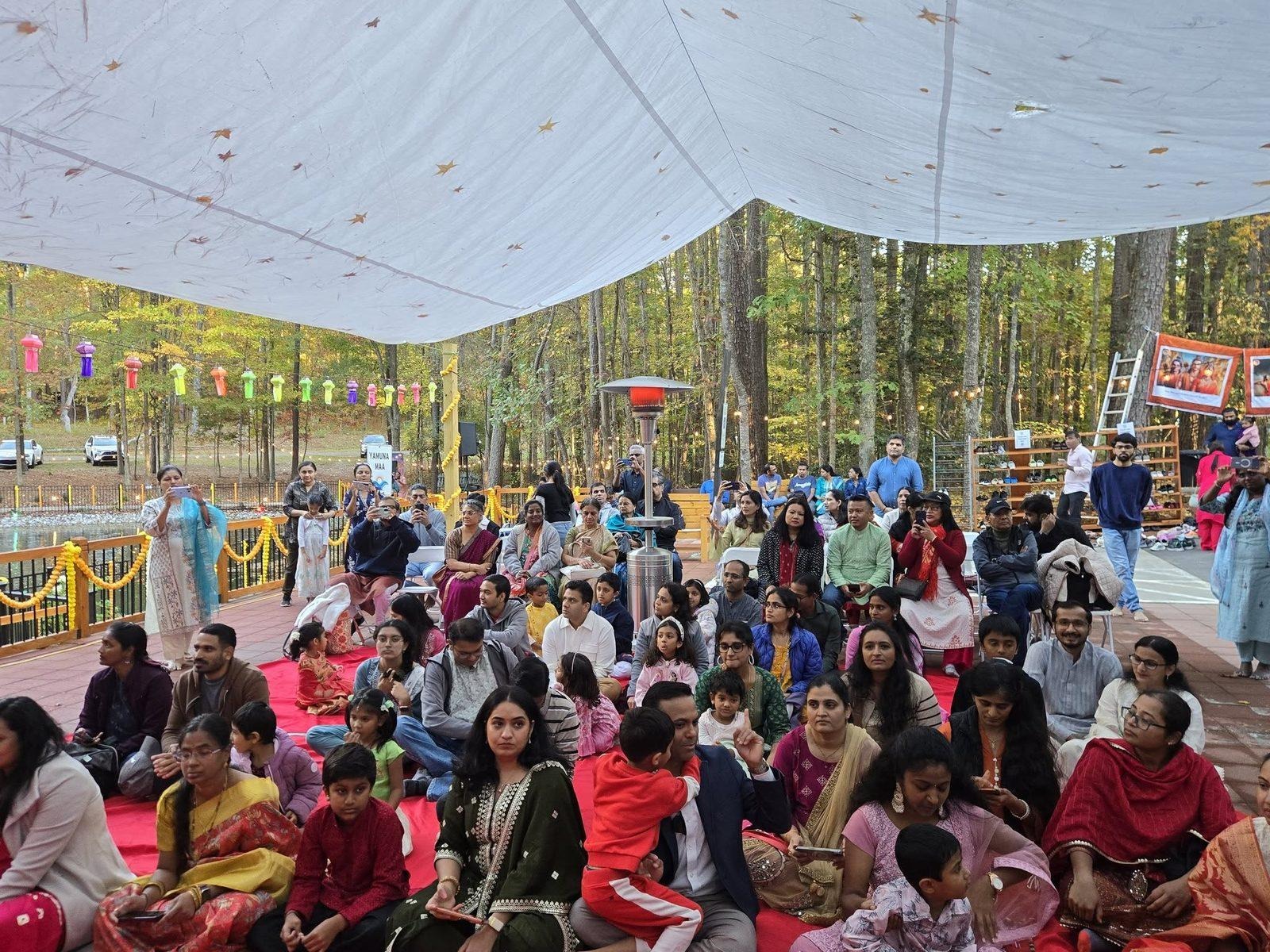
The children brought the timeless story of the Ramayan to life through skits depicting various episodes from the epic. Dressed as Lord Ram, Sita ji, Hanuman ji, Ravan, and other characters, the young performers drew cheers and applause from the audience. Colorful costumes, handmade props, and thoughtfully designed sets added charm to the performances. It was heartening to see so many children from the community participate with such enthusiasm.
Grand 1,008 Diyas Lighting Ceremony
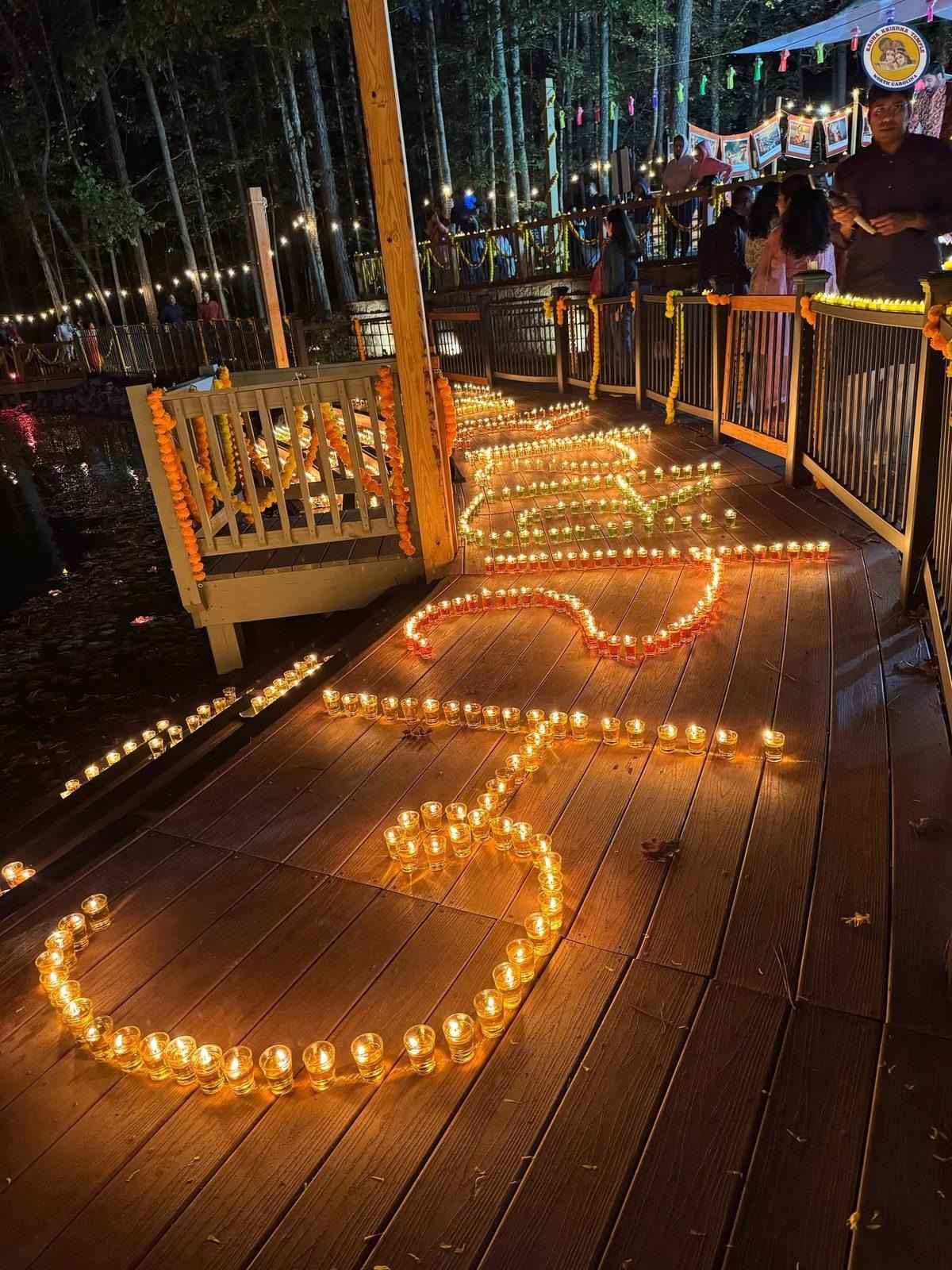
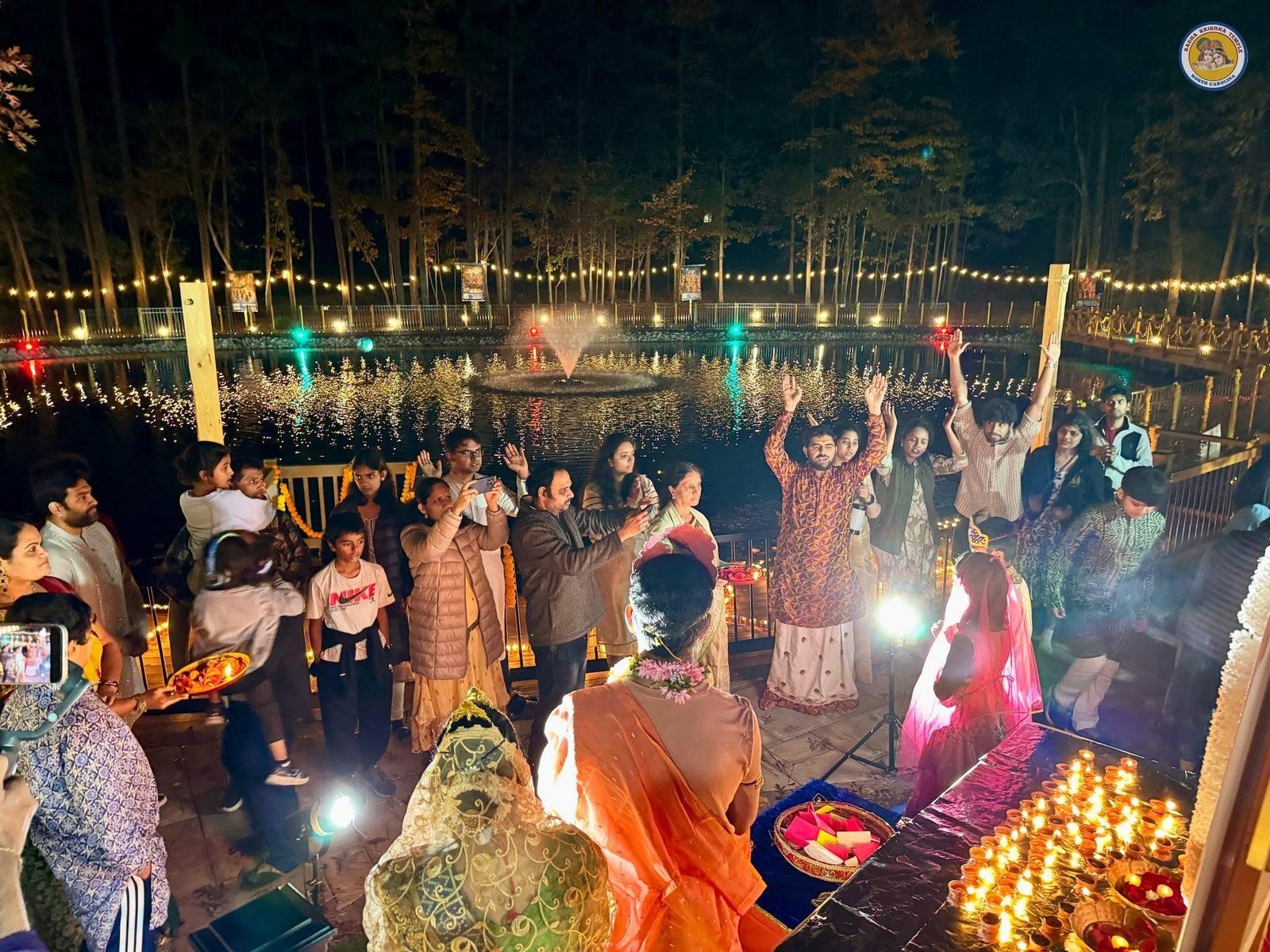
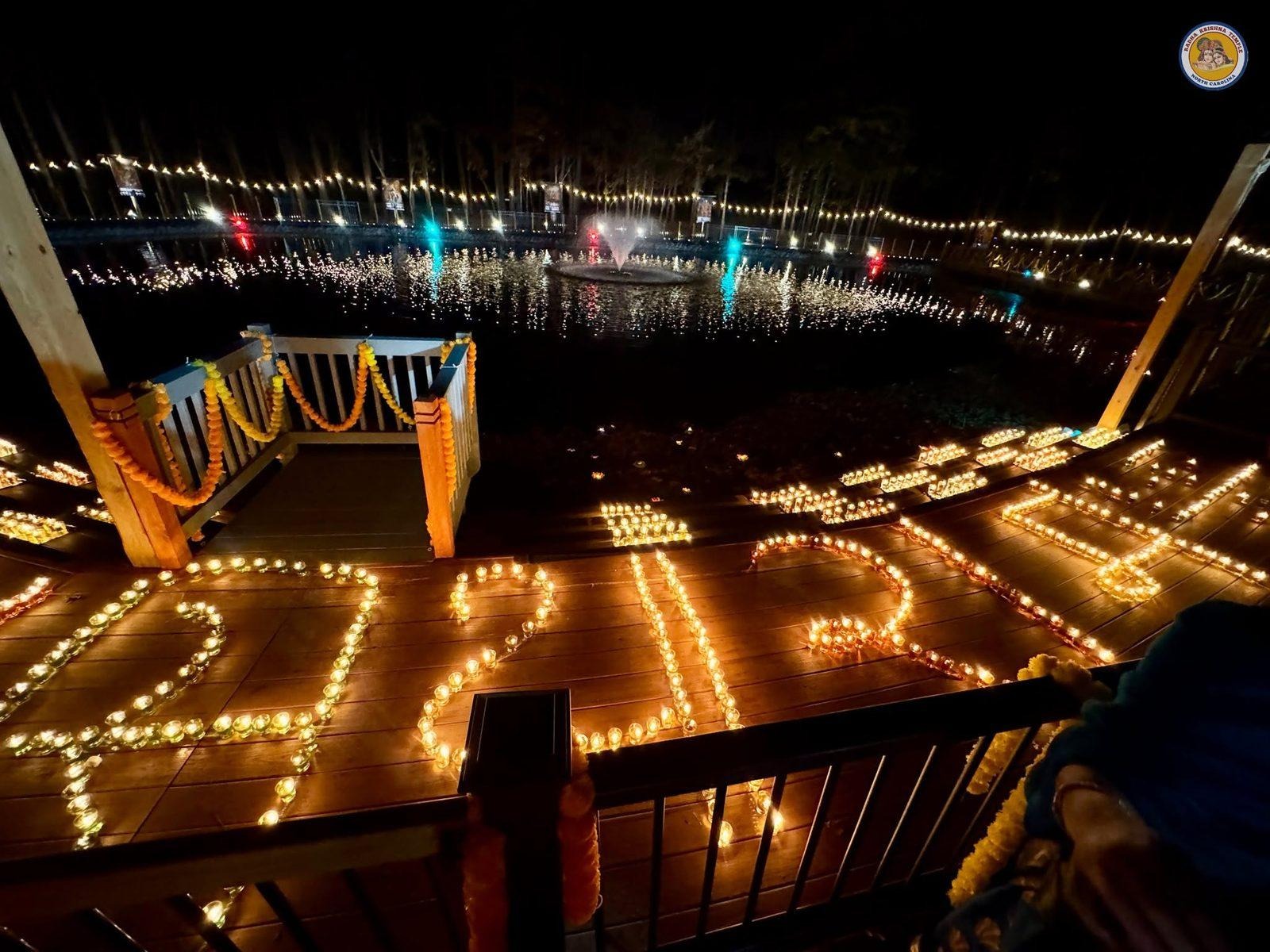
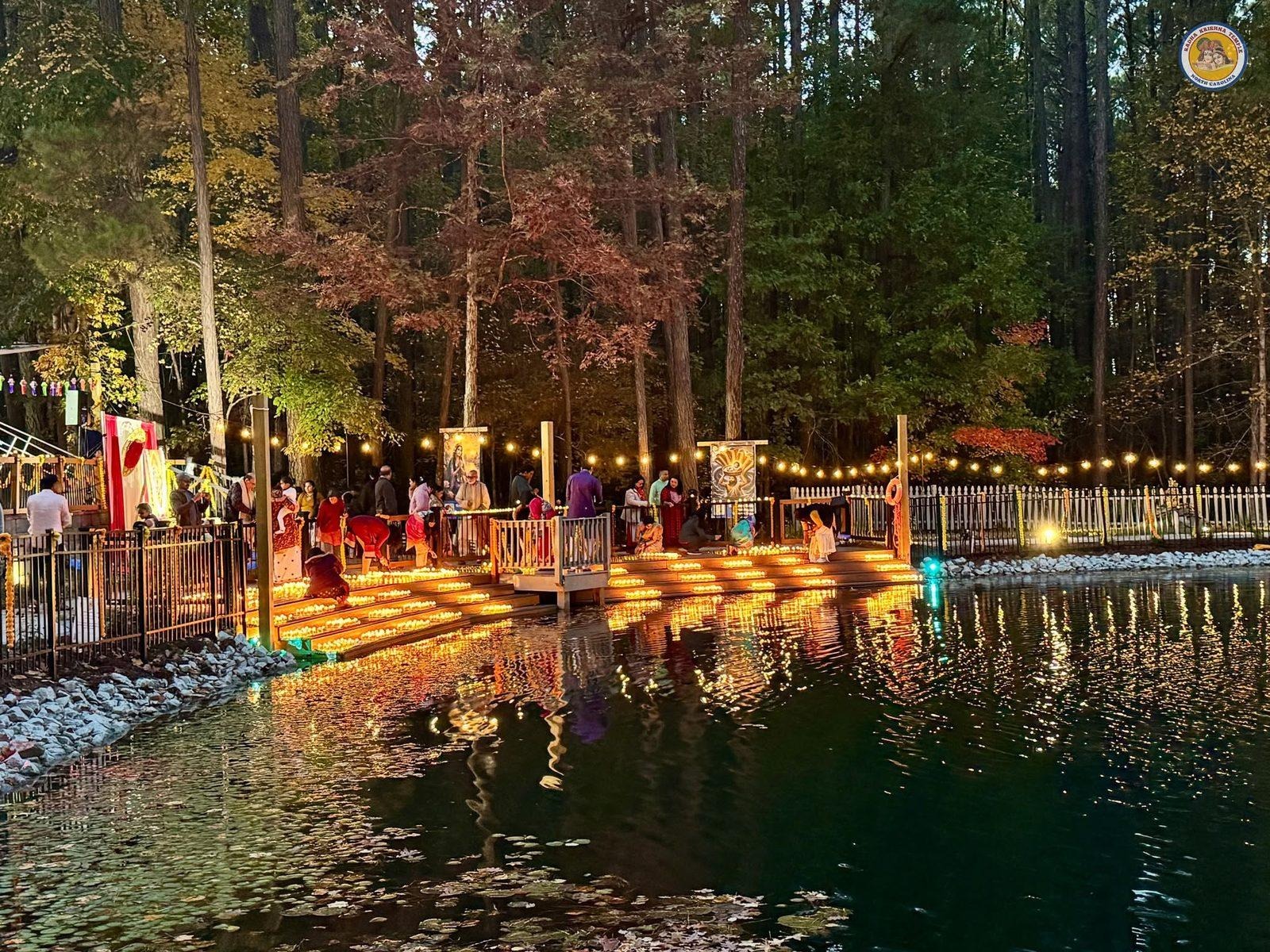
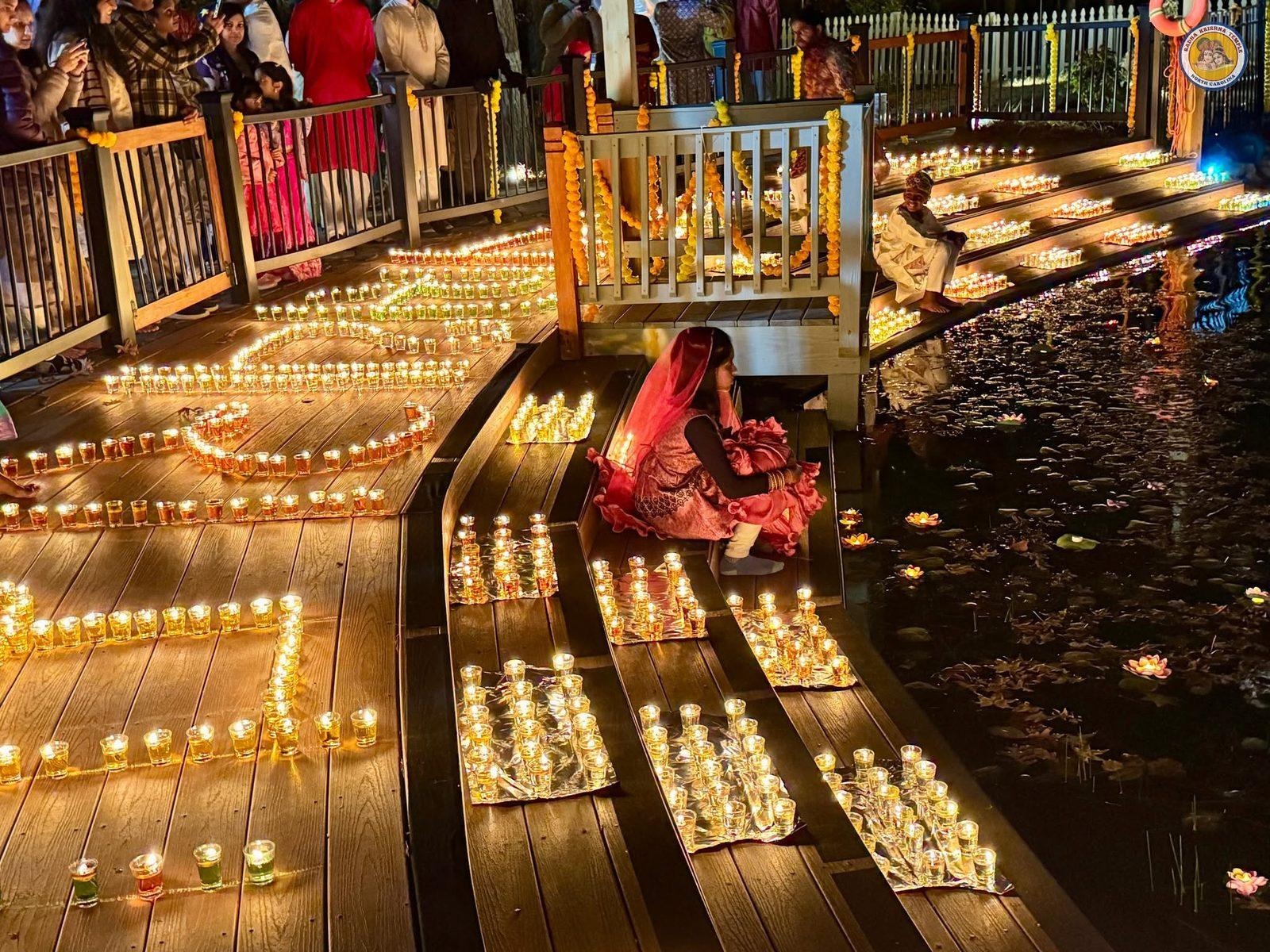
It was among the signature events of the celebration. The Yamuna Ghat was transformed into a breathtaking sight as hundreds of glowing diyas, arranged in intricate patterns and sacred designs, adorned the pathways and steps. As the wooden steps glowed with the warm light of the diyas, beautiful lotuses bloomed in the water, creating a magical atmosphere. It seemed as though nature itself had joined hands with the devotees, adding its own touch of beauty to the divine celebration.
The golden reflections of countless lights shimmered across the water, while the illuminated, colorful fountain added to the enchanting atmosphere.
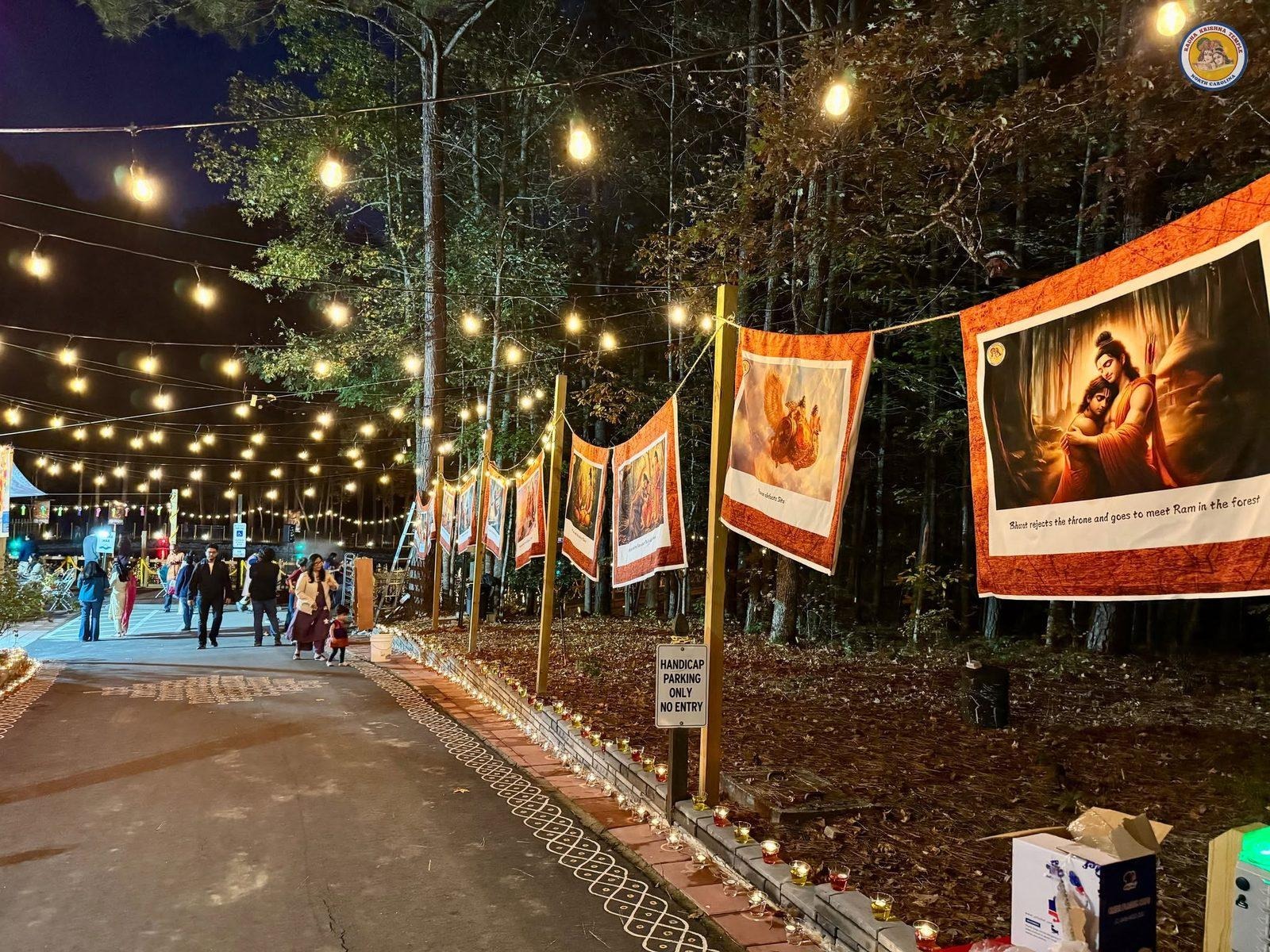
Beautiful marigold garlands decorated the railings, while a glowing pathway featured illustrations depicting episodes from the Ramayan, including the reunion of Bharat and Lord Ram in the forest, Jatayu Samvad, Shabari’s meeting with Lord Ram, and many more. Dressed in colorful traditional attire, devotees and families gathered along the ghat, offering prayers and lighting diyas, creating a beautiful kaleidoscope of lights and colors.
A Grand Welcome to Lord Ram & Mother Sita
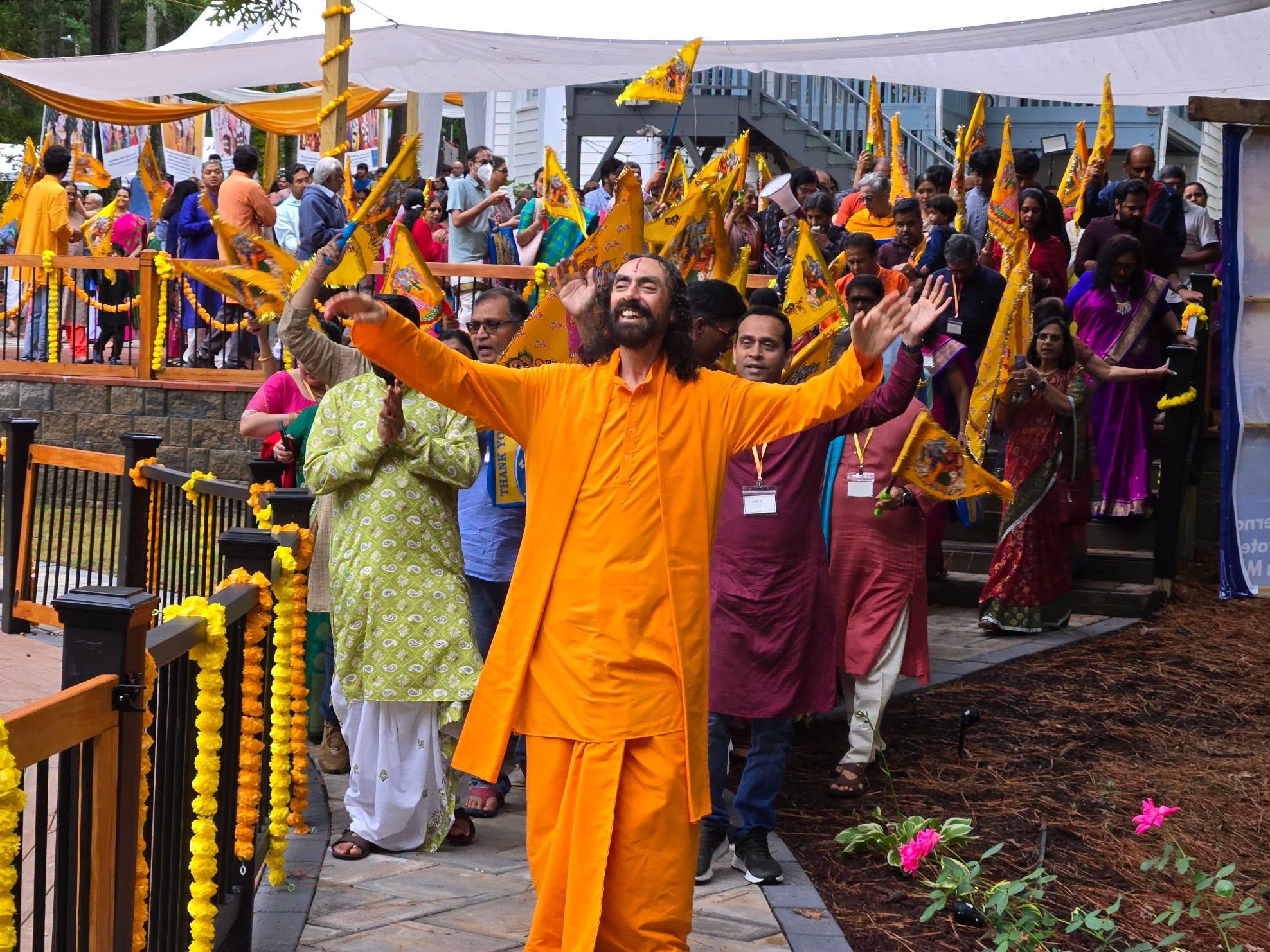
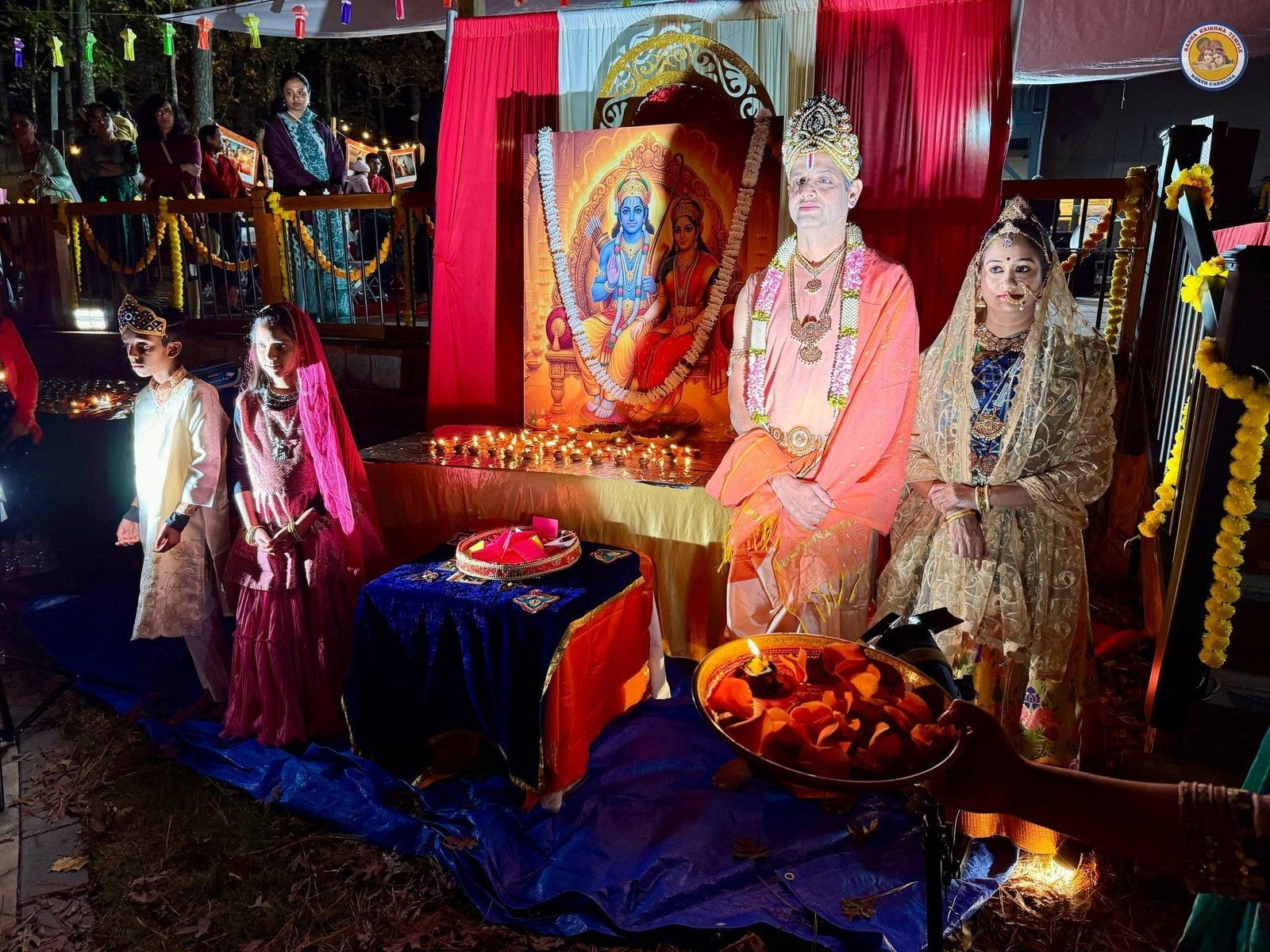
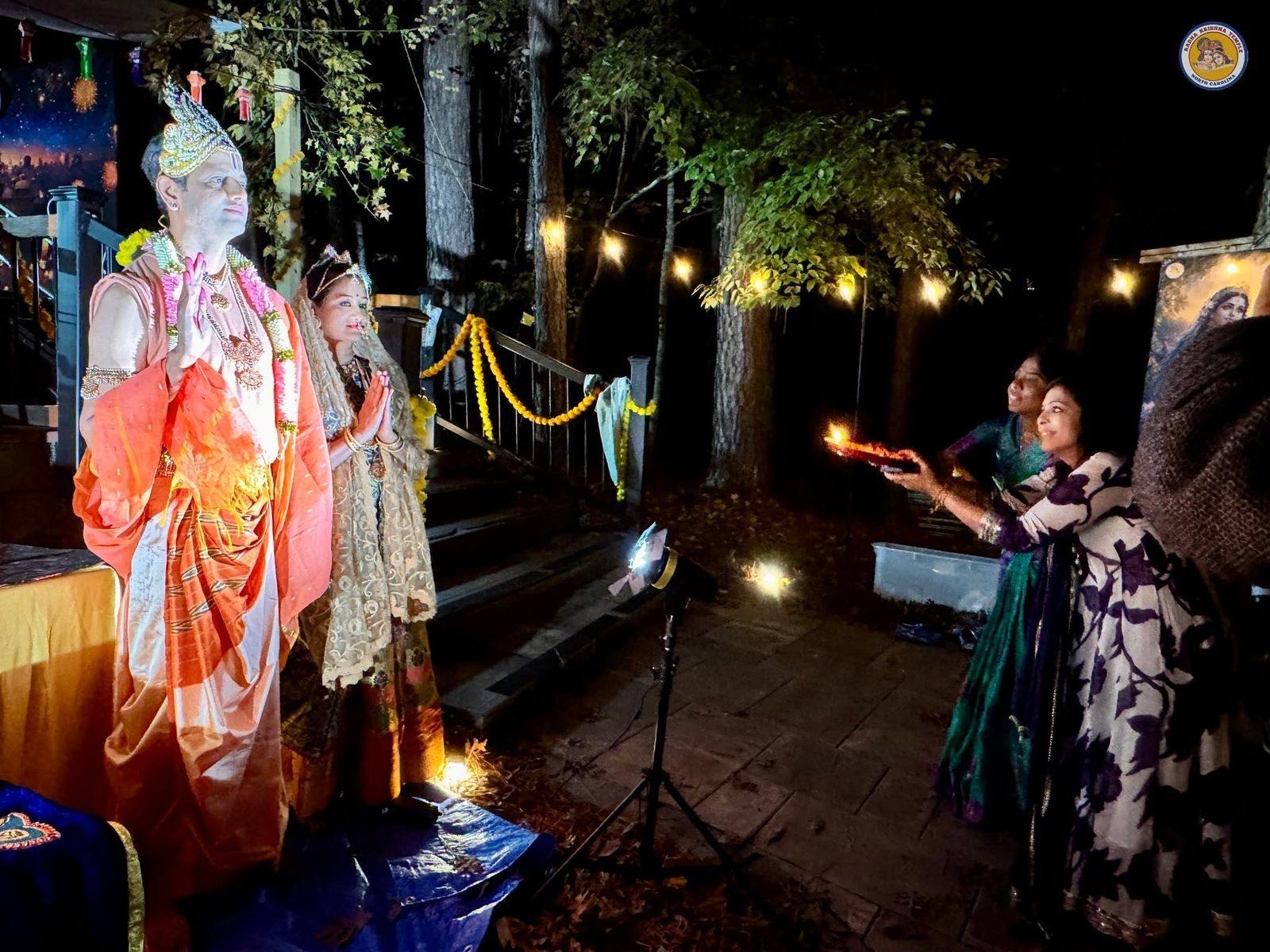
After recreating the splendor of Ayodhya, the devotees were ready to welcome Lord Ram and Mother Sita. Adorned in royal attire, magnificent crowns, and flower garlands, Lord Ram and Mother Sita were welcomed with traditional aarti. A joyous procession followed, with devotees dancing, clapping, and rejoicing as they accompanied their beloved Lords along the beautifully illuminated pathway. The entire gathering seemed swept up in the joy of the divine homecoming, as though the centuries had melted away and the devotees themselves had become part of the grand celebrations in Ayodhya.
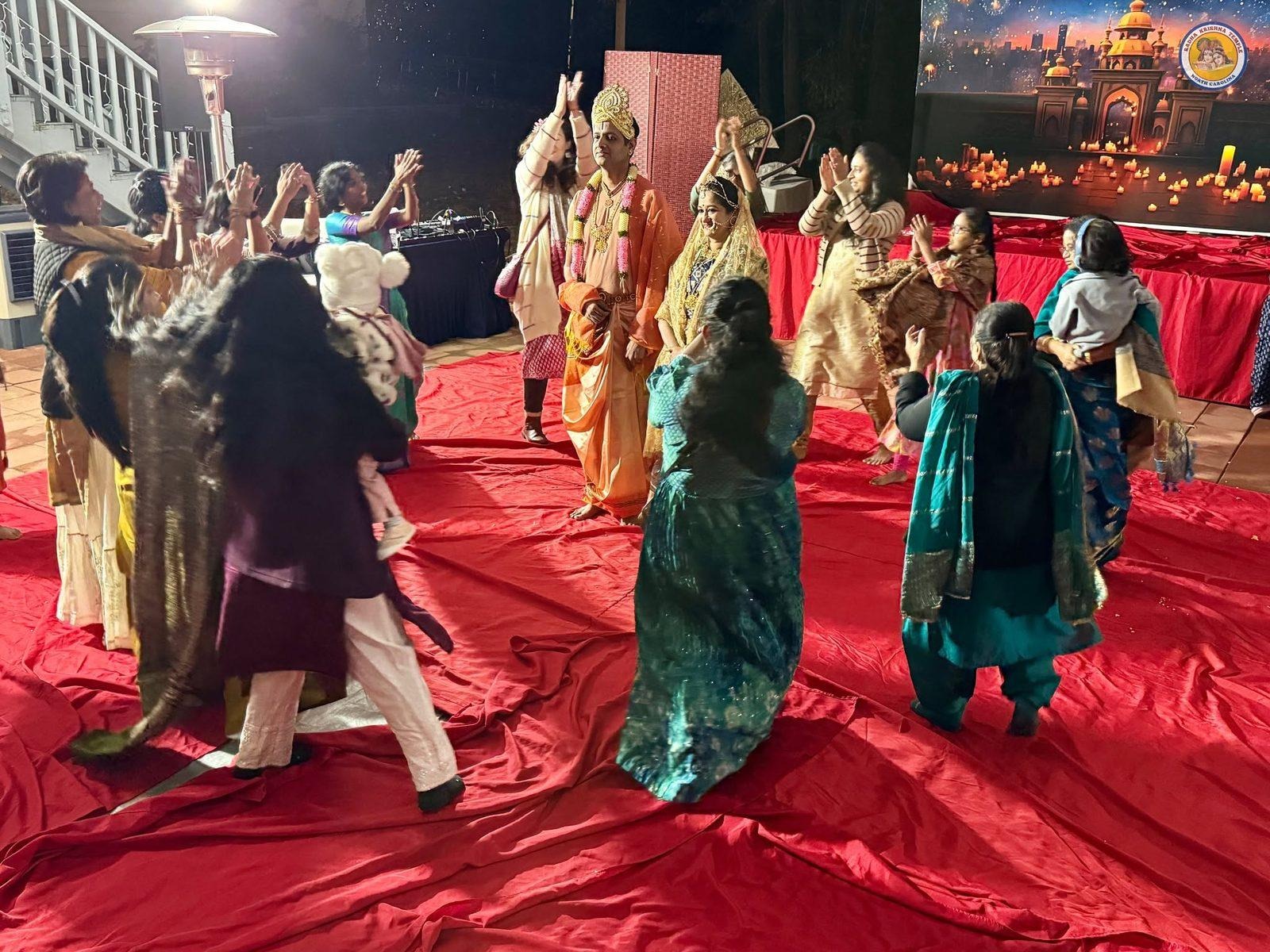
The evening also featured Mannat Parikrama and Deep Arpan, offering devotees an opportunity to perform sacred circumambulations and to offer diyas as a symbolic act of surrender to God. The celebrations concluded with a fireworks display. Colorful bursts of light filled the night sky, drawing cheers and applause from the gathering.
The Day of Diwali
The auspicious day began with a special satsang, featuring devotional kirtans and spiritual wisdom.
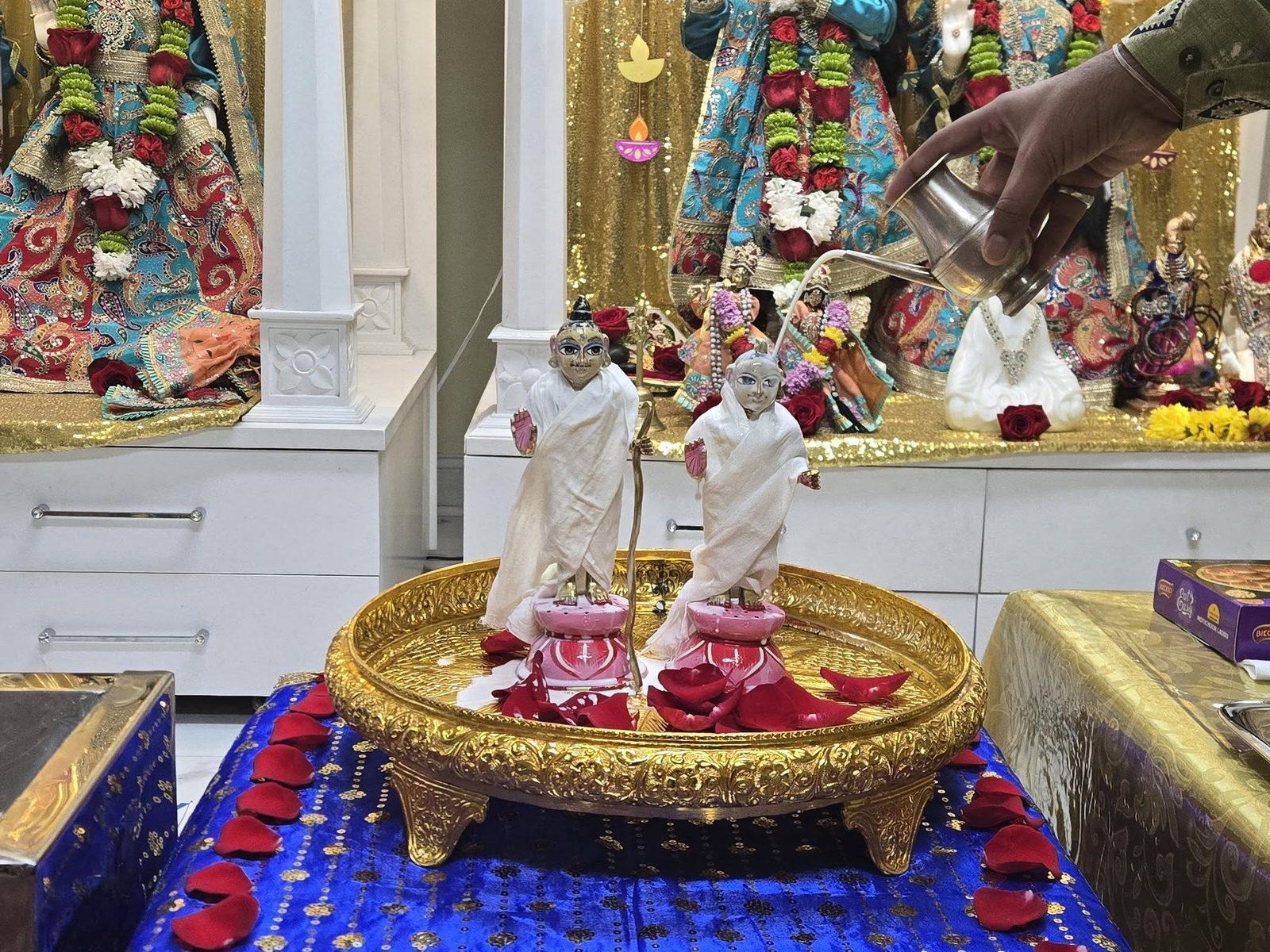
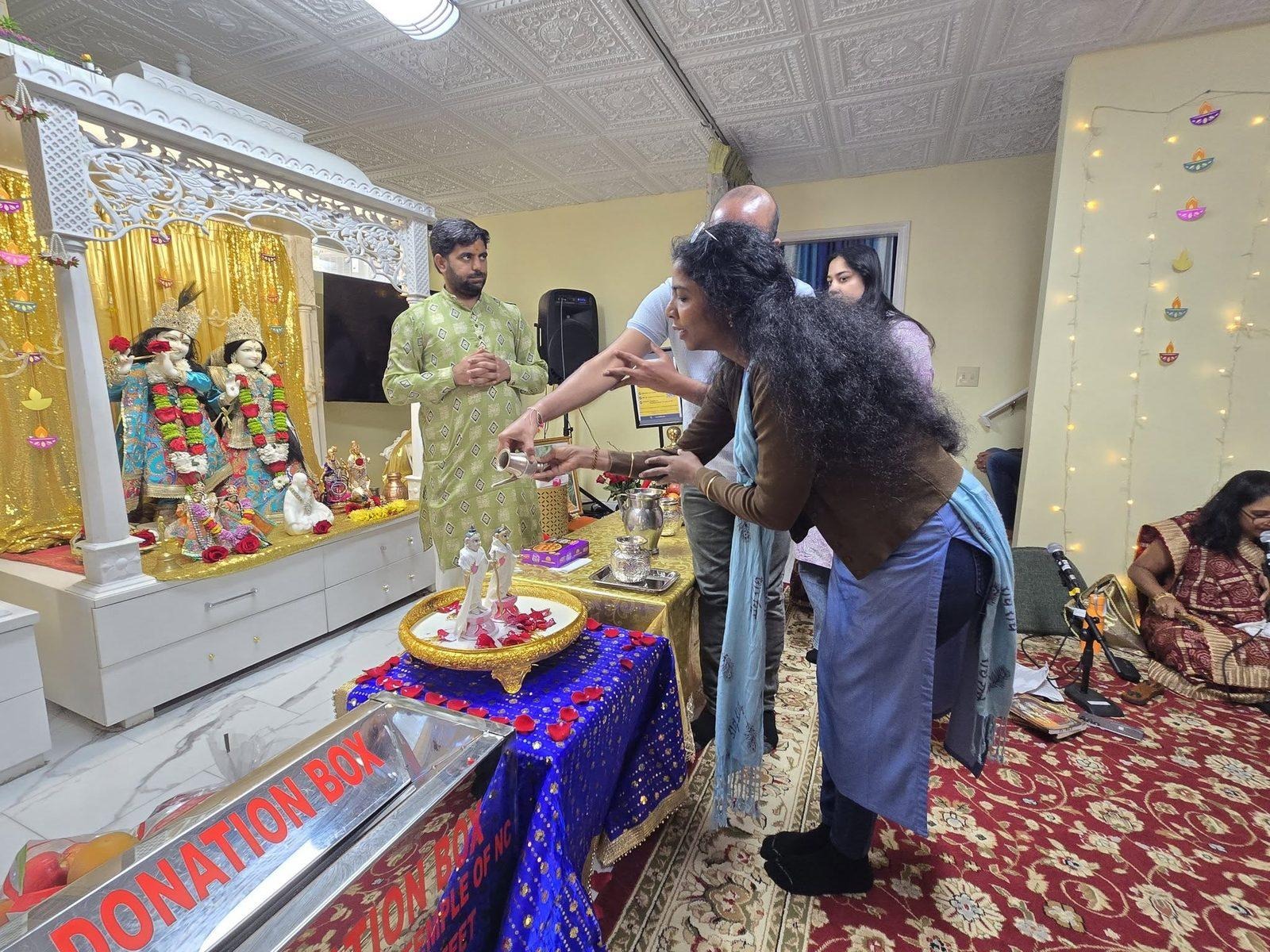
The satsang was followed by Lord Ram Rajya Abhishek. The Shri Vigrahs (sacred idols) of Lord Ram and Mother Sita were placed on beautifully decorated pink lotus pedestals inside an ornate golden tray, surrounded by red rose petals. As the priests chanted sacred mantras, devotees performed the abhishek by gently pouring sacred offerings over the Shri Vigrahs.
The ceremony commemorated the establishment of Ram Rajya, an ideal kingdom founded on justice, compassion, and the welfare of all.
Grand Diwali Preeti Bhoj and Cultural Extravaganza
Following the coronation ceremony, everyone was invited to the Preeti Bhoj, where devotees and families gathered to enjoy a sumptuous feast. The occasion brought everyone together as one big family, sharing delicious food, laughter, and the joy of Diwali.
This was followed by the Diwali Cultural Extravaganza, featuring colorful dance performances, devotional bhajans, and cultural presentations offered for the pleasure of the newly crowned Lord Ram and Mother Sita, as well as the assembled devotees.
Shree Lakshmi Narayan Pooja and Diya Lighting
As evening approached, devotees gathered for one of the most sacred observances of Diwali. Maa Lakshmi, the goddess of wealth, is the divine consort of Lord Narayan, the protector and sustainer of the universe. Their worship reminds us that true prosperity is rooted in devotion to God. Selfless surrender, righteous conduct, and living according to the scriptures pave the way for divine grace and lasting spiritual prosperity.
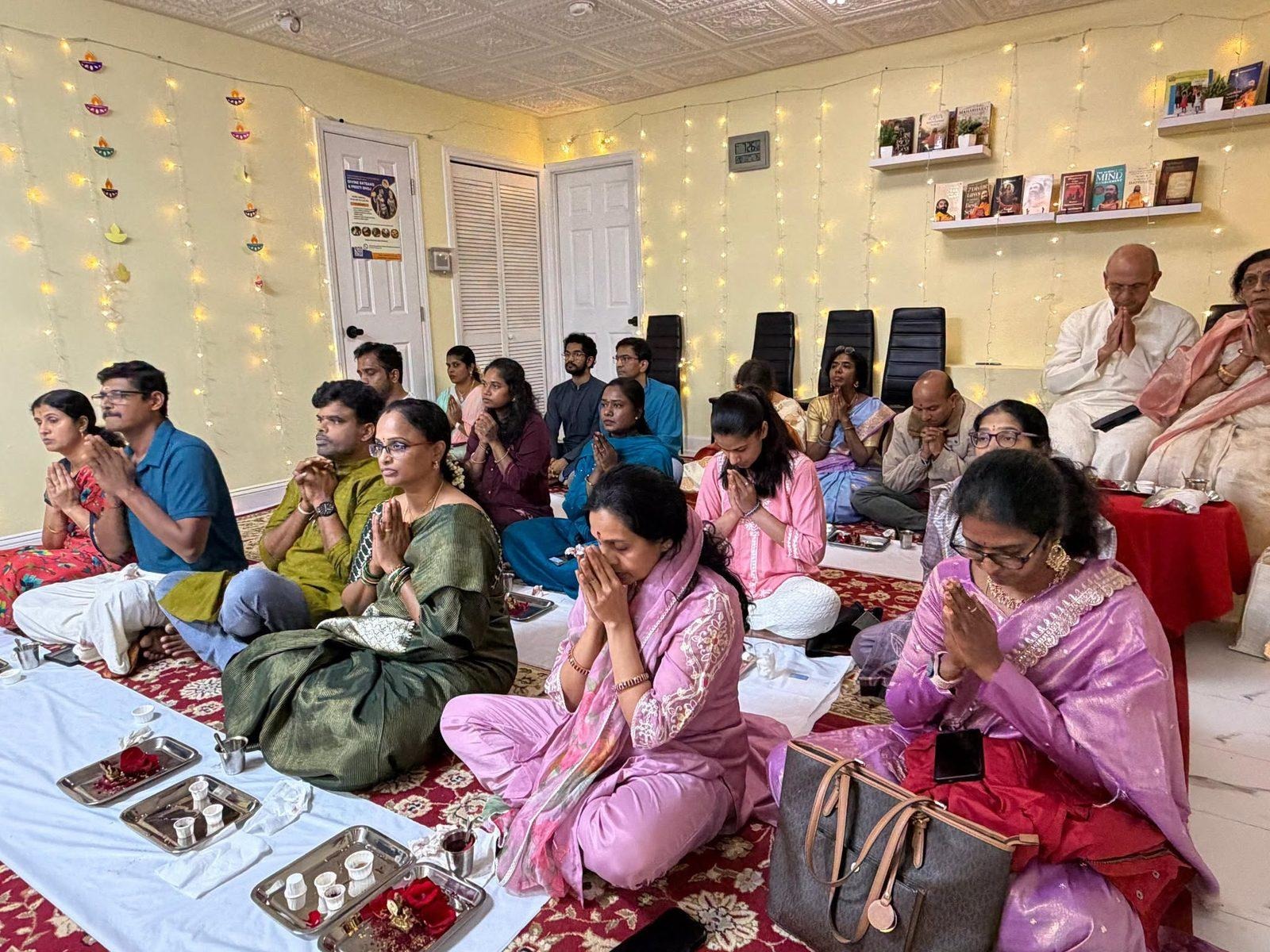
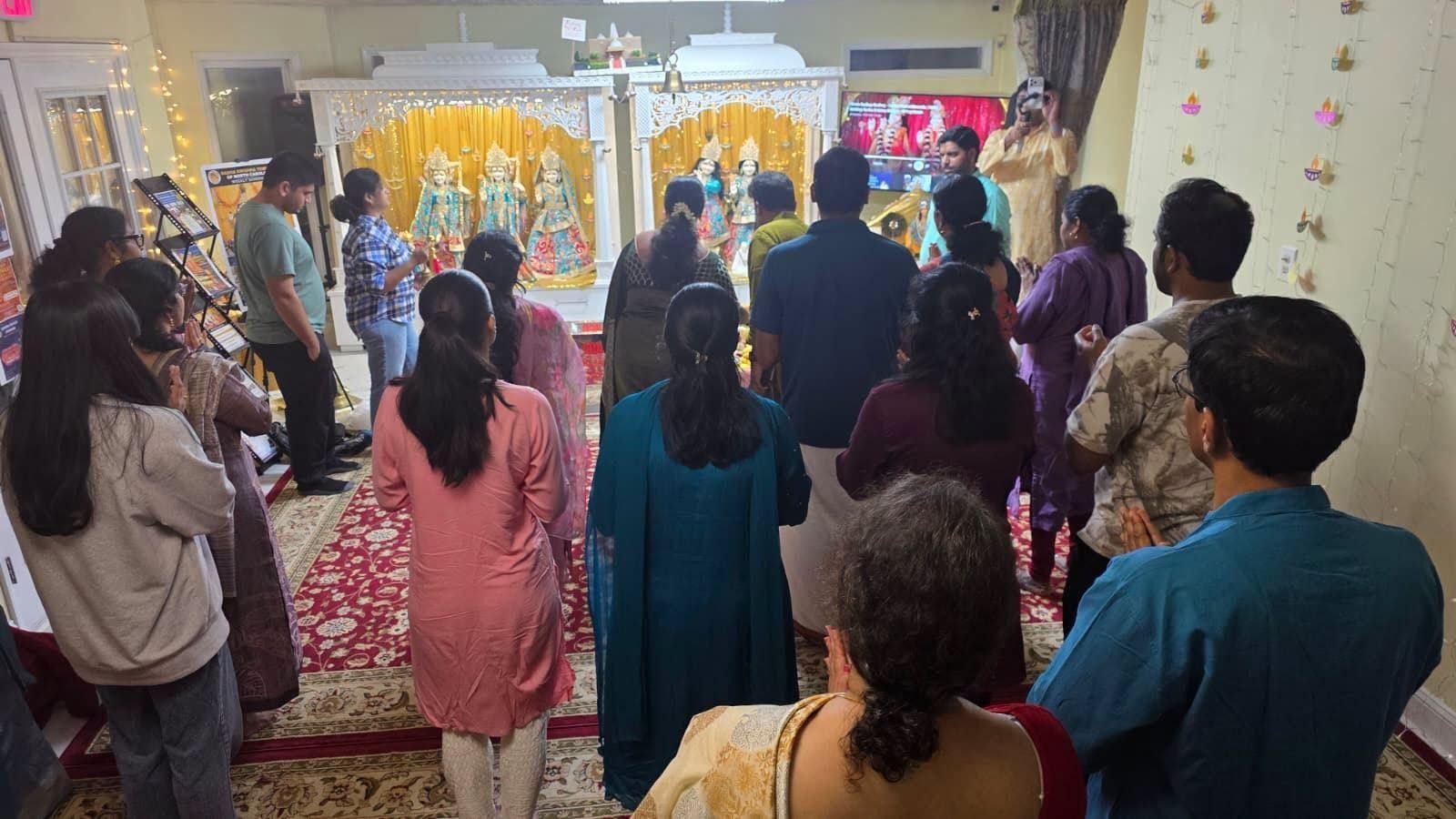
Devotees gathered with great reverence, arranging their beautifully decorated pooja thalis with flowers, fruits, coconuts, and other sacred offerings. Seated together before the temple altar, they participated in the community pooja, performing the rituals with devotion. The ceremony concluded with collective prayers and aarti and everyone sought the divine blessings.
Following the sacred pooja, devotees participated in the traditional diya lighting ceremony, illuminating the temple with lamps.
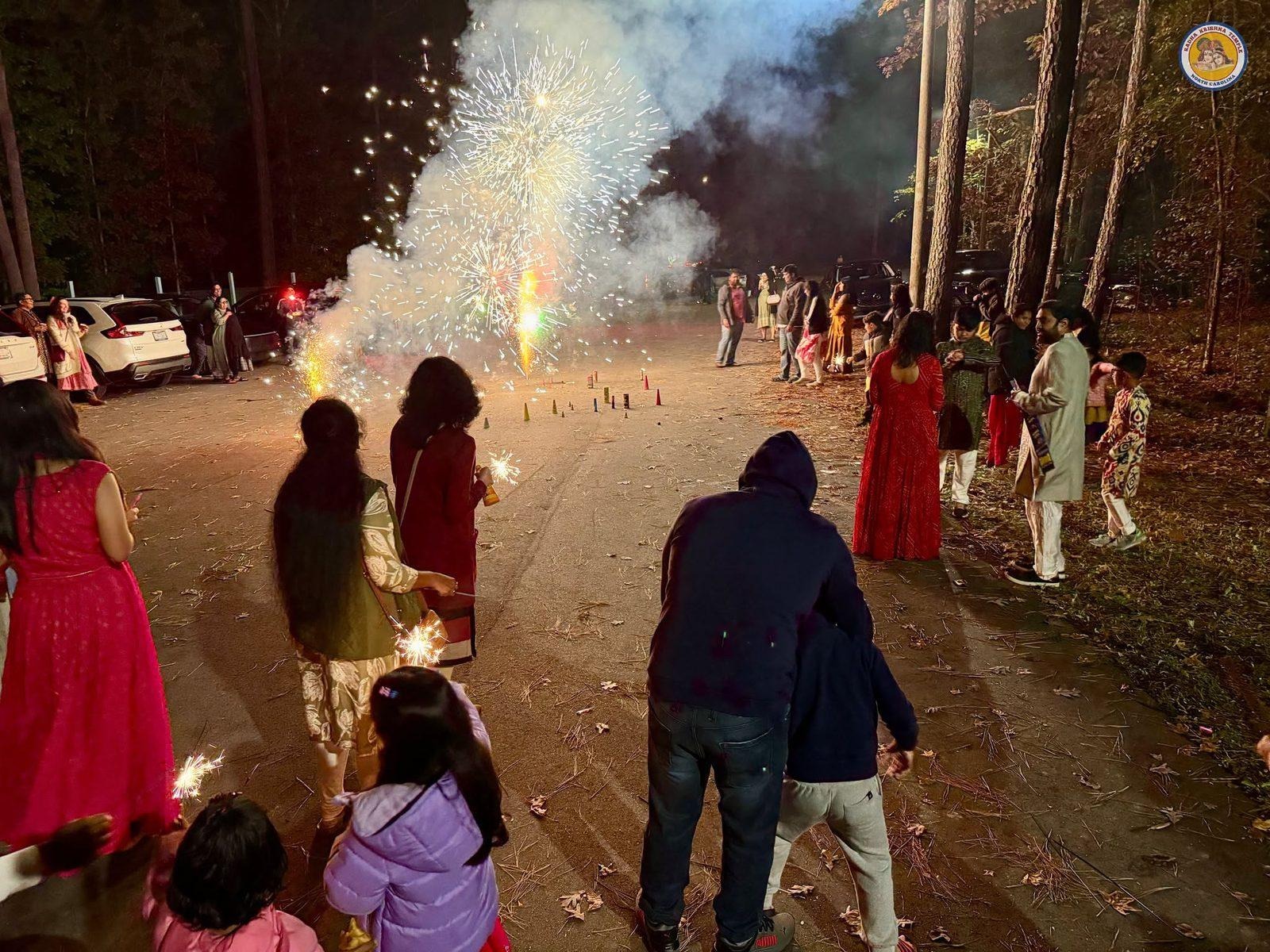
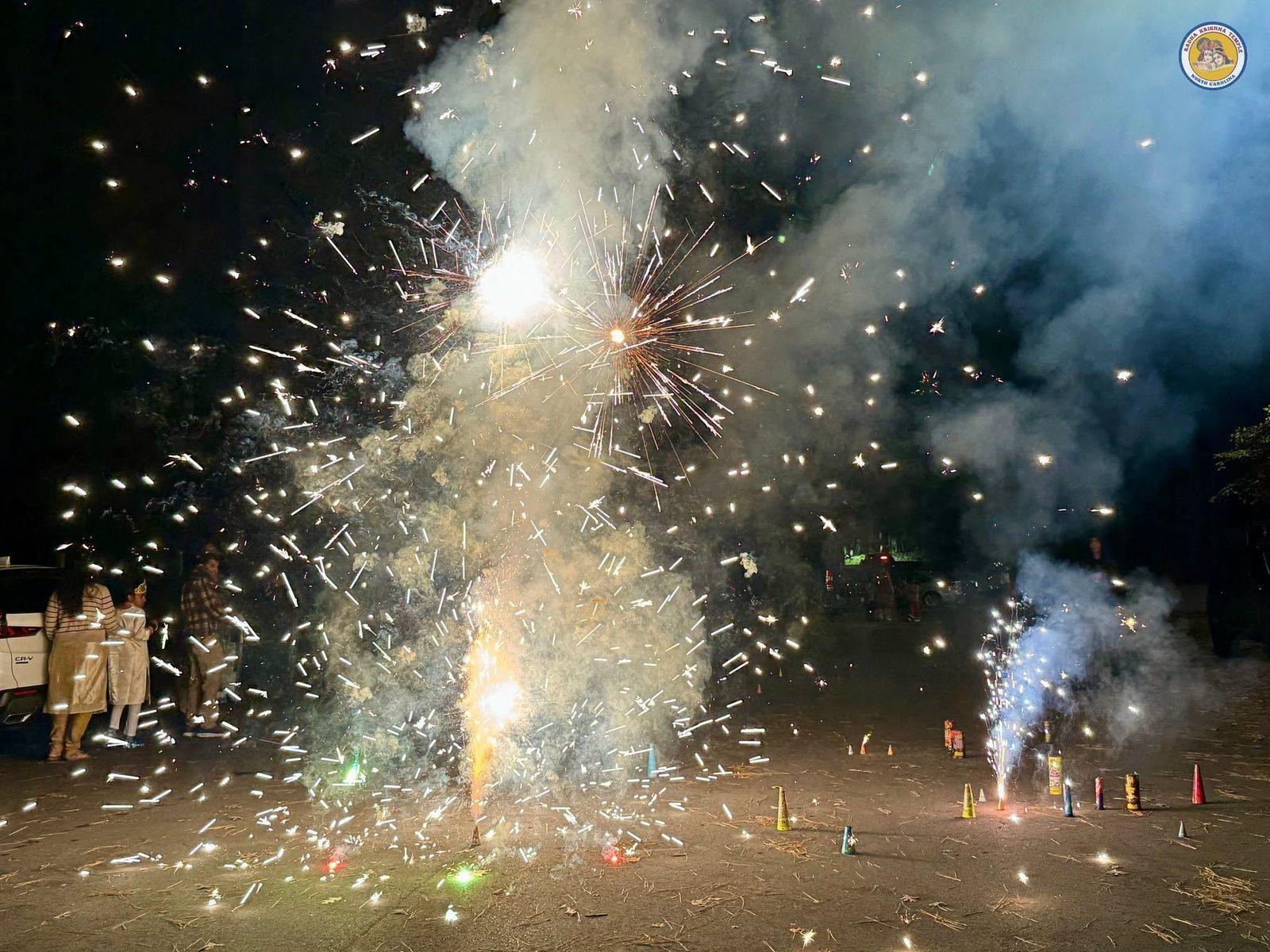
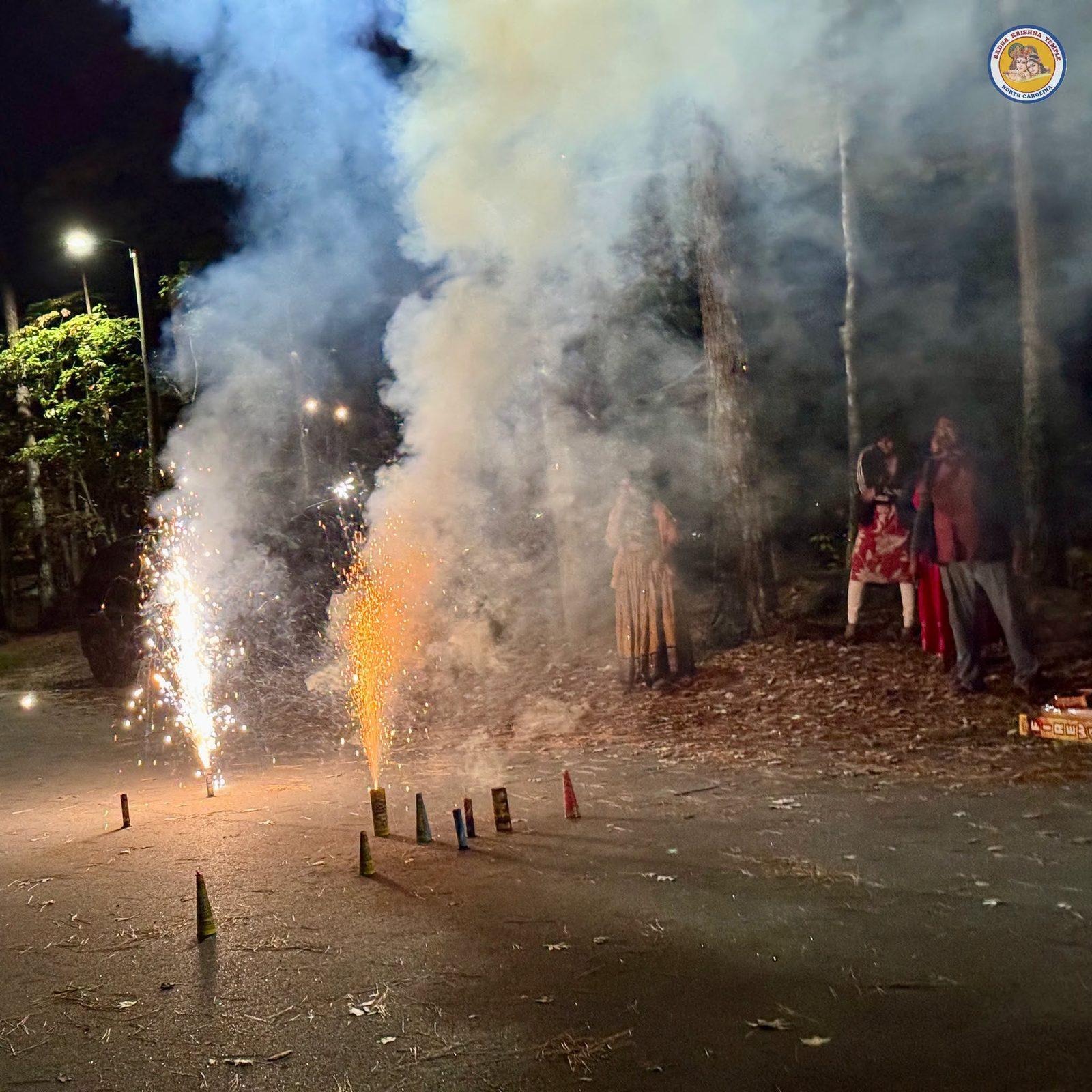
The celebrations reached their grand finale with a spectacular display of fireworks. Families gathered outdoors as sparkling phuljharis and colorful anars filled the surroundings with light. Children watched with excitement as brilliant showers of golden and silver sparks rose into the night sky.
Govardhan Pooja and Annakut
The Diwali festivities continued on November 9 and 15 with Govardhan Pooja and Annakut. On Monday, November 9, the Radha Krishna Temple of North Carolina observed Govardhan Pooja, followed by Bhajan Sandhya. Devotees sang bhajans in praise of Shree Krishna and Shree Ram, lovingly remembering the Lord's divine names, virtues, and leelas.
The celebrations continued on a grander scale on Sunday, November 15, during the temple's weekly satsang gathering. The day began with a special satsang , followed by Govardhan Pooja.
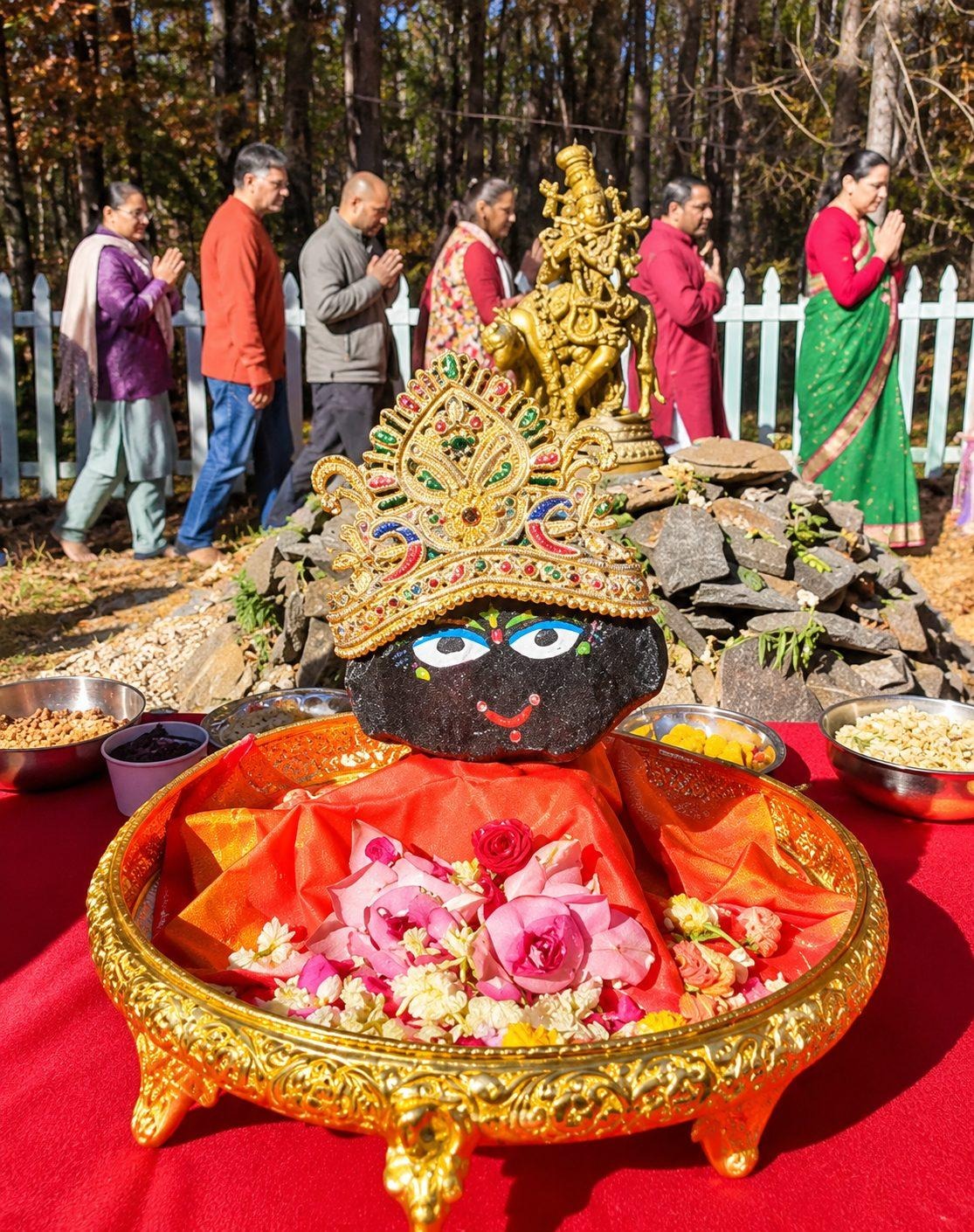
Devotees gathered outdoors around a beautifully arranged representation of Govardhan Hill, accompanied by a richly adorned Shri Vigrah of Lord Krishna, decorated with an ornate crown, colorful garments, and flowers. They offered prayers and chanted sacred mantras before performing Govardhan Parikrama, reverently circumambulating the sacred hill. This was followed by Govardhan Abhishek, during which sacred offerings were made to the Lord.
This pooja commemorates one of Lord Krishna's most beloved leelas. When Devraj Indra, angered by the Brajwasis' decision to worship Govardhan Hill instead of him, unleashed torrential rains upon Braj, Lord Krishna lifted the mighty Govardhan Hill on His little finger, providing shelter to the residents of Braj for seven days.
This divine pastime reveals Lord Krishna's boundless love for His devotees. The Brajwasis had placed their complete faith in Him, and He personally protected them from Indra's wrath. On this auspicious occasion, devotees worship Lord Krishna as Giridhari, seeking His blessings for protection, well-being, and nourishment.
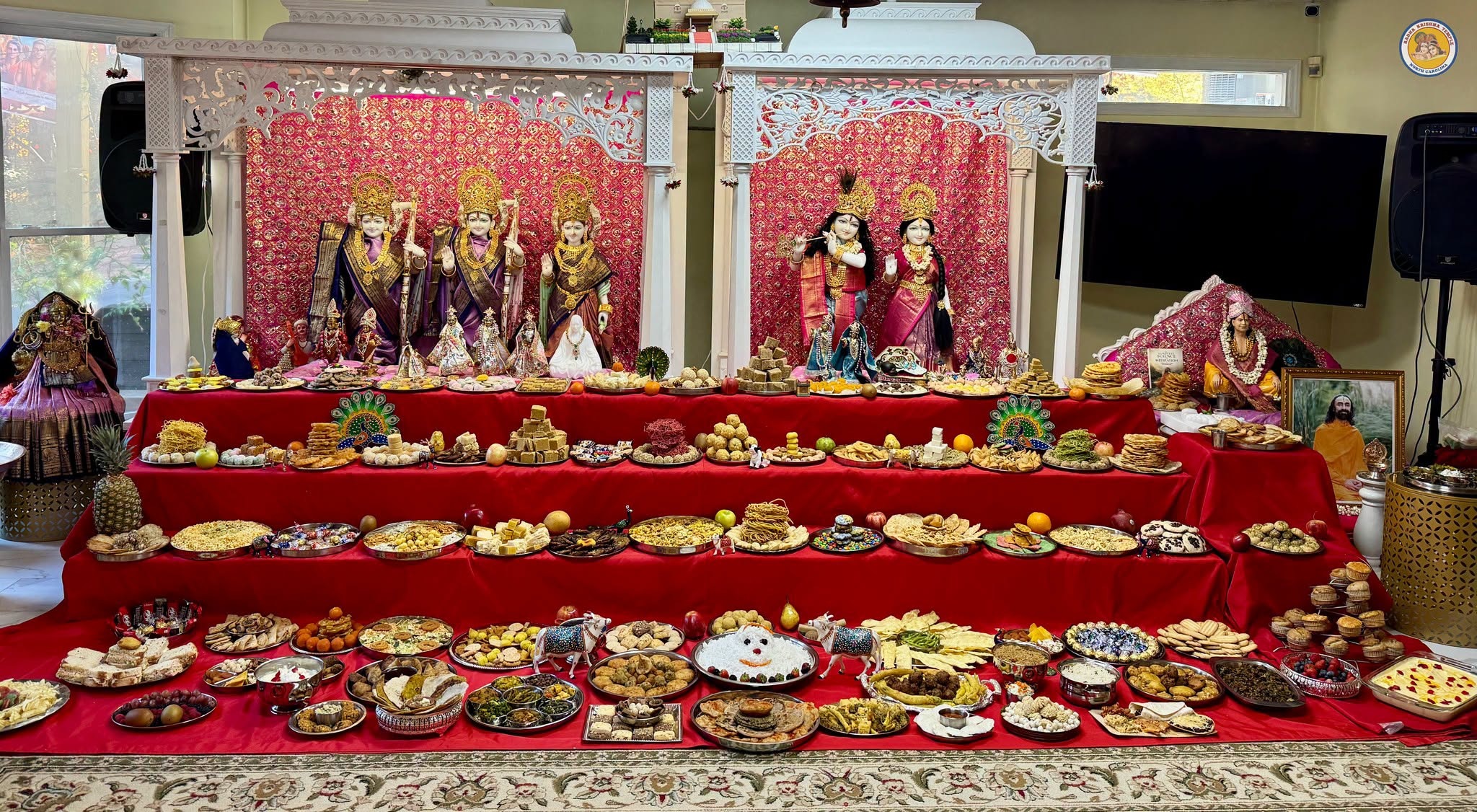
Following the Abhishek, devotees offered Annakut to the Lord. Annakut, meaning "a mountain of food," is a cherished tradition involving an elaborate assortment of vegetarian dishes, sweets, fruits, and delicacies. Traditionally, the offering may include Chhappan Bhog, or 56 food preparations, recalling the belief that Shree Krishna went without His customary eight daily meals for seven days while holding Govardhan Hill. The festivities concluded with the Grand Annakut Preeti Bhoj, bringing the temple community together to share the blessed prasad.
Bhai Dooj: Honoring the Bond Between Siblings
A special pooja was held at the temple on November 10 to celebrate the auspicious occasion of Bhai Dooj. The festival honors the loving bond between brothers and sisters. According to Hindu tradition, Yamraj visited his sister Yamuna Devi, who warmly welcomed him, applied tilak to his forehead, and lovingly prepared a feast for him. On this day, sisters traditionally pray for their brothers’ long lives, happiness, and well-being, while brothers express their love and gratitude toward their sisters. Beyond these customs, the festival reminds us of the importance of love and care with our near and dear ones.
Carrying the Light of Diwali Within
Diwali Mahotsav 2026 at the Radha Krishna Temple of North Carolina brought together the richness of India's spiritual traditions, the joy of community celebrations, and the timeless wisdom of Sanatan Dharma.
Yet, the greatest celebration of Diwali shall take place within us when the light of divine grace illuminates our hearts. Just as the people of Ayodhya cleaned and lit up their homes to welcome Lord Ram, may we make our hearts a worthy abode for God.