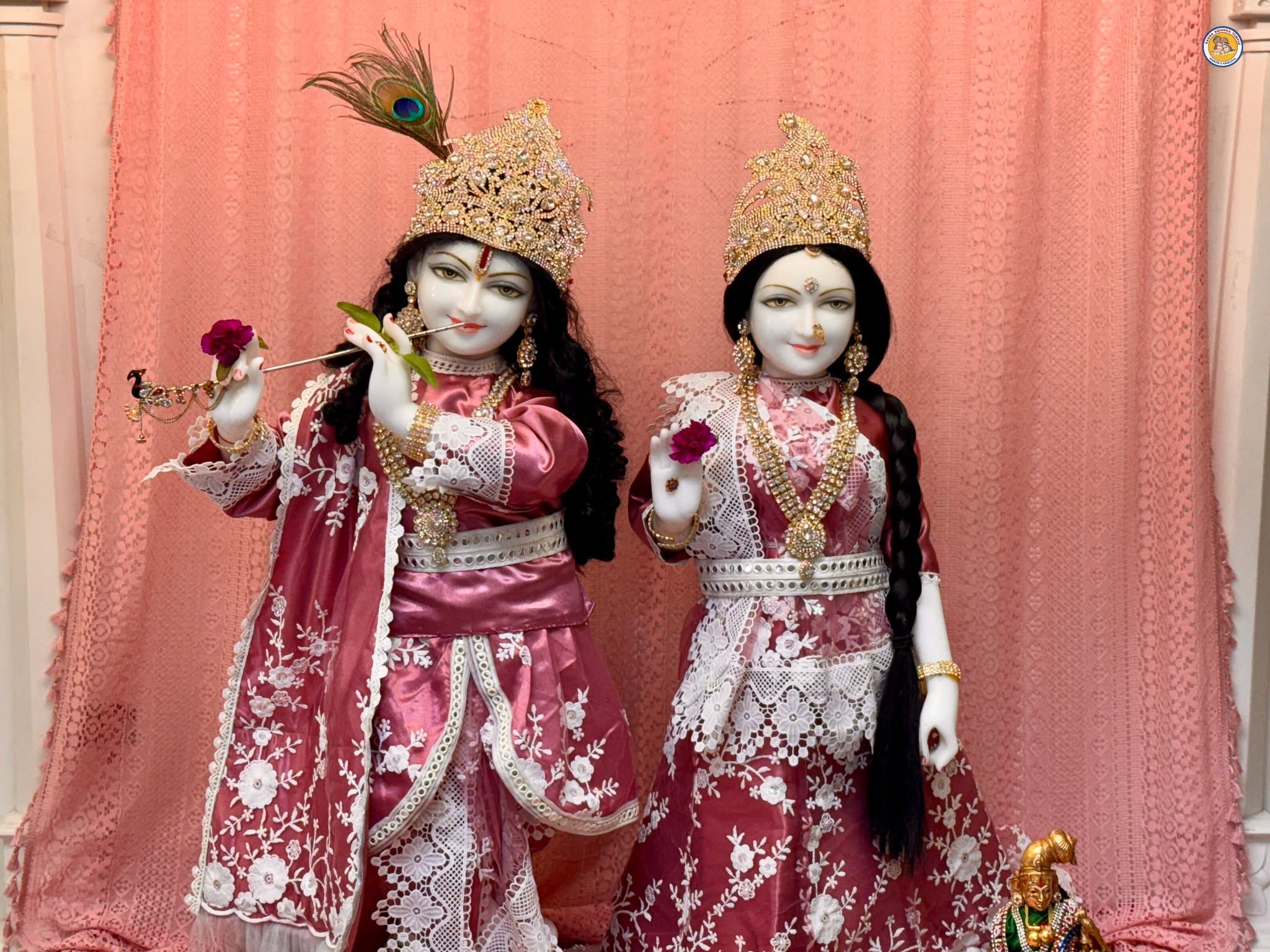
Shri Radha Krishna adorned with flower garlands at Radha Krishna Temple of North Carolina

Ekadashi

A day of fasting, prayer and a special Abhishek to Shri Krishna with Panchamrit, Tulsi, kirtan and aarti. Everyone is welcome.

The meaning of the day

Why do we observe Ekadashi?

Ekadashi means “eleventh.” It falls on the 11th lunar day of each fortnight, about 24 times a year. It is one of the days dearest to Lord Vishnu and Shri Krishna, kept with fasting, prayer and remembrance of the Lord.

01

The birth of Ekadashi Devi

The Padma Purana tells of the demon Mura, who troubled the gods. While Lord Vishnu rested in a cave at Badrikashram, a radiant maiden came forth from His own body and destroyed Mura. Pleased, the Lord named her Ekadashi. He blessed her: whoever honors her day with fasting and devotion would be freed from sins and come closer to Him.

This story is remembered on Utpanna Ekadashi, the day Ekadashi Devi appeared.
02

Upavasa: to dwell near God

The Sanskrit word for fasting, upavasa, means “to stay near.” The fast is not about going hungry. It frees time and attention from food so the mind can rest on Shri Krishna.

03

Fasting the senses too

The eleven senses (five of knowledge, five of action, and the mind) are offered to the Lord. Less food, less talk and less distraction leave more room for japa, kirtan and reading the Bhagavad Gita.

04

Lighter body, clearer mind

Grains and beans are set aside for the day. Many devotees find that a light, sattvic diet of fruit and milk brings a calm, steady mind that is ready for meditation.

05

A rhythm of renewal

Coming twice a month with the waxing and waning moon, Ekadashi becomes a steady spiritual reset. It is a regular chance to begin again with fresh devotion.
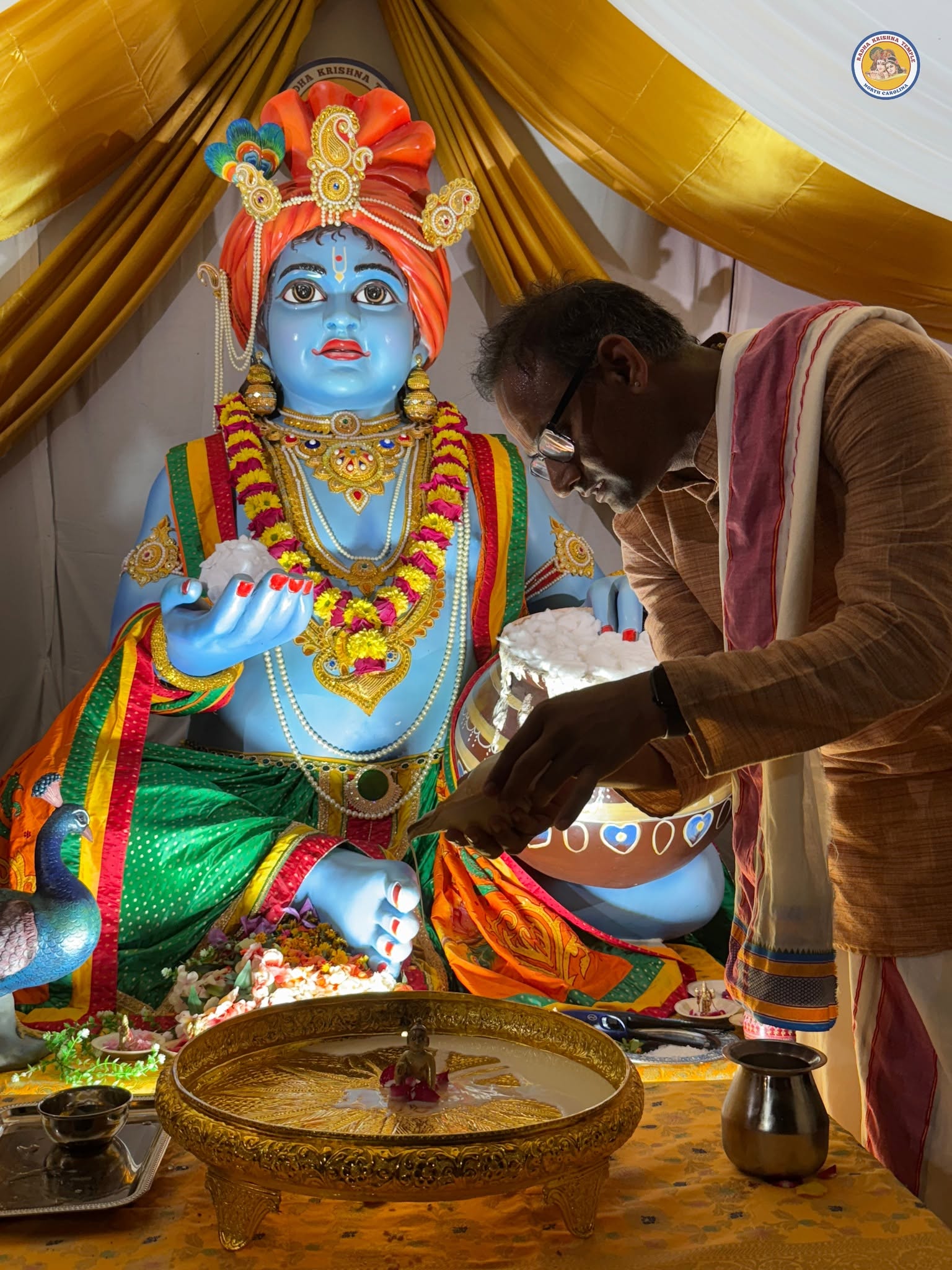
A devotee offering abhishek to Shri Krishna at Radha Krishna Temple of North Carolina
Every Ekadashi · At the temple
Ekadashi Abhishek

We bathe Shri Krishna in love

Abhishek is the sacred bathing of the Deity while Vedic mantras are chanted. On Ekadashi, devotees gather at the temple to offer Panchamrit to Shri Krishna. It is a way of serving the Lord with our own hands, and of asking Him to wash our hearts clean.

Panchamrit: the five nectars
Milk
Purity
Curd
Prosperity
Ghee
Strength
Honey
Sweet speech
Sugar
Bliss

How the Abhishek unfolds

1
Sankalp
A prayer of intention for the devotees and their families.
2
Panchamrit Abhishek
Milk, curd, ghee, honey and sugar are offered to the chanting of mantras.
3
Shuddha Jal Snan
A final bath of pure water, followed by fresh clothes for the Lord.
4
Shringar & Tulsi Archana
Flowers, ornaments and Tulsi leaves, which are dearest to Krishna.
5
Kirtan & Aarti
Bhajans and kirtan, ending with aarti of the Lord.
6
Prasad
The Lord’s prasad is shared with all the devotees.
Sponsor the Ekadashi Abhishek for your family, or bring milk, fruits, flowers or Tulsi to offer.
Sponsor the Abhishek
Mark your calendar

Upcoming Ekadashi dates

Each Ekadashi has its own name, story and blessing. Join us at the temple for the Abhishek on these days.

November 20, 2026
Kartik Shukla

Devutthana (Prabodhini) Ekadashi

Lord Vishnu awakens from His four-month yoga nidra and Chaturmas ends. It opens the season of Tulsi Vivah.

Tulsi Vivah at the temple on Sunday, Nov 22.
Tulsi Vivah, Sun Nov 22
December 4, 2026
Margashirsha Krishna

Utpanna Ekadashi

The day Ekadashi Devi appeared from Lord Vishnu to defeat the demon Mura. A traditional day to begin keeping the Ekadashi vrat.

December 20, 2026
Margashirsha Shukla

Mokshada Ekadashi

The Ekadashi of liberation, and Gita Jayanti: the day Shri Krishna spoke the Bhagavad Gita to Arjuna at Kurukshetra.

Gita Jayanti
January 2, 2027
Pausha Krishna

Saphala Ekadashi

Saphala means fruitful. Keeping this vrat is said to bring success to every sincere effort.

Vaishnava observance: Sunday, Jan 3.
January 18, 2027
Pausha Shukla

Pausha Putrada Ekadashi

Observed for the blessing and well-being of children.

February 1, 2027
Magha Krishna

Shattila Ekadashi

Sesame (til) is offered six ways, in bathing, worship, food and charity, to purify body and mind.

A simple guide

How to observe Ekadashi

The vrat spans three days. Keep it as fully as your health allows. What matters most is that your mind stays with Shri Krishna.

Day 10 · Dashami

Prepare

Eat one light, sattvic meal and avoid grains at night.
Pick Tulsi leaves for the next day’s offering. By tradition, Tulsi is not plucked on Ekadashi.
Make a quiet resolve (sankalp) to keep the vrat.
Day 11 · Ekadashi

Fast & worship

Avoid grains and beans: rice, wheat, dal and their flours.
Choose your fast: nirjala (no water), only fruit and milk, or one grain-free meal.
Fill the day with japa, kirtan and Bhagavad Gita reading.
Come to the temple for the Abhishek and darshan of Shri Krishna.
Day 12 · Dwadashi

Break the fast

Do parana after sunrise, within the parana time for your city.
Offer the first meal to the Lord, then take it as prasad.
Share food with others or give in charity to complete the vrat.
Enjoy on Ekadashi
Fruits
Milk & yogurt
Nuts
Sabudana
Potatoes
Sweet potato
Rajgira & kuttu flour
Rock salt
Set aside for the day
Rice
Wheat & atta
Dal & beans
Corn
Onion & garlic
Non-vegetarian food

Children, elders, expecting mothers and anyone with a health condition should keep a gentle fast, such as fruit or one meal, or simply give the day to prayer. Please check with your doctor if you are unsure.

Questions devotees ask

Ekadashi FAQ

Why are grains avoided on Ekadashi?

Tradition, as described in the Puranas, holds that on Ekadashi sin takes shelter in grains. Setting aside rice, wheat and beans also keeps the body light and the mind clear for devotion.

What if I can’t fast completely?

That’s fine. Take fruit, milk or one grain-free meal. Spend more time in prayer and kirtan, and come for the Abhishek. Devotion matters more than how strict the fast is.

Can I attend the Abhishek without sponsoring?

Yes. Everyone is welcome to attend the Abhishek and have darshan of Shri Krishna. Sponsoring is a way to offer seva for your family; you can book it on our Pooja Booking page.

What can I bring to offer?

Milk, fruits, flowers and Tulsi leaves (picked the day before) are lovely offerings for Shri Krishna.

How often does Ekadashi come?

Twice a month: once in the waxing fortnight (Shukla) and once in the waning fortnight (Krishna). That makes about 24 a year, and 26 in a year with an extra month (Adhik Maas).

Can children observe Ekadashi?

Children are best kept to a gentle version: grain-free food, a story of the Lord, and joining the aarti. These help them love the day without strain.

Om Namo Bhagavate Vasudevaya

Spend this Ekadashi with Shri Krishna

Come for the Abhishek, sing with us, and take home His prasad. Bring your family. The Lord is waiting for you.