Grand Opening and Festival Highlights (Pothi Yatra, Ram Sita Vivah, & Mata Ki Chowki)
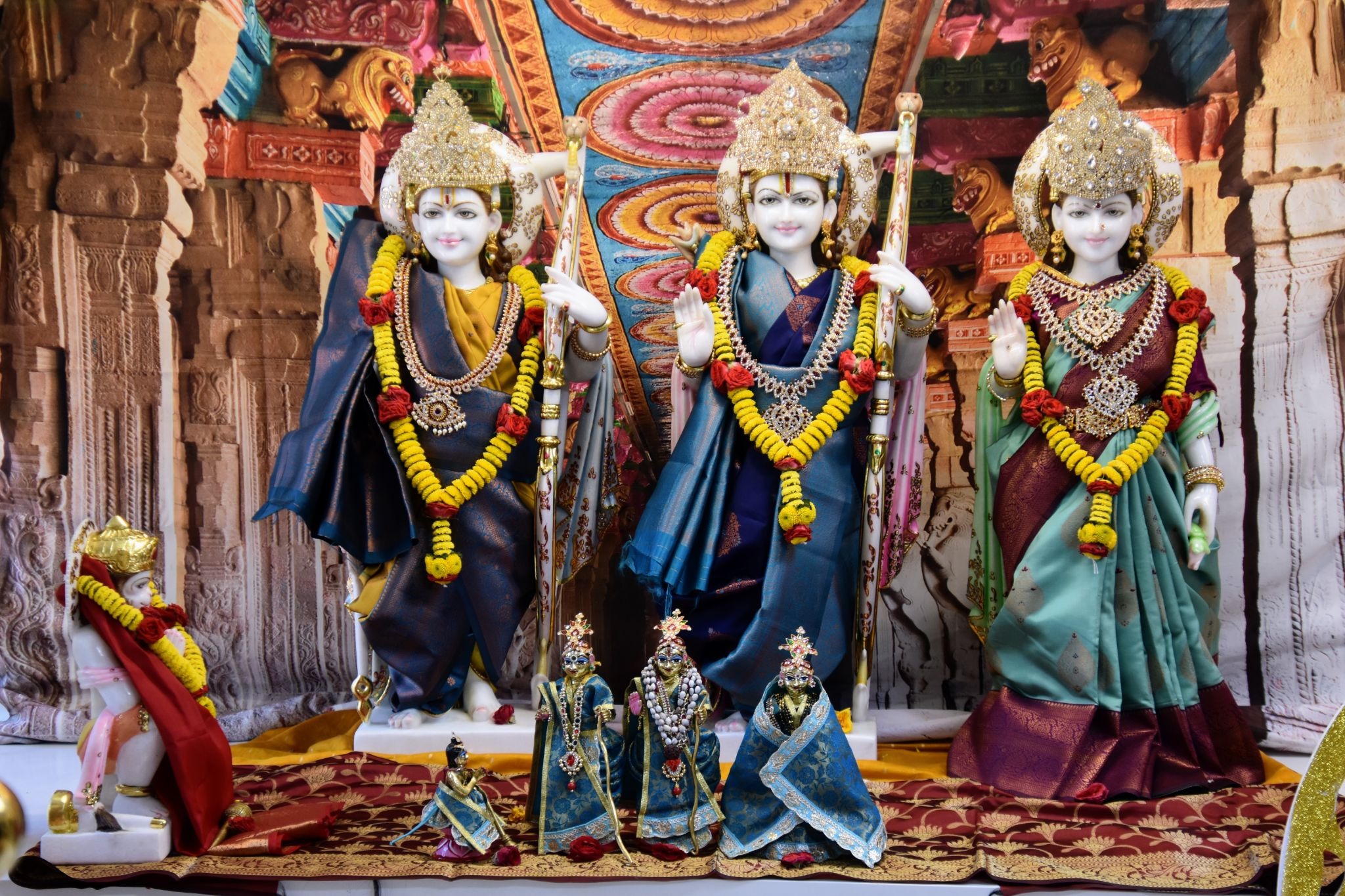
10 Days Grand Celebration of Ram Navami Mahotsav at Radha Krishna Temple of North Carolina
Thousands of years ago, during the Treta Yuga, the Supreme Lord descended upon the sacred land of Bharatvarsha. The Ramayana, the sacred story of Lord Ram that has been told countless times across generations, yet its magnificent charm remains ever fresh. It inspires, uplifts, and transforms hearts each time it is heard. The speaker never tires of narrating it, and the listener never tires of receiving it. Such is the power of this divine epic. It purifies the mind, instills the seed of devotion, and offers timeless wisdom for life.
As we listen to these divine narrations, many of us find ourselves transported to Ayodhya, imagining that we are part of those divine pastimes. Who has not longed to witness the joyous celebration of Sita and Ram's wedding, or to be present in those blessed moments?
For devotees in North Carolina, that longing became a living experience. From March 20 to March 29, 2026, the Radha Krishna Temple of North Carolina transformed into a vibrant Ayodhya, as it hosted a grand 10 day Ram Navami Mahotsav.
In those ten days, it truly felt as though Lord Ram and Sita had graciously descended to bless everyone with their presence.
To honor every moment of this divine celebration, we are sharing this sacred journey as a special three-part celebratory series:
- Part 1: The Grand Opening, the sacred Pothi Yatra, Ram Sita Vivah and the historic outdoor Mata Ki Chowki.
- Part 2: The Sacred Forest Journey — diving into the profound narrative depths of Bharat Milan, the Kevat Leela, and the roaring faith of Sundarkand.
- Part 3: The Ultimate Manifestation — the grand Ram Abhishek, Rameswaram Puja, and final reflections.
Step through the temple doors with us. Leave the mundane world behind, and let your heart return to Ayodhya.
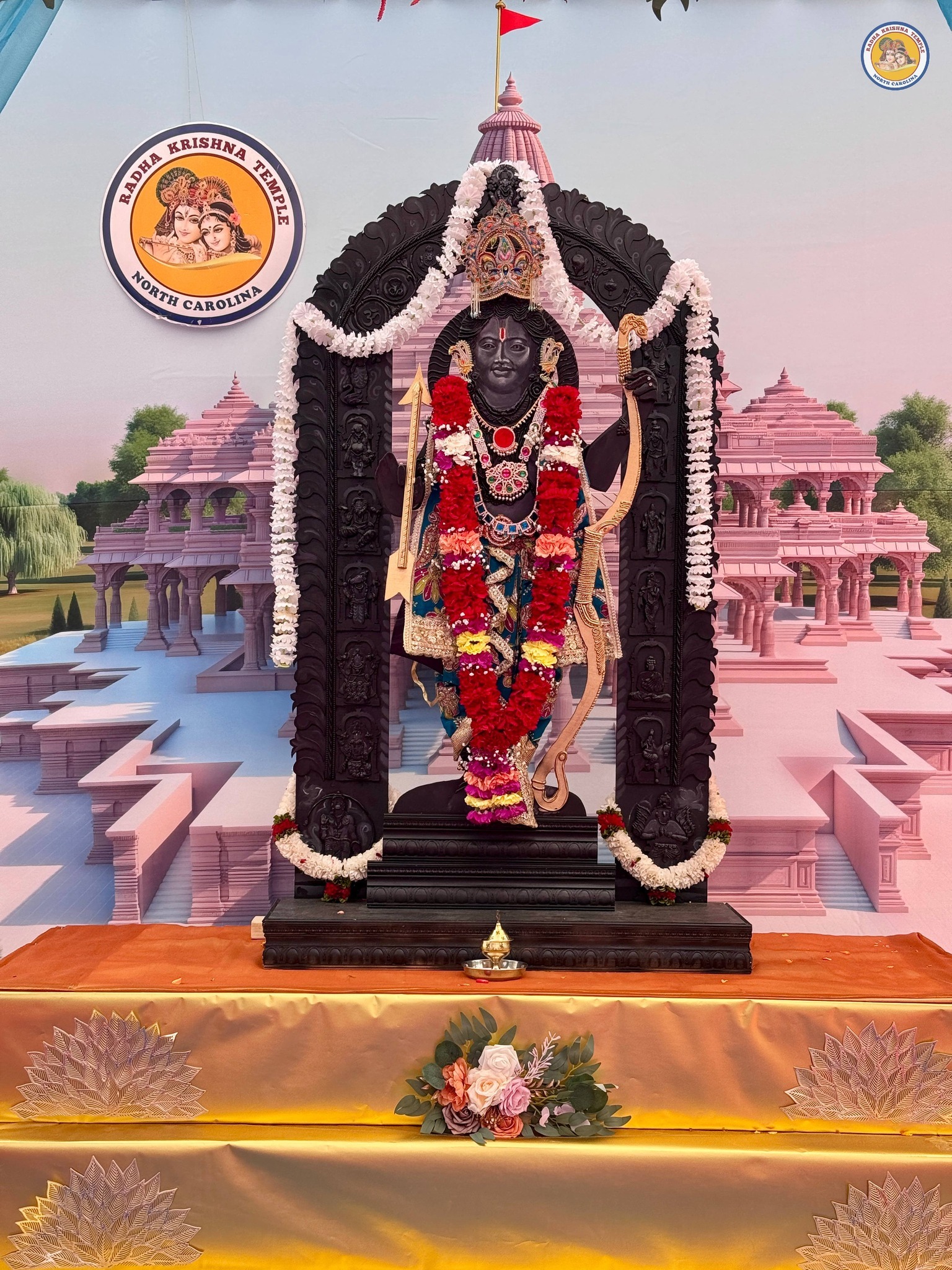
Day 1: Pothi Yatra and Ram Janam
The celebration began with a rare and moving blessing: the darshan of a replica of Ayodhya Ram Lalla.
For those who had witnessed, even from afar, the historic Pran Pratishtha of Ram Lalla in Ayodhya Ram Mandir, this moment carried a special significance. The same beloved child form of the Lord, who had captivated millions of hearts in devotion, was now present here, in North Carolina. Devotees in North Carolina were blessed to behold the very form of Ram Lalla that had captivated the hearts of devotees worldwide. It was not just a visual experience. It was deeply personal, as if the Lord had come closer, allowing each devotee to behold Him with love and intimacy. Many stood in silence, absorbing the moment. Others folded their hands with moist eyes. It was a darshan that touched something very deep within.
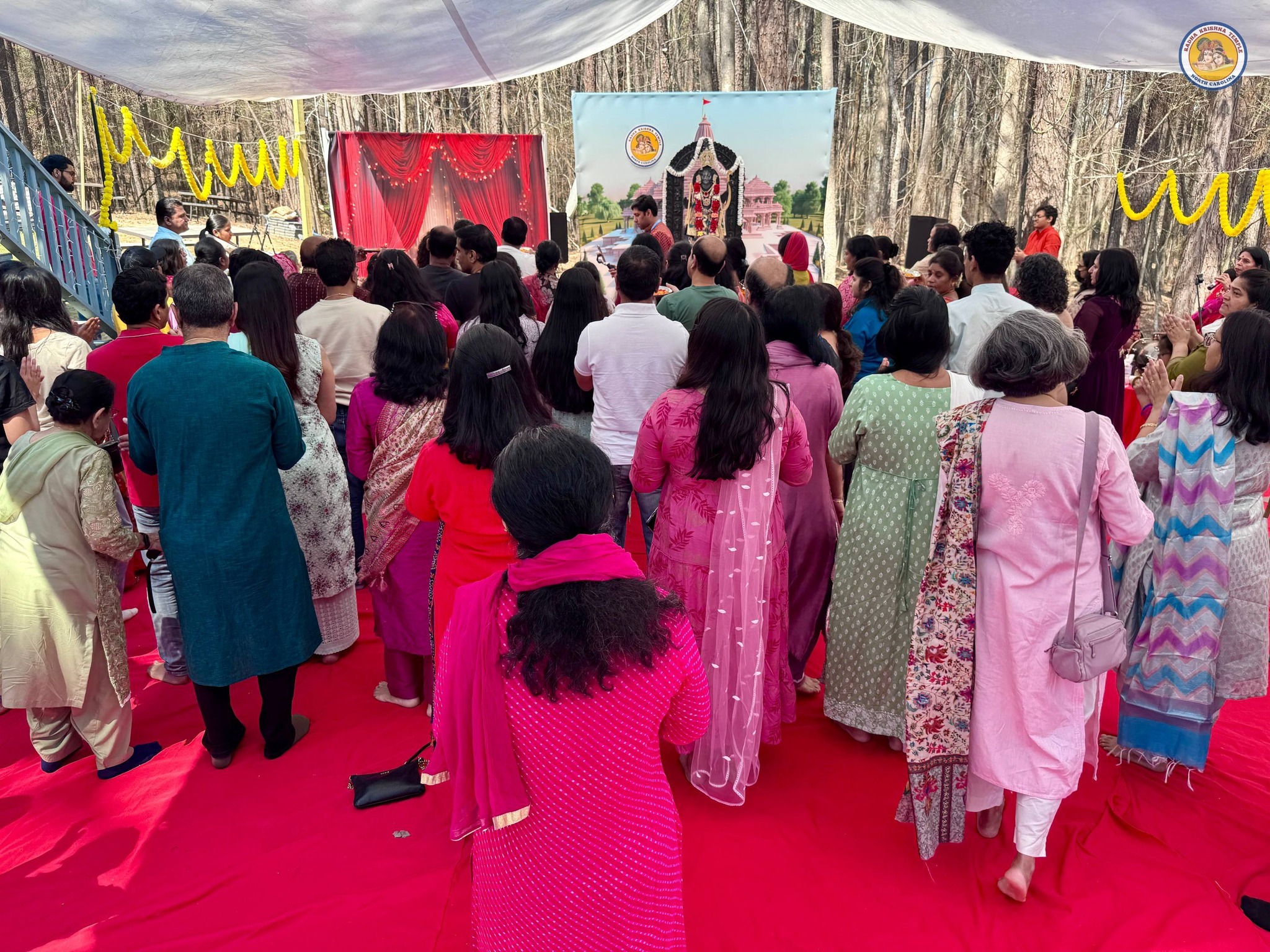
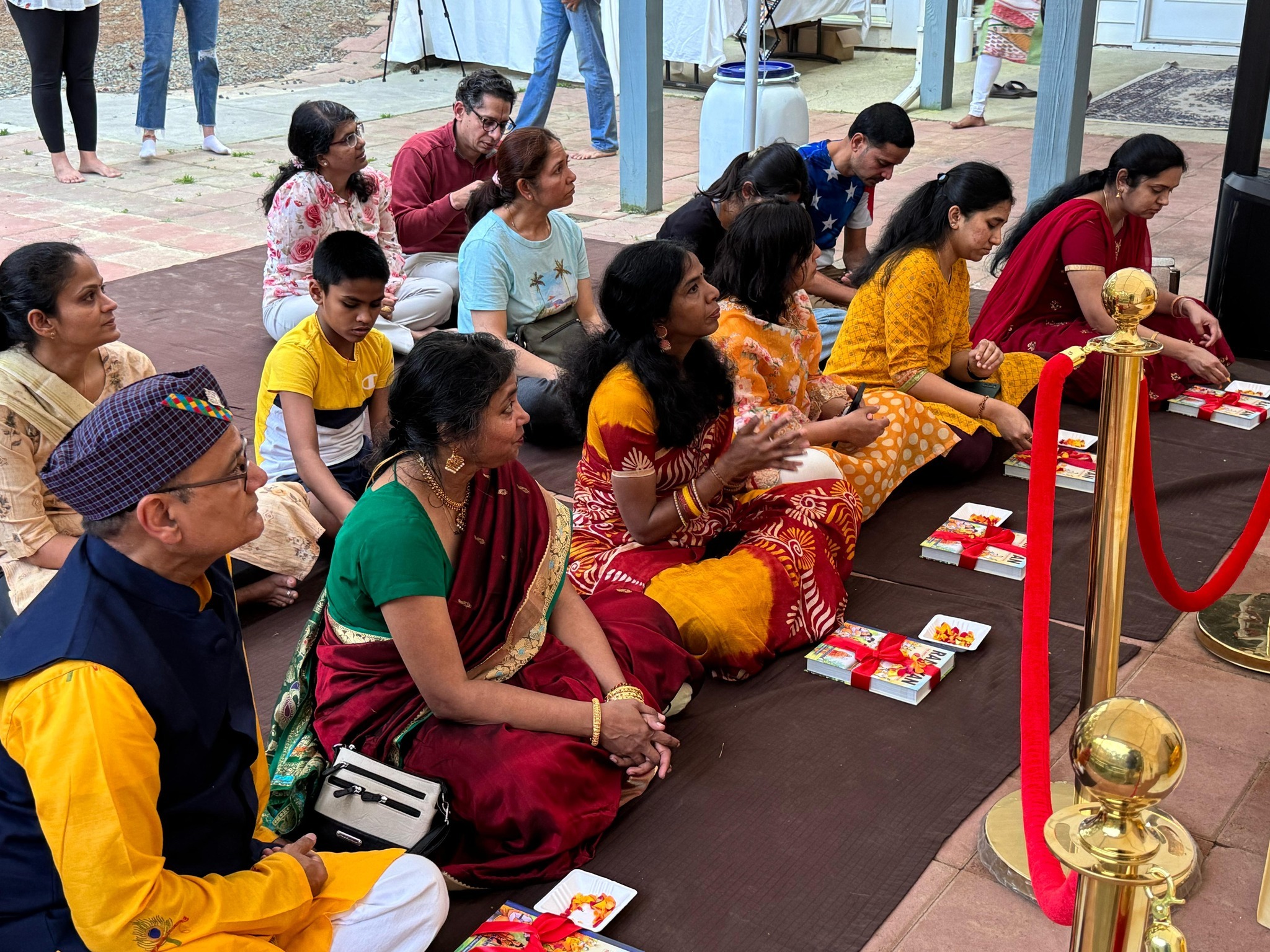
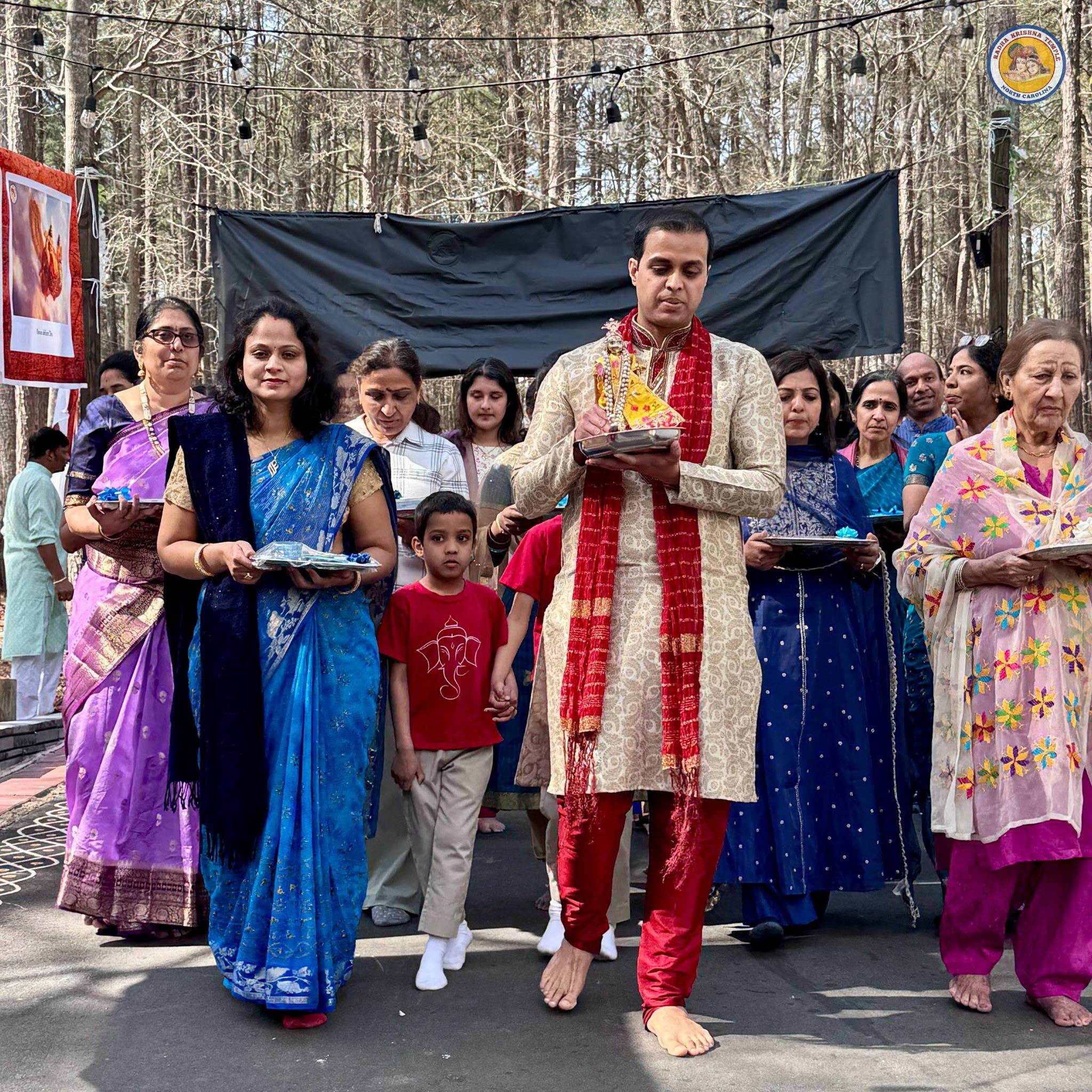
In this atmosphere of devotion, the sacred Pothi Yatra was carried out with great reverence. The Ramayan, with commentary by revered Swami Mukundananda, was lovingly carried by devotees on their heads. This was not merely a ritual. It was a heartfelt expression that divine wisdom must guide and reign above our lives. As the devotees walked in parikrama around the serene, wooded temple, there was a quiet prayer in every step, a collective longing that the grace of the Ramayan may fill their hearts with bhakti.
To truly feel the joy of this moment, we must remember the story that began it all — the story of the Lord's descent.
In the higher realms, a celestial assembly had gathered in desperate prayer. The Devatas had approached the Supreme Lord, pleading for shelter and protection from the demon king Ravan, who had grown so powerful and tormented the three worlds. Moving with infinite compassion, the Lord promised to descend into the mortal realm to vanquish Ravan and restore Dharma.
King Dashrath was one of the greatest rulers of the solar dynasty, excelling in both Vedic literature and warfare. He ruled his kingdom wisely and justly. He had three queens — Kausalya, Sumitra, and Kaikeyi. But Dashrath carried a great concern: he had no heir to his throne. Seeking the advice of his guru, Sage Vashistha, he was led to perform the Putrakameshti Yagna.
Out of the sacred fire, Agni-dev manifested with a golden bowl of divine nectar. Dashrath gave half to Kausalya and half of what was left to Kaikeyi. The remaining nectar was divided into two halves for Sumitra. On receiving these portions, Sumitra felt a deep debt of gratitude; she promised that if she had sons, they would serve the sons of Kausalya and Kaikeyi.
Soon, a wave of anticipation swept through Ayodhya as the cosmos prepared for the miracle. Then, on the day of the Lord's Avatar, the sun shone with unprecedented brilliance, the devatas gathered in heaven and the Supreme Lord, the Father of the universe, took birth in the lap of Mother Kausalya. Soon the news came that Kaikeyi also gave birth to a boy and Sumitra had given birth to two sons. As the news of the four princes — Ram, Lakshman, Bharat, and Shatrughna — echoed through the palace, King Dashrath's happiness knew no bounds. The entire kingdom of Ayodhya was transformed into a festival of joy.
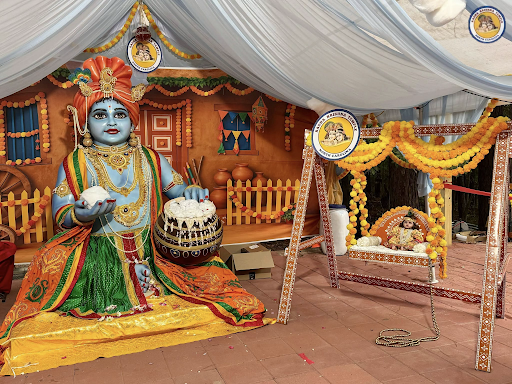
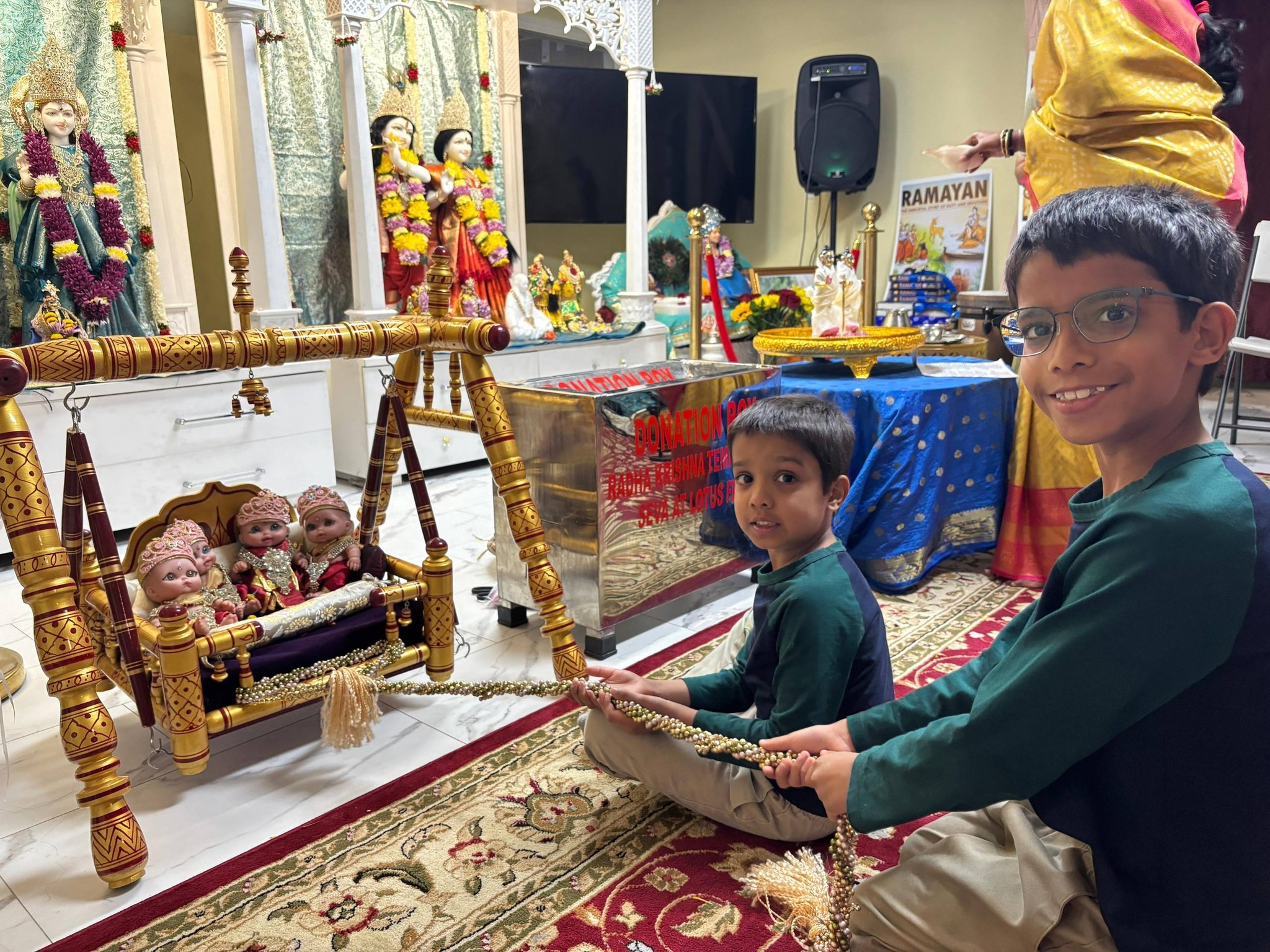
An echo of such festive mood from the streets of Ayodhya was reborn here at the Radha Krishna Temple. The celebration of Ram Janma brought an outpouring of joy. The divine child forms of Lord Ram, along with Lakshman, Bharat, and Shatrughna, were lovingly placed in a beautifully adorned cradle. What followed was not just a ceremony, but a celebration filled with affection and delight. Devotees gathered around, singing bhajans, gently swinging the cradle, and rejoicing as though they were present in Ayodhya at the time of the Lord's birth.
There was music, there was dance, and there was an unmistakable sense of celebration in the air. Children, especially, were filled with excitement. Their laughter, their eagerness to participate in the Jhoolan and the cake cutting, reflected a pure, innocent joy that made the entire atmosphere even more special.
The temple itself had been transformed into a living canvas of the Ramayan. Across the premises, scenes from the Lord's divine pastimes had been brought to life through vivid visual depictions. Walking through them felt like moving through the sacred story itself, as if each moment of the Ramayan was unfolding around you.
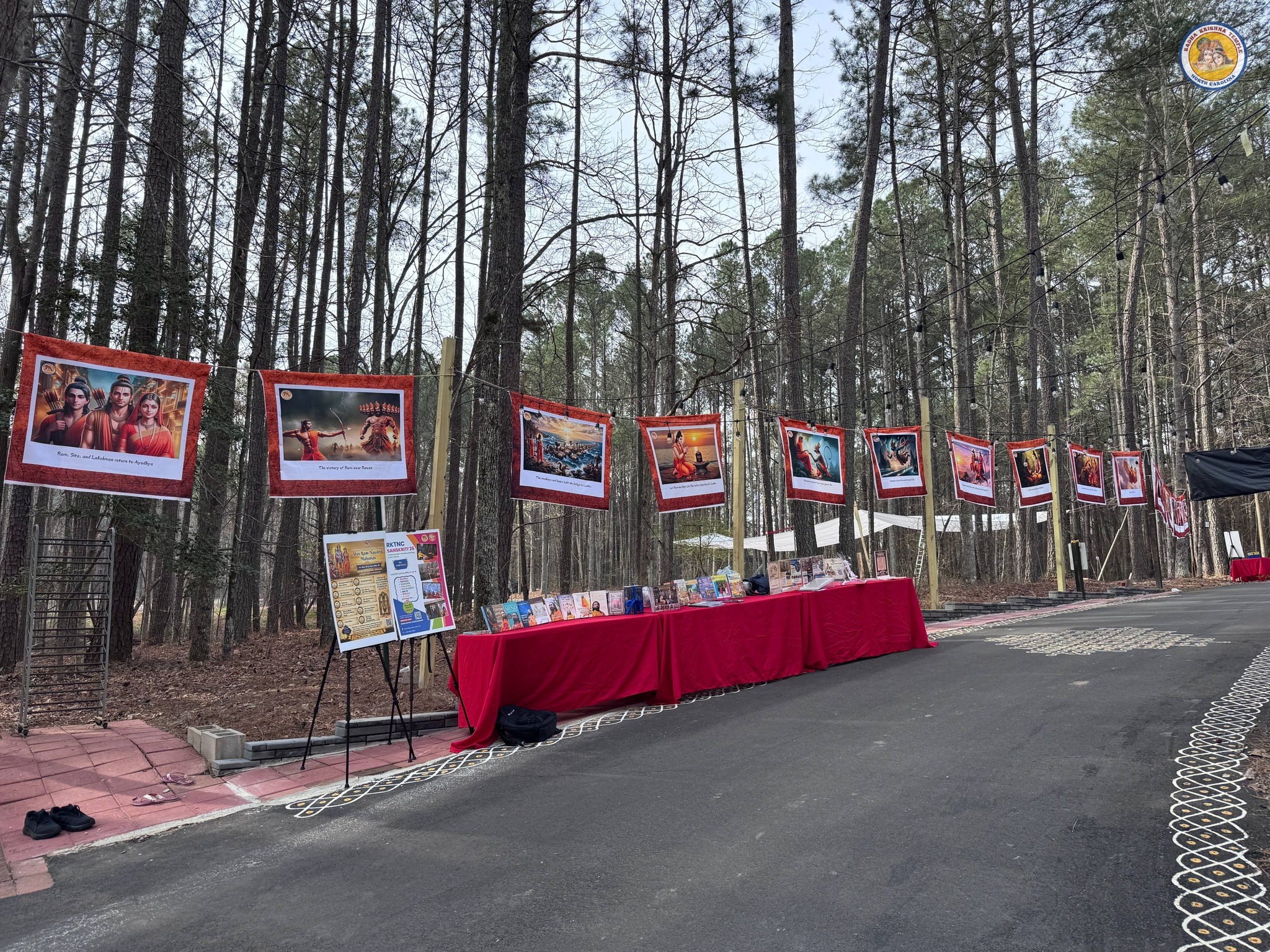
It felt alive. It felt as though Ayodhya itself had descended into the temple, blessing every heart that was present.
Day 2: Sita Ram Vivah – A Celebration of Divine Union
The divine wedding of Sita and Ram is one of the most cherished moments in the Ramayana — a union of two divine personalities, representing perfect devotion and eternal love.
Continuing our story from the Ramayana, as Lord Ram and His brothers grew into their youth, sage Vishwamitra arrived in Ayodhya, seeking Ram's help to protect his sacred yajnas from demons who constantly disturbed them. King Dashrath was deeply distressed at the thought of sending his tender young prince into the forest. But sage Vishwamitra reminded him that Ram was no ordinary child, and Guru Vashishtha too assured the king that great good would come from this journey.
Thus, Ram and Lakshman departed with the sage, and under his guidance, Lord Ram destroyed the demons who threatened the yajnas, restoring peace and righteousness.
Their journey eventually brought them to Mithila, where King Janak was seeking a worthy groom for his divine daughter, Sita.
King Janak possessed the mighty Shiv Dhanush, gifted by Lord Shiva Himself — a bow so heavy that no king or warrior could even lift it. Yet one day, while playing, young Sita effortlessly moved the chest beneath which the bow rested while retrieving her ball. Realizing her daughter is divine, King Janak resolved that only one who could string and break the bow would be worthy of her hand in marriage.
It was in the beautiful Pushp Vatika of Mithila that Ram and Sita first beheld one another. In that sacred moment, their hearts recognized what destiny had already ordained.
Soon came the grand Swayamvar. Kings and princes from many lands gathered, each attempting to lift and string the mighty bow, yet none succeeded. Then, at the instruction of sage Vishwamitra, Lord Ram stepped forward. With humility, He first bowed to His Guru and then to the sacred bow. And in the very next moment, He lifted the Shiv Dhanush as effortlessly as a child lifts a toy and broke it in two. The thunderous sound echoed across the three worlds, and Mithila erupted in joy.
Preparations began for the divine wedding of Ram and Sita, a celebration so glorious that even the celestial beings are said to have descended to witness it.
And at the Radha Krishna Temple of North Carolina, devotees were blessed to relive that very celebration once again.
The temple had been transformed into a sacred wedding space. At the center stood a beautifully decorated mandap, with the presence of Ayodhya Ram Lalla in the backdrop, quietly witnessing the union about to unfold.
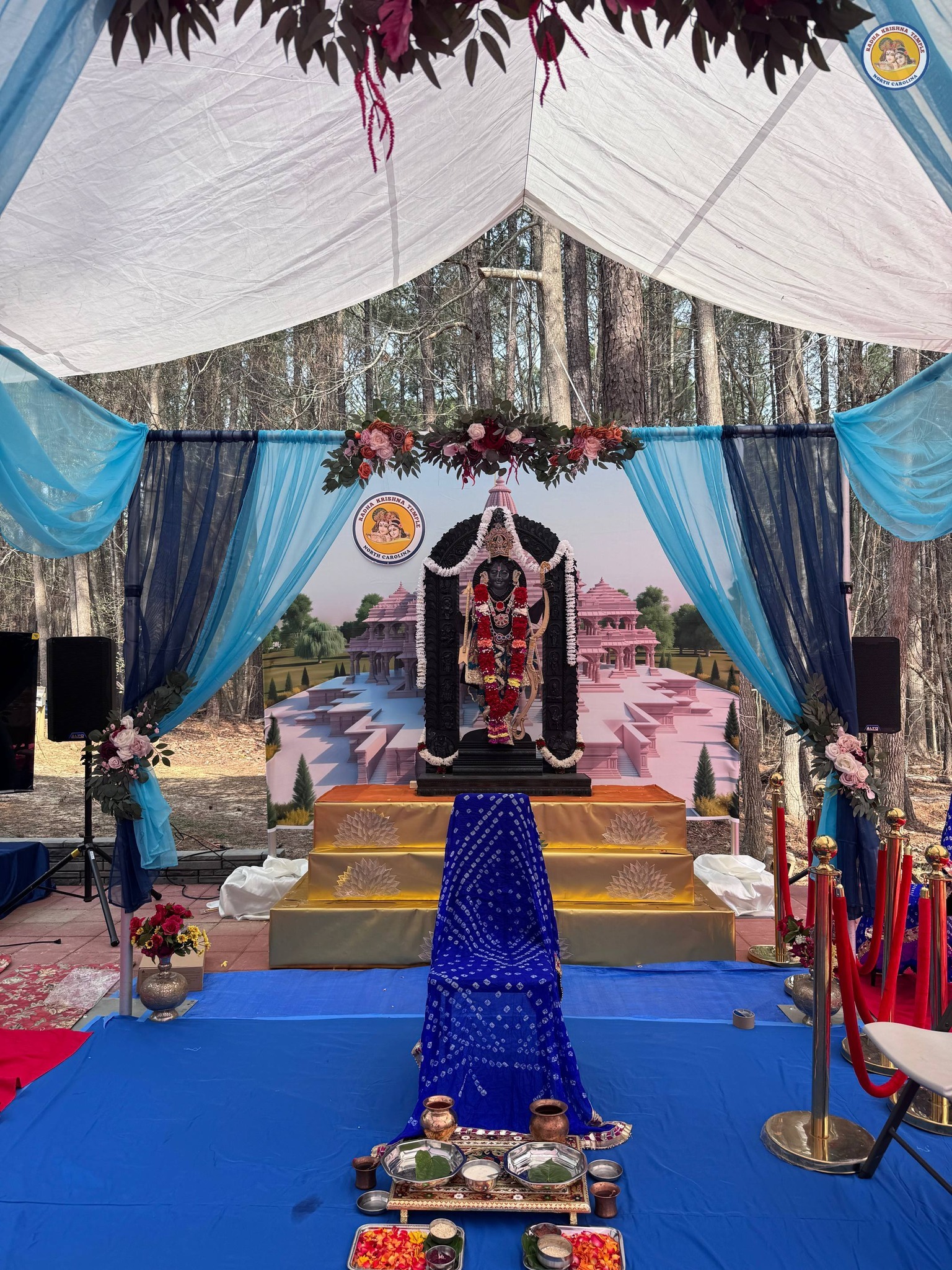
The celebrations began with the Baraat. The Utsav Murti of Lord Ram, adorned as the divine bridegroom, was carried toward the mandap. Devotees followed with ecstatic joy, carrying offerings of seer varisai. It felt as though every person present had a role to play, truly becoming part of the wedding procession.
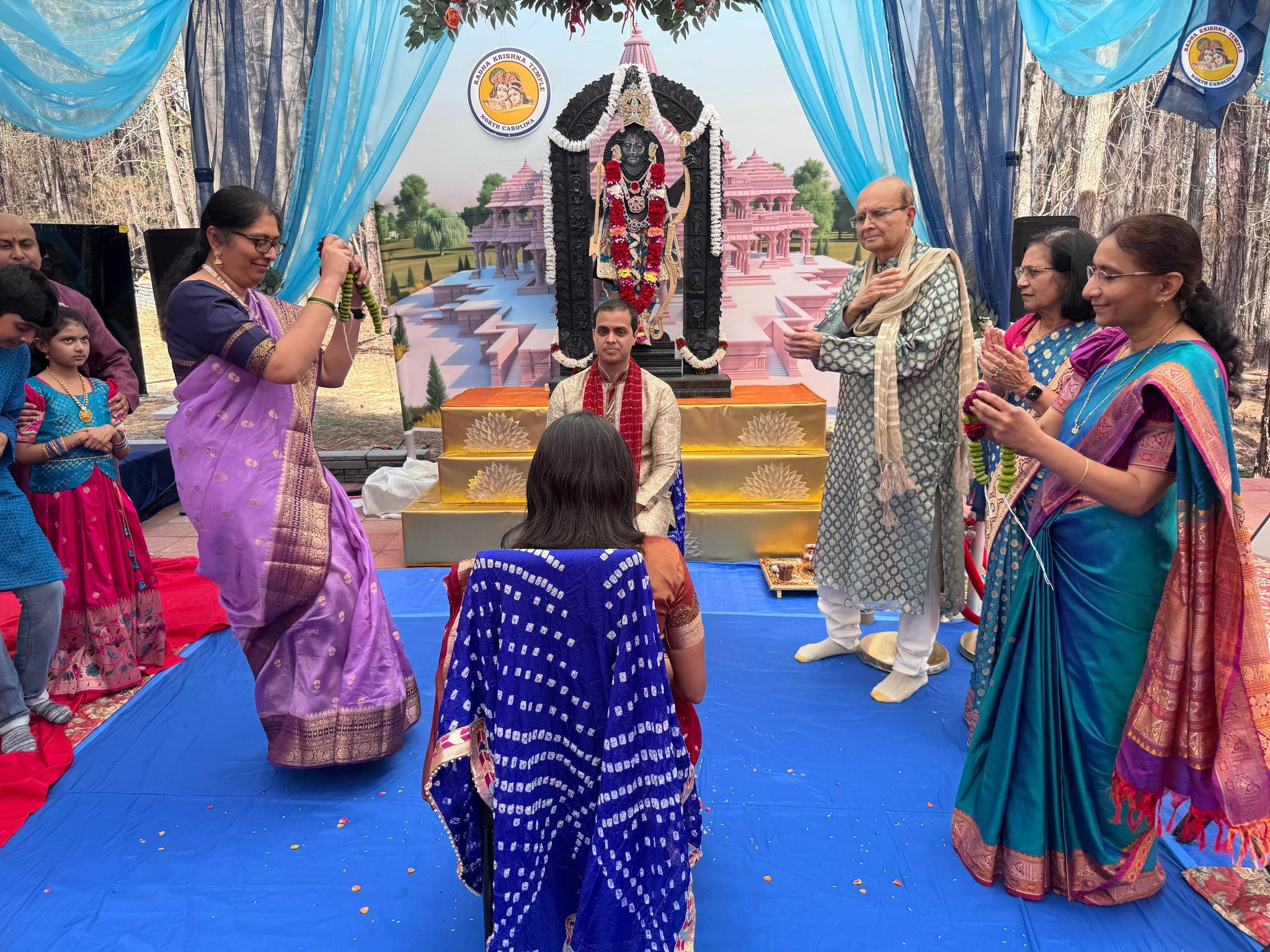
Soon after, attention turned to the arrival of Mother Sita. From the other side, Her procession approached, with devotees carrying silver vessels, walking with care and devotion. The rituals followed the traditional Vedic path of a South Indian Kalyanam. During the mala badal (exchange of garlands), the joy in the room was so palpable that many expressed it through dance. When the Mangalyadharanam — the offering of the mangal sutra — took place, a sense of grace and completeness filled the hall.
While the mandap held the central celebration, the spirit of the wedding extended across the temple. Children were deeply engaged in many exciting programs offered for them that day. Some were building the Ram Setu, carefully placing each piece with focus and excitement. Others were playing games, aiming arrows or using catapults to bring down Ravana, their laughter filling the space. Through puzzles, treasure hunts, and storytelling, the Ramayana came alive for them in a joyful and interactive way.
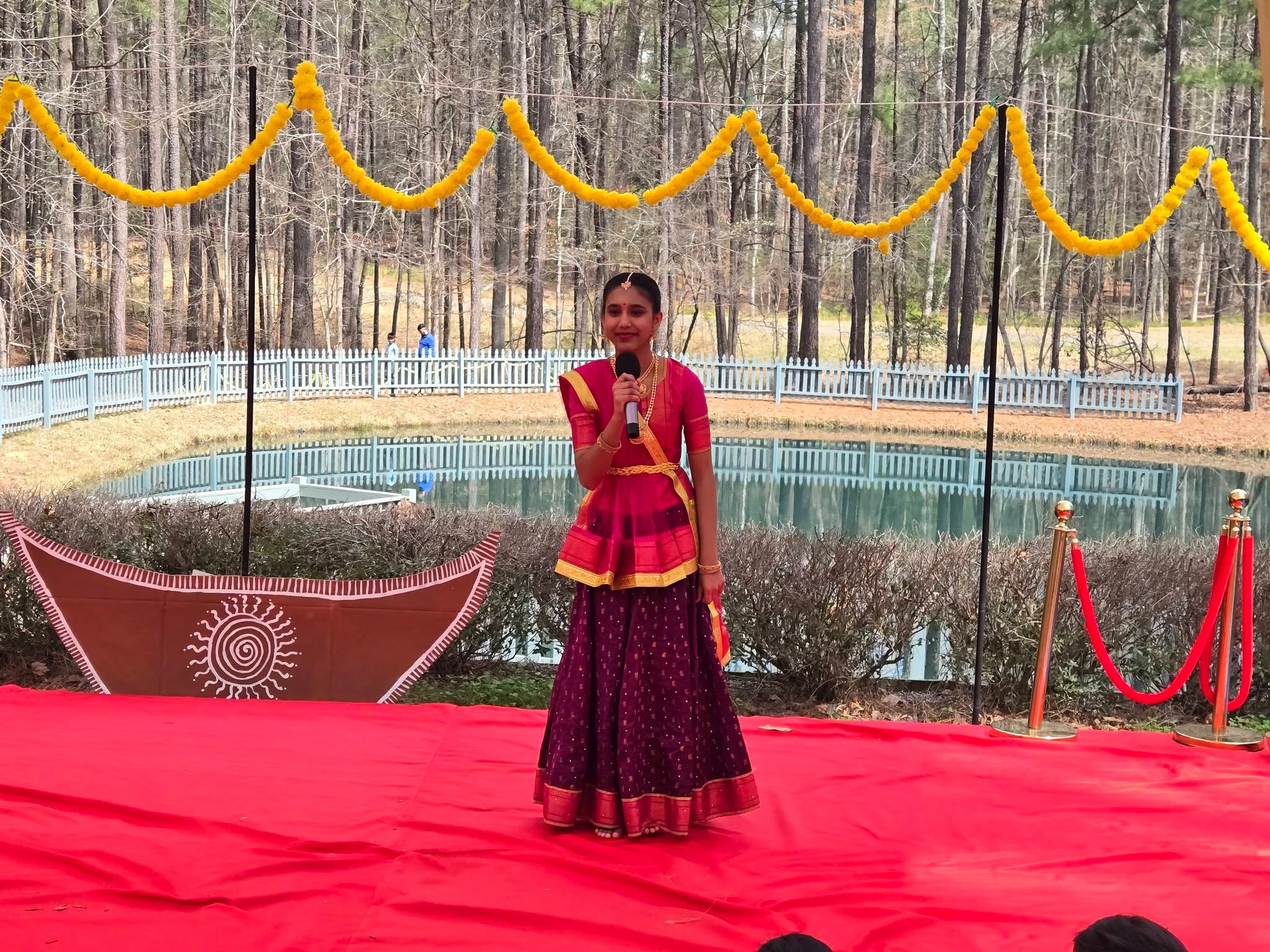
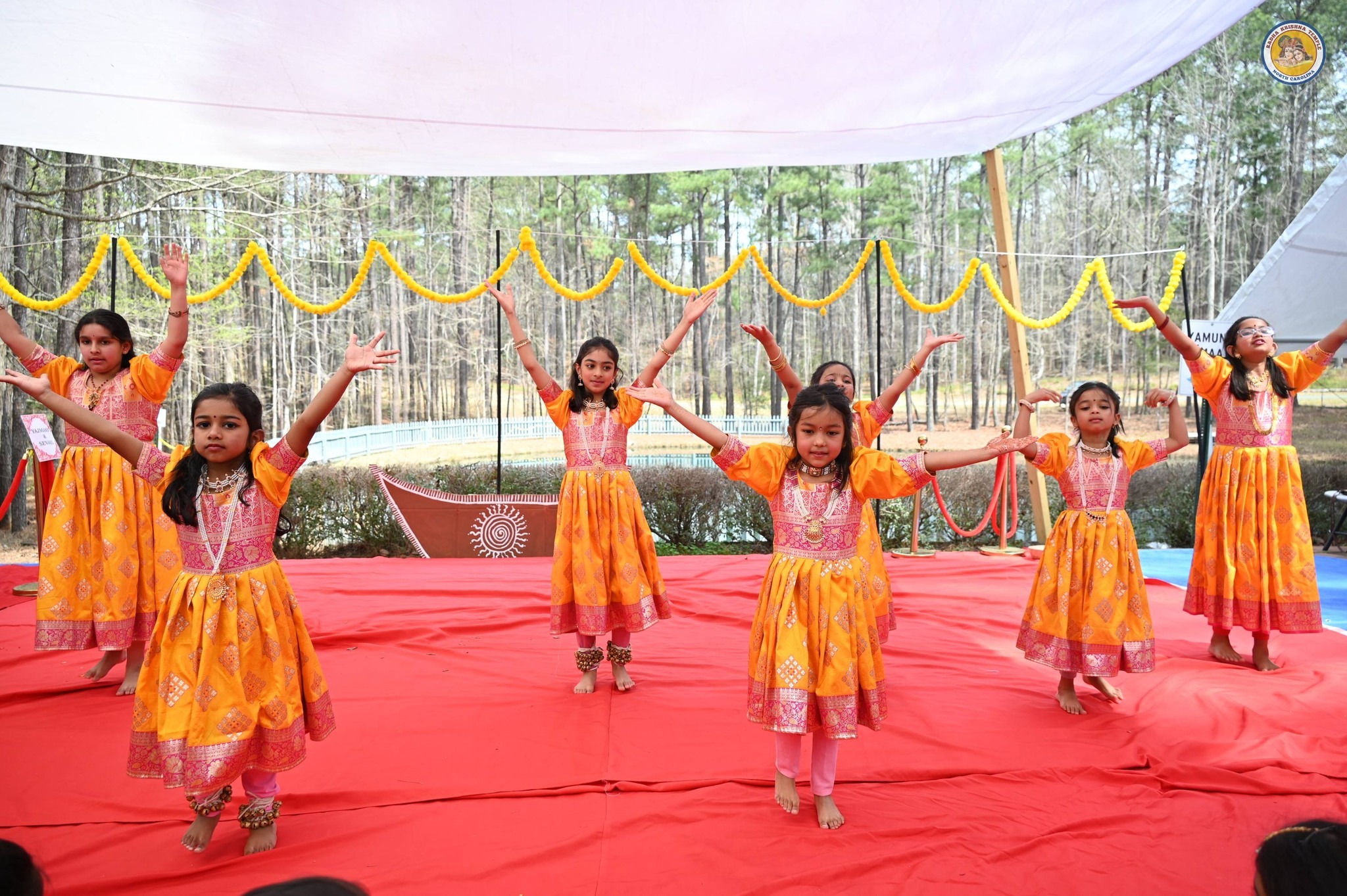
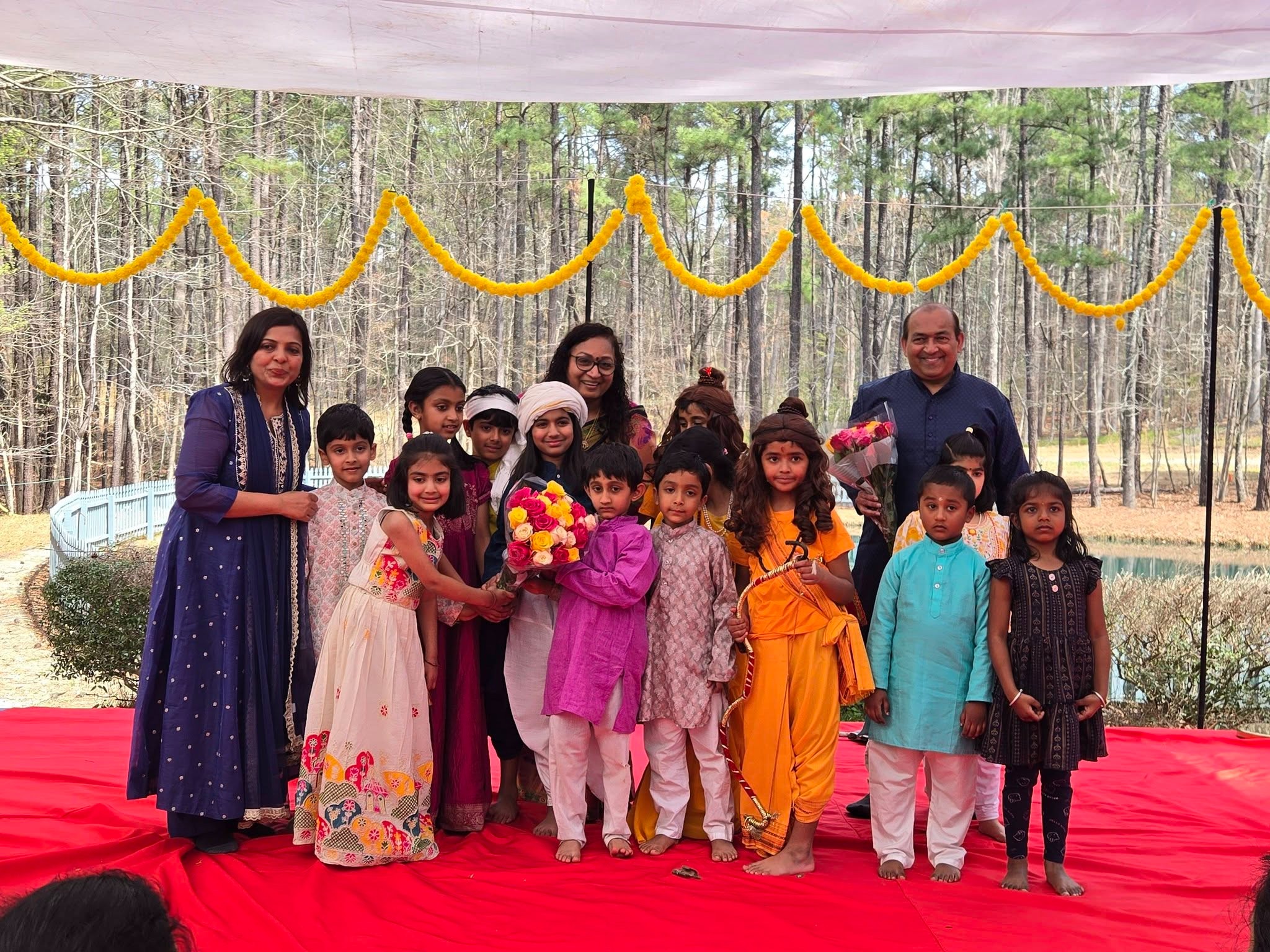
Workshops, art, and performances added to the vibrancy of the day. As the day unfolded, the celebration moved beyond the rituals of a wedding. It became an experience shared by everyone present, in different ways, yet with the same feeling.
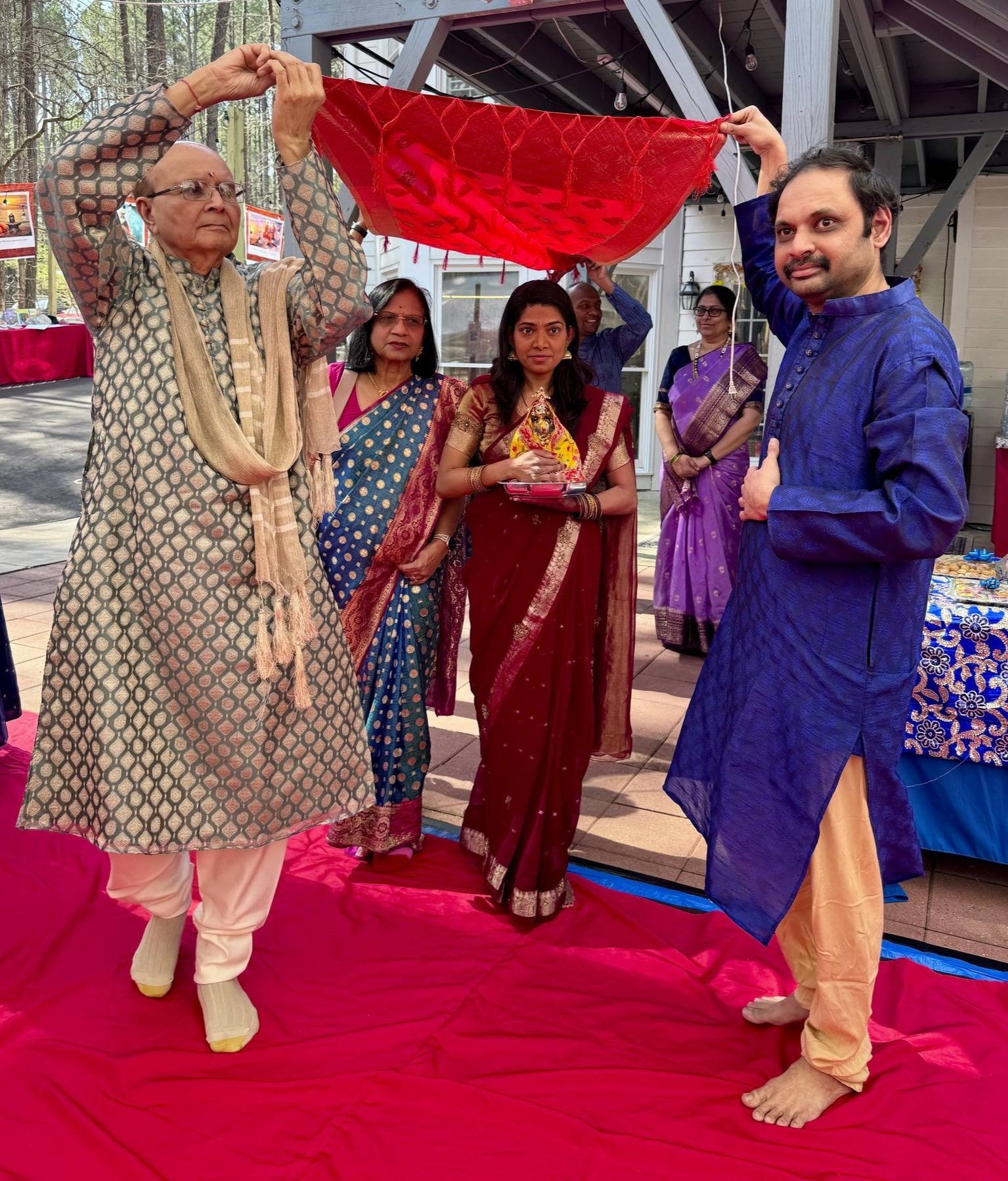
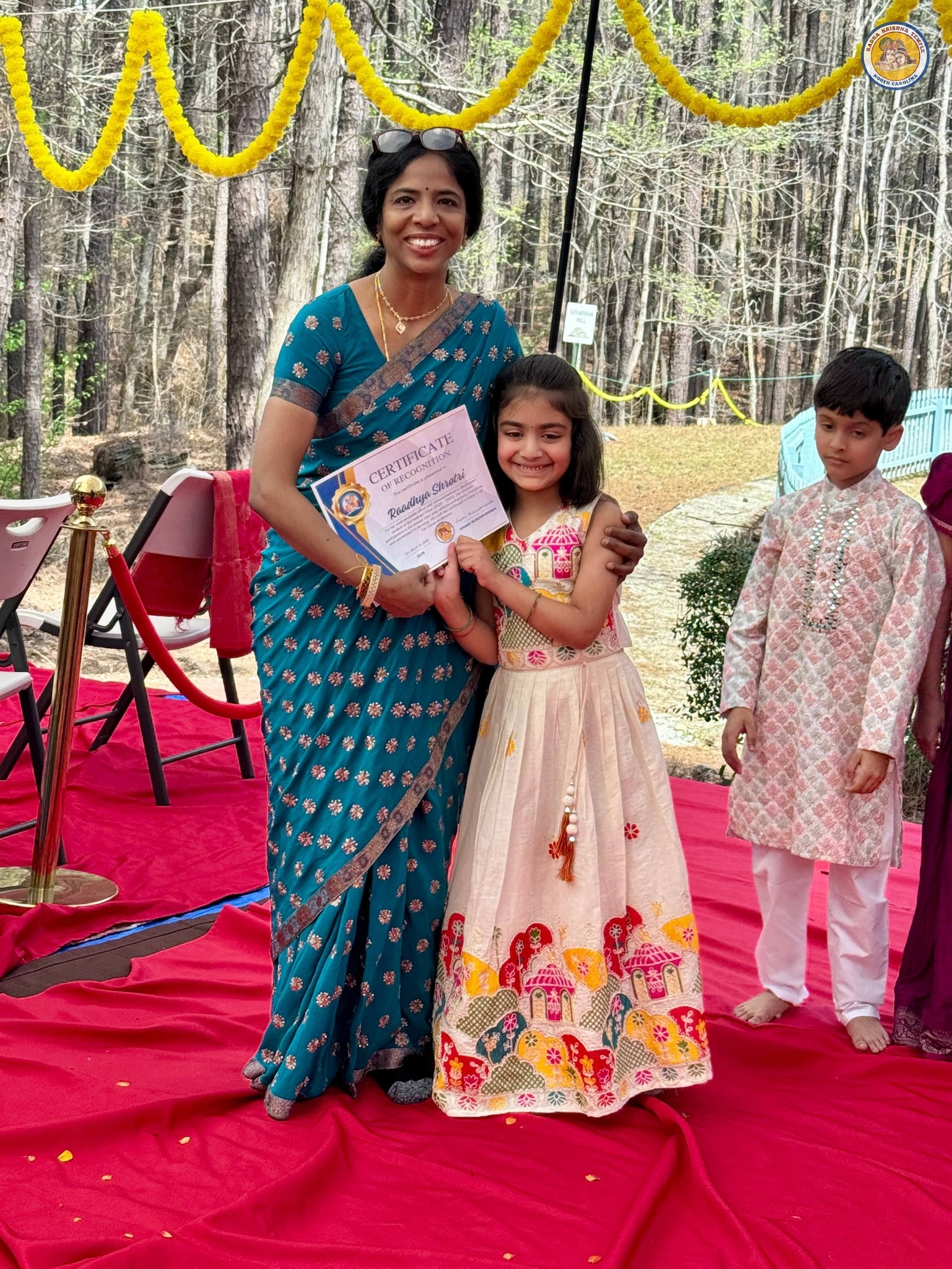
By the end of the day, it felt as though the Sita Ram Vivah had not just been observed, but truly lived.
Day 3: The First Grand Mata Ki Chowki – Welcoming the Divine Mother
The third day of the Mahotsav brought a historic milestone for the Radha Krishna Temple of North Carolina: the hosting of its very first grand Mata Ki Chowki. This vibrant celebration filled the temple grounds with devotional singing, joyful celebration, and an atmosphere charged with bhakti.
Mata Ki Chowki is a sacred Hindu devotional gathering dedicated to Goddess Durga, also known as Mata Rani. Maa Durga represents Shakti, the divine energy that bestows protection, strength and grace.
In this beautiful outdoor setting, as the community gathered to honor Mata Rani, the mind naturally turns to the sacred story of how the Divine Mother first appeared in the Ramayana — not through a palace birth, but from the heart of the Earth itself.
In the kingdom of Mithila, a long and severe drought had once parched the land. King Janak was advised by sages to personally plow the sacrificial ground to invoke the mercy of the heavens. As the golden plow moved through the soil, it struck a vessel buried deep within. Inside was a radiant baby girl, glowing with celestial light. She was named Sita, meaning "furrow," as she was born of the Earth. Her descent brought immediate grace; the rains fell, the land turned green, and the world realized that the Divine Mother had arrived to stand beside the Lord.
Just as Mother Sita appeared from the Earth to bring prosperity to Mithila, Her presence was felt throughout this morning, blessing the gathered community. The energy of this divine descent seemed to vibrate through the air as the celebration unfolded. The deity of Mata Rani was a magnificent sight, exquisitely decked with jewels and vibrant dresses. During a moving ceremony, priests lovingly draped chunnery after chunnery upon the idol — each veil representing a layer of devotion and the Mother's protective grace wrapping around her children.
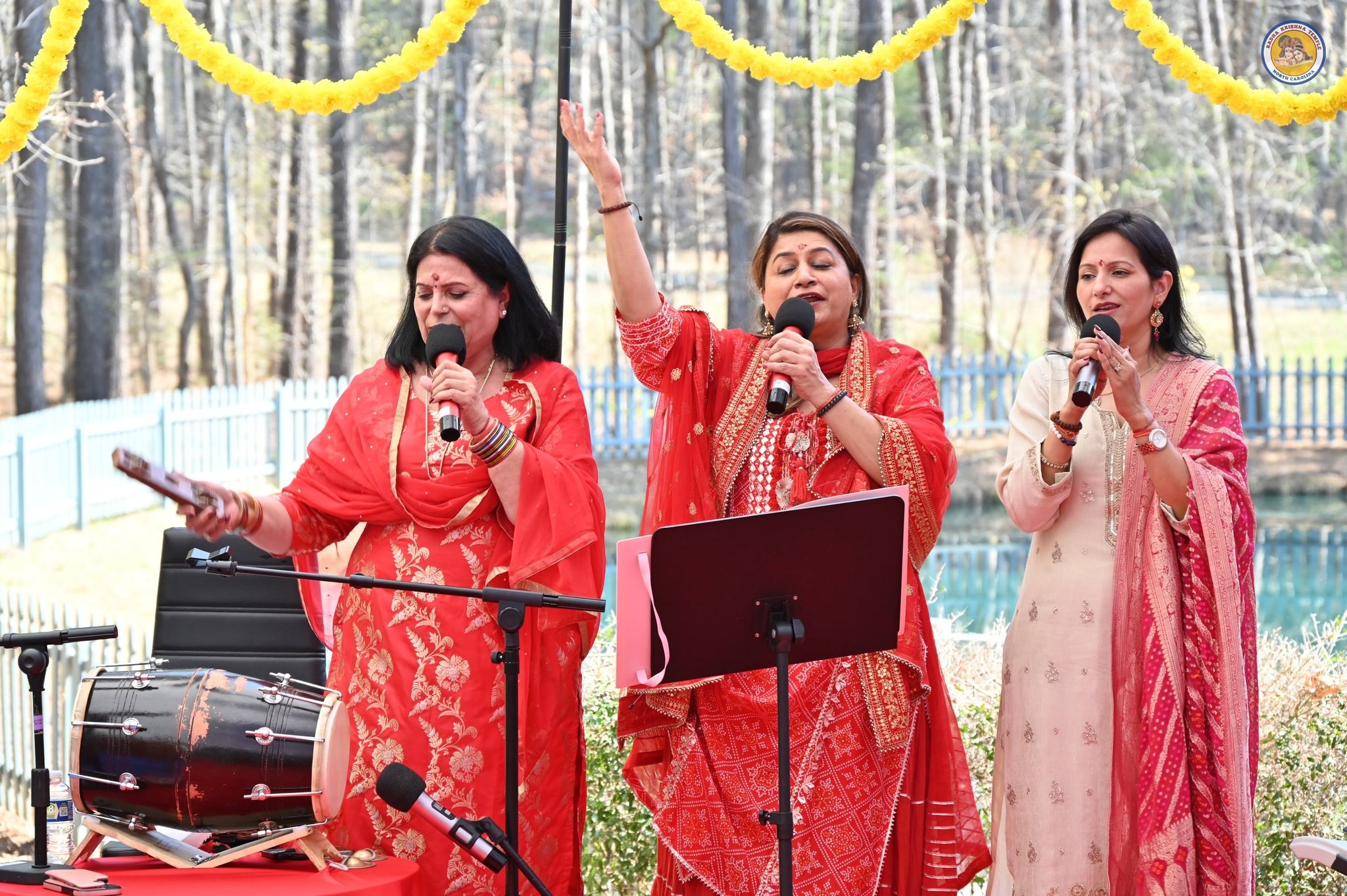
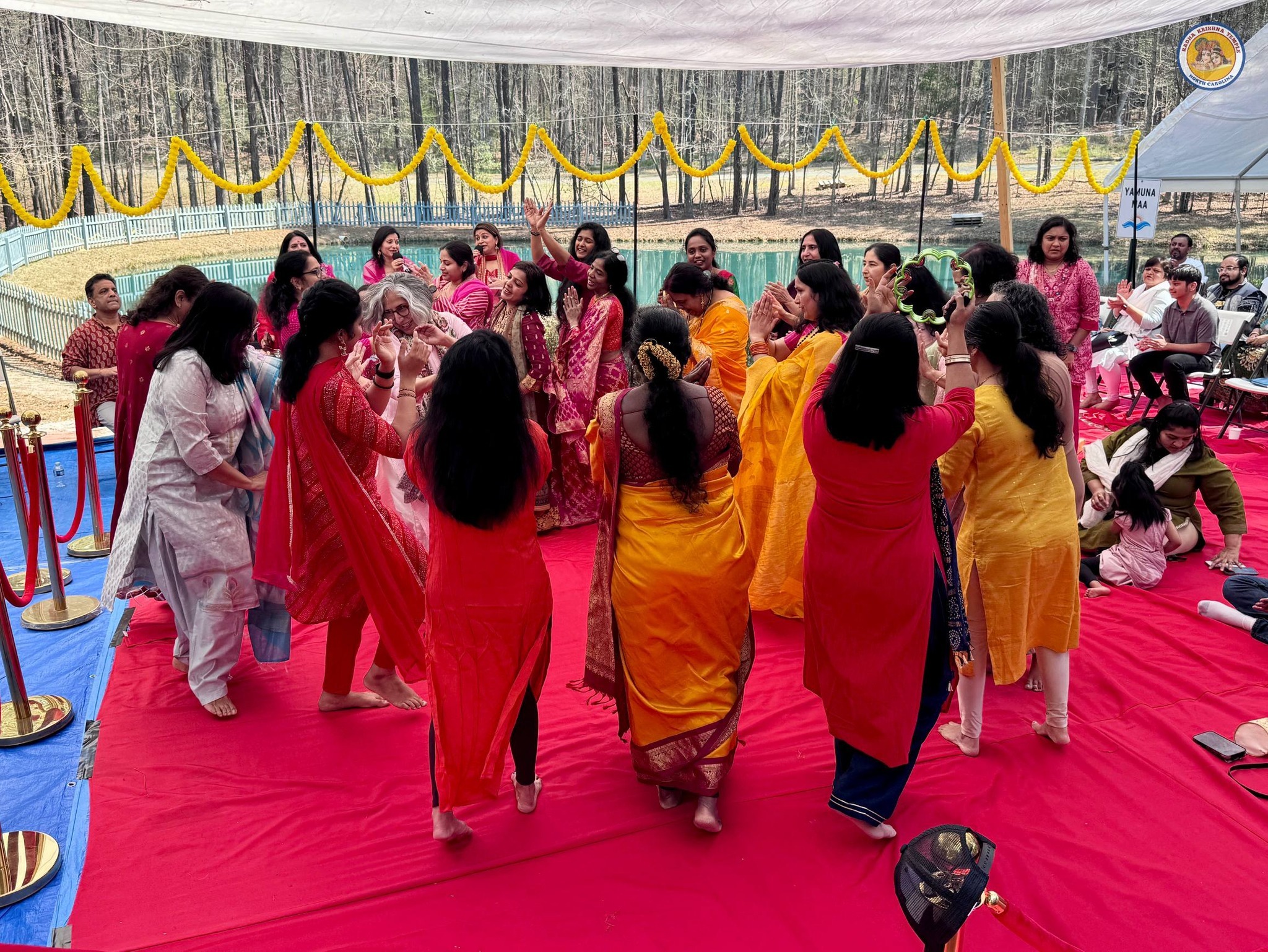
The RTP Bhajan Mandali led the gathering into a realm of pure divinity. The outdoor setting made the experience feel expansive, with prayers rising directly into the clear morning air. The energy was contagious; rhythmic singing soon grew into a powerful wave of devotion. The space was filled with the sound of clapping, the chime of manjiras, and the steady beat of the dhol. Faces were lit with a fervor that only comes from deep Bhakti. The spirit of the Chowki took the celebration to a higher level as ladies formed circles, spinning and dancing in joyful worship. The men soon joined in, creating their own lively groups, all moving to the soulful bhajans.
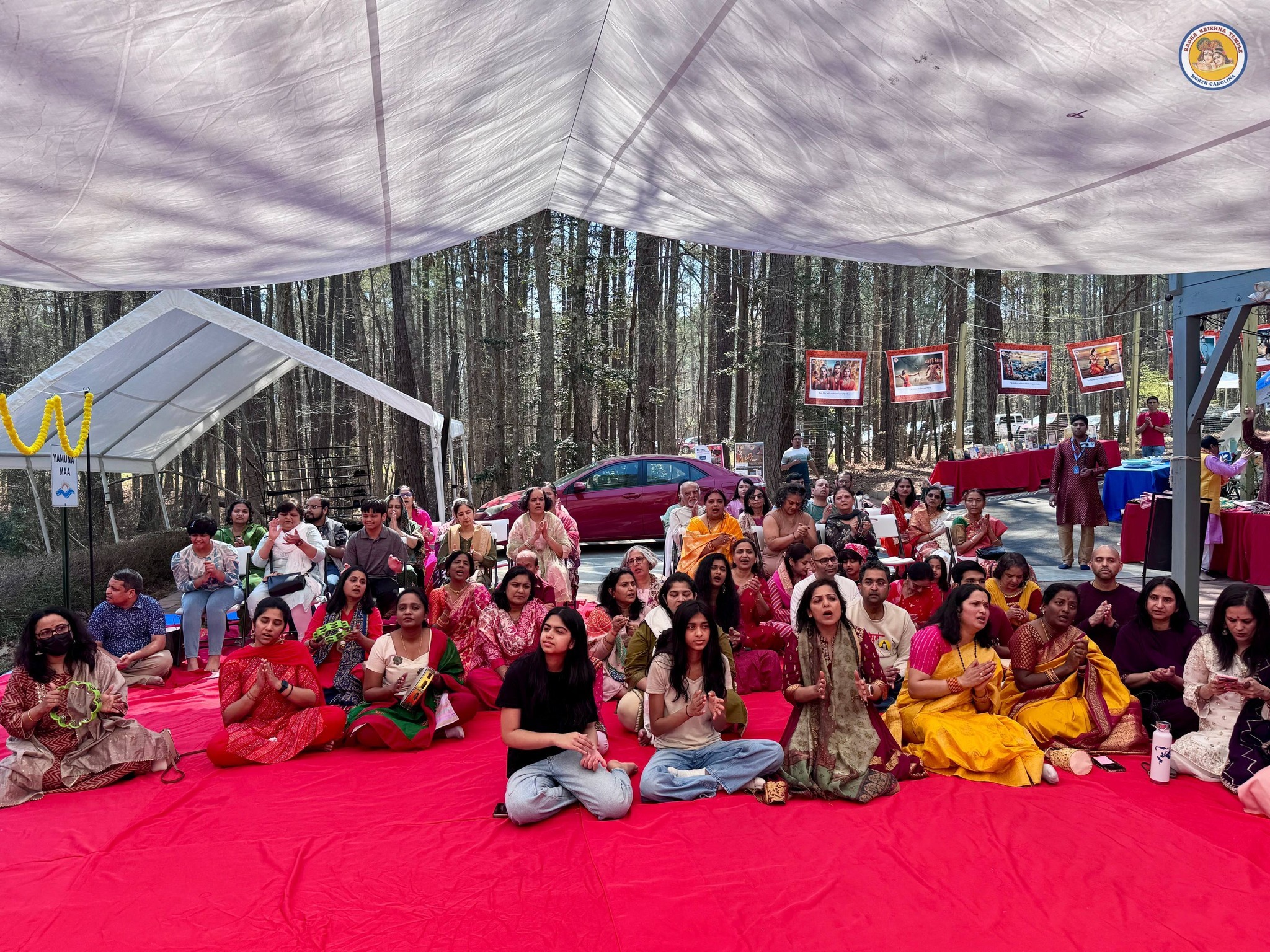
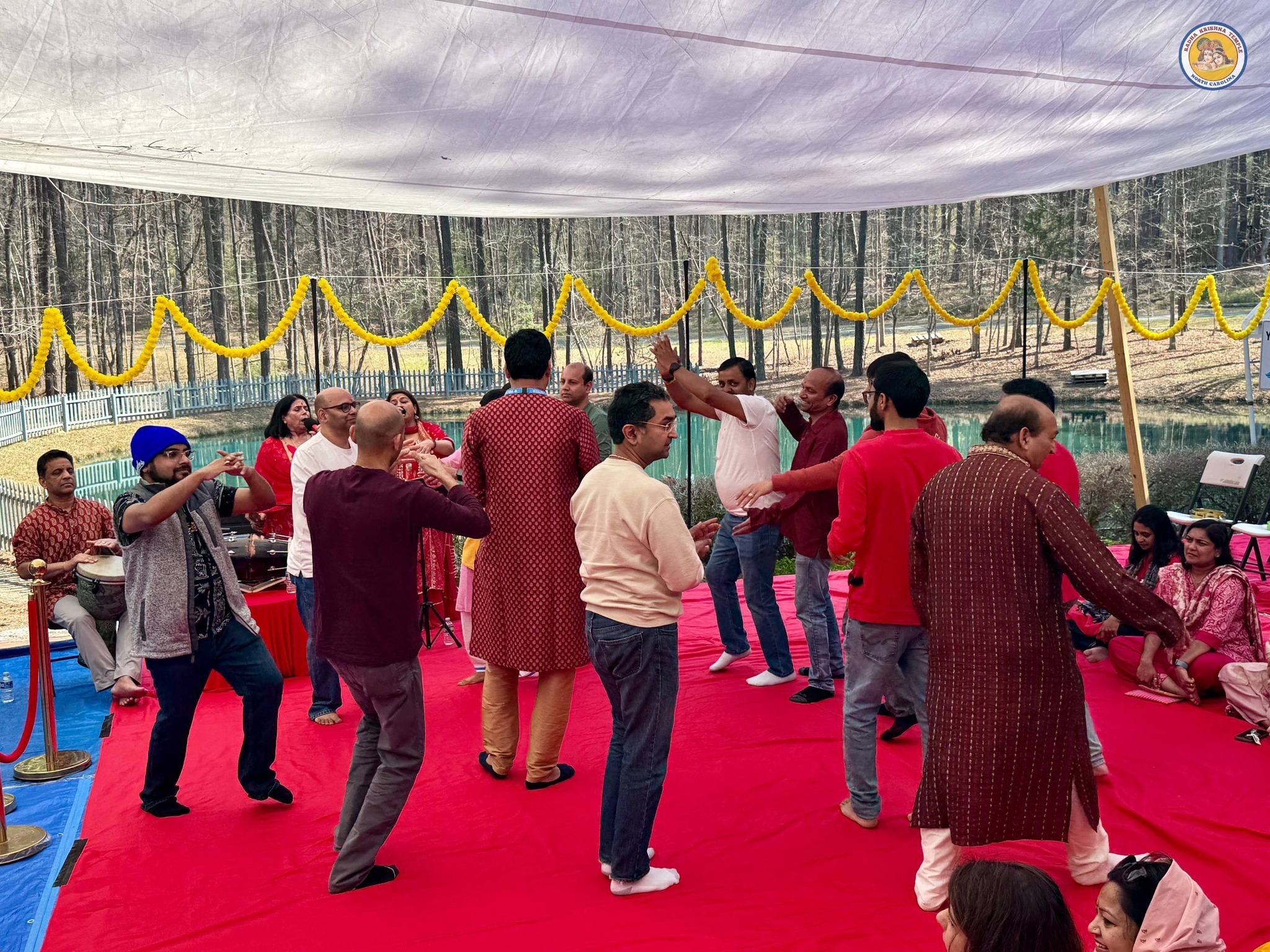
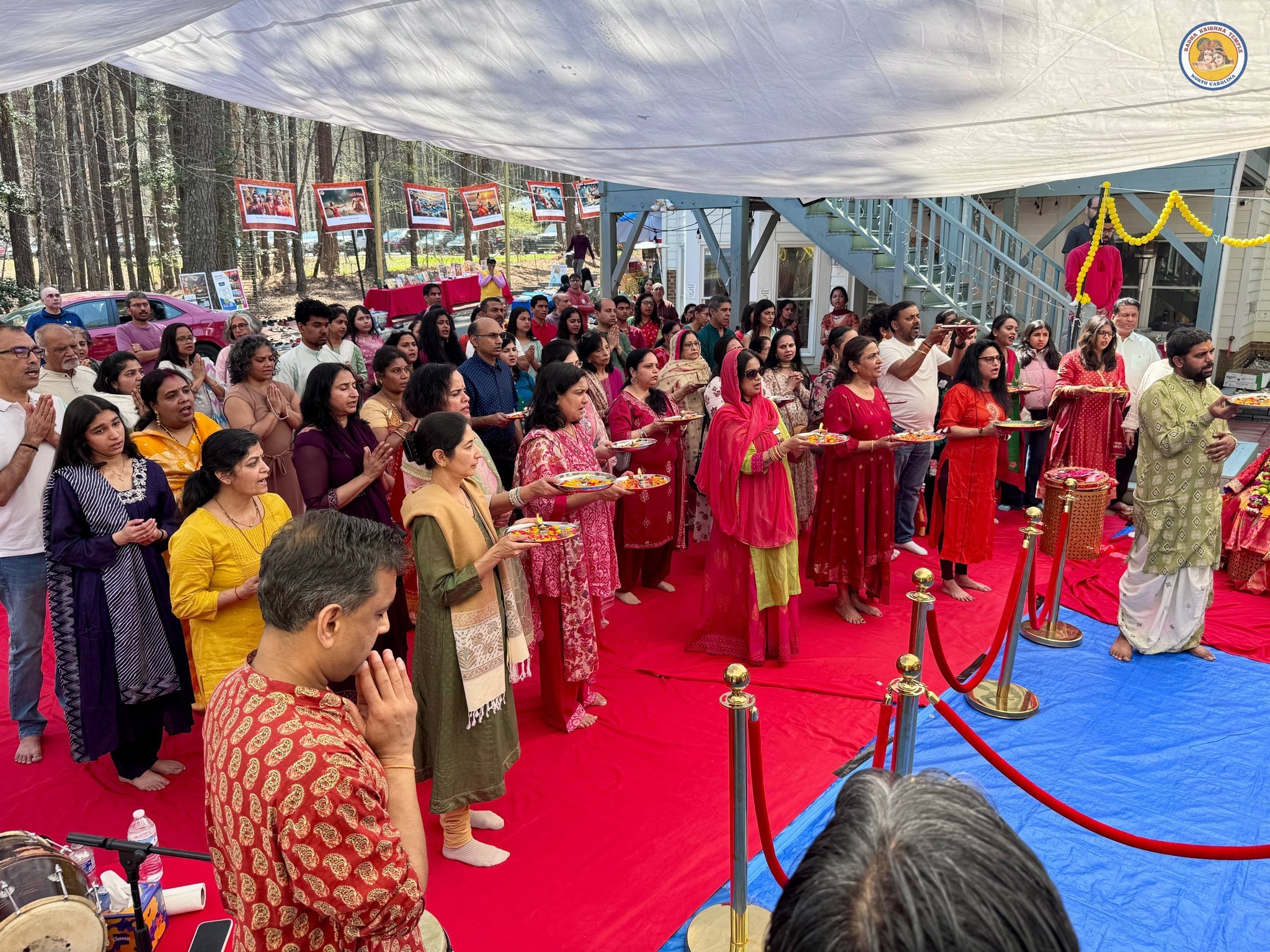
The morning concluded with a heartfelt Aarti and Bhog, followed by a community Preeti Bhoj. With the chants of "Jai Mata Di" echoing throughout the gathering, the celebration became more than just a ritual at the altar. It touched the hearts of everyone present, leaving behind a sense of abundance and the divine grace that carried beautifully into the rest of the Mahotsav.
Coming Next: Part 2
Join us in the next chapter as we witness the heart-wrenching beauty of Bharat Milan, the innocent faith of the Kevat Leela, and the powerful, roaring energy of the congregation's Sundarkand path. The journey continues in Part 2!